


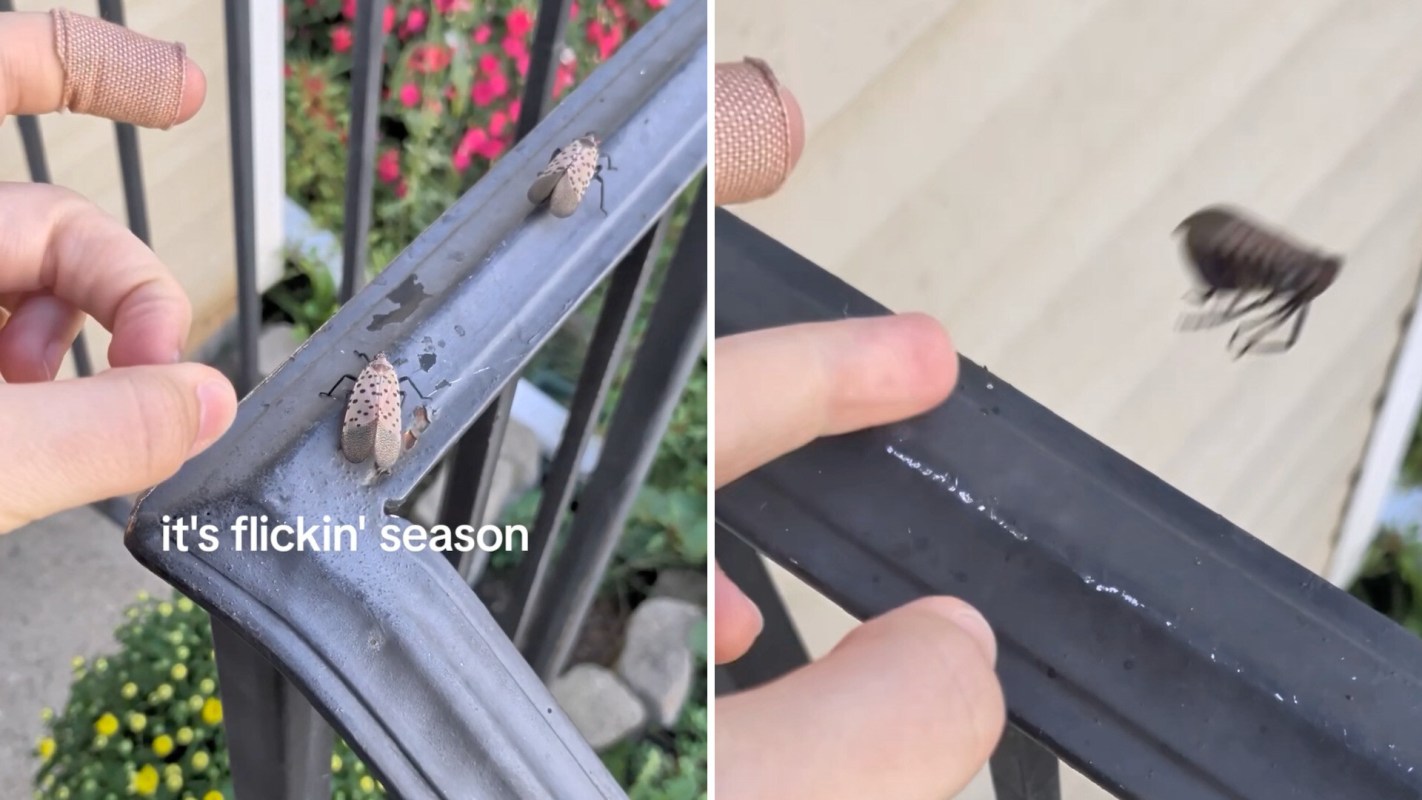
As spotted lanternflies begin turning up again in parts of the Eastern United States, online reactions suggest plenty of people are already bracing for the familiar stomp-and-squash season.
That attitude shows up clearly on TikTok, where creator Emily (@calicozyart) posed a blunt question to viewers: "who else is ready to flick and squish some spotted lantern flies this year?"
What's happening?
The invasive insects, recognizable for their speckled wings and hopping behavior, have become a recurring nuisance in neighborhoods, parks, and backyards.
Emily's video showed them around her residence as she stomped and flicked them away with gusto.
@calicozyart who else is ready to flick and squish some spotted lantern flies this year ? 🪰
♬ Shop (From The Legend of Zelda, Ocarina of Time) [Instrumental Mix] - Arcade Player
Commenters quickly chimed in with their own sightings and battle stories.
"Terrifying I saw 7 of them outside they were massive," one wrote.
TCD Picks » Quince Spotlight
💡These best-sellers from Quince deliver affordable, sustainable luxury for all




"Yeah I smashed two of them earlier," a viewer added.
Another commenter indicated that they were having a little more trouble with the invaders this season.
"They're getting smarter year after year," they wrote. "One was able to fly away from me 8 times before I was able to squash it."
In places where lanternflies show up year after year, their return has started to feel routine. With each fresh round of sightings, a new batch of videos also tends to appear, urging residents to deal with the bugs themselves.
Why does it matter?
Spotted lanternflies are more than just unsettling insects gathering on porches and trees. They are an invasive species that can damage plants by feeding on sap, which stresses vegetation and leaves behind sticky honeydew that can encourage mold growth.
Lanternflies have been a major concern for vineyards, orchards, nurseries, and other agricultural operations in the Eastern United States because they can target grapes, fruit trees, and hardwoods.
Beyond crop and plant damage, the insects can also make outdoor spaces far less enjoyable. Large groups clustered on decks, fences, or building walls can turn a quiet evening outside into an irritating cleanup problem, especially when populations are high.
What can I do?
If you live in an area where spotted lanternflies are established, experts and state agencies have long encouraged residents to avoid moving them to new places and to destroy them when it is safe to do so.
That can include squishing adults, scraping egg masses into alcohol or hand sanitizer, and checking vehicles or outdoor items before transporting them.
It is also important to learn what the insects look like during different life stages, as nymphs do not resemble the winged adults and can be easier to address earlier in the season.
For homeowners, removing favored host plants like tree of heaven where recommended locally and staying alert around patios, trees, sheds, and garden spaces can help reduce surprise encounters. If your state asks residents to report sightings in newly affected areas, following those guidelines can also help agencies track the spread.

Get TCD's free newsletters for easy tips, smart advice, and a chance to earn $5,000 toward home upgrades. To see more stories like this one, change your Google preferences here.







