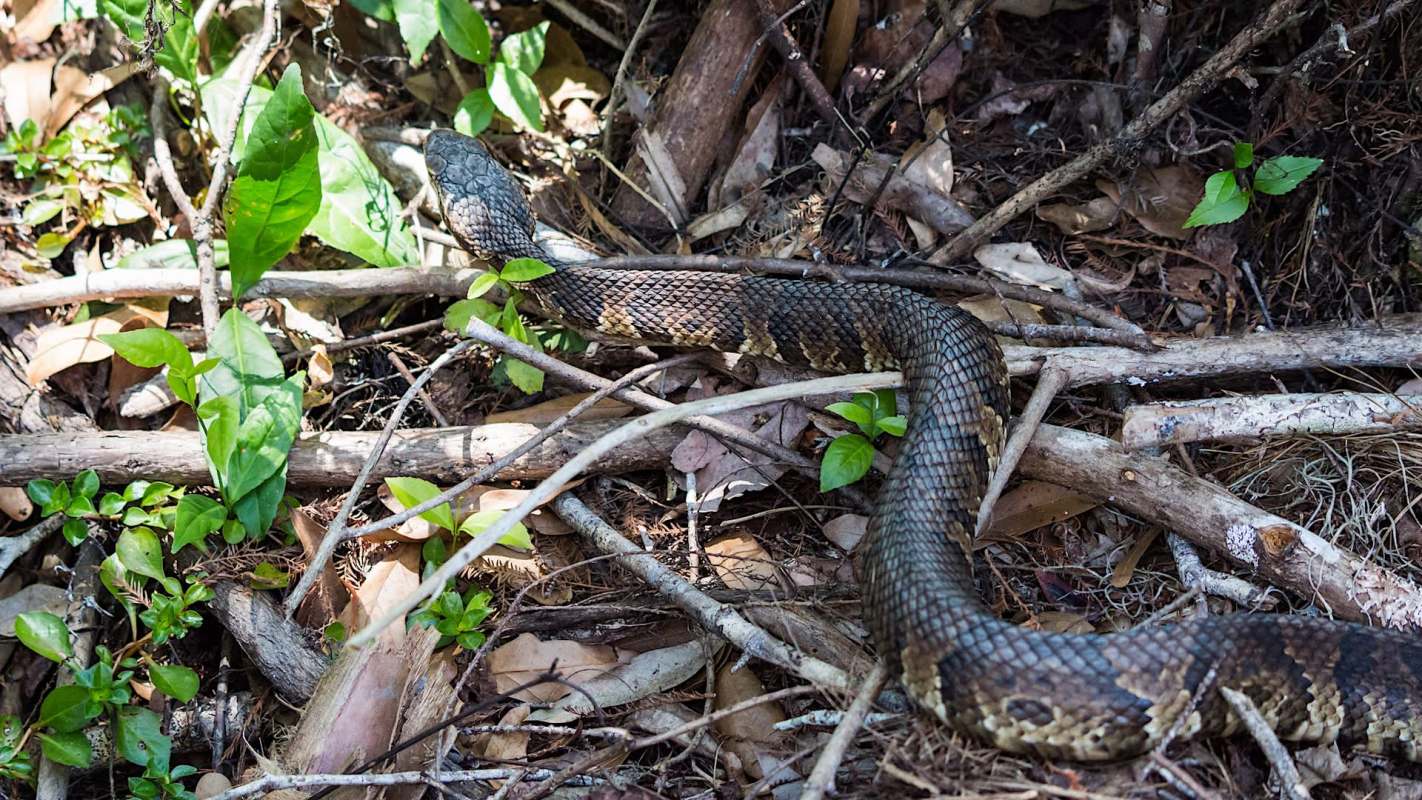
Copperhead sightings in Florida's Everglades continue to circulate online and through citizen reports. Copperheads, however, do not live in the Everglades. In most cases, experts believe people are seeing a far more likely candidate — a juvenile Florida cottonmouth, a venomous close relative that can look surprisingly similar at a young age.
What's happening?
The eastern copperhead is widespread across much of the eastern and central United States, but Florida is a notable exception. According to the World Atlas, there is currently no established copperhead population in South Florida. Within the state, documented copperhead populations are confined to seven counties in the western Panhandle, hundreds of miles from South Florida.
That places Everglades National Park — all 2,357 square miles of it — well outside the species' known range.
Why do reports of "Everglades copperheads" keep appearing? It's likely misidentification. The Florida cottonmouth, also called a water moccasin, lives throughout much of the Everglades. It's a close relative of the copperhead.
Juvenile cottonmouths often display bold banding and copper-toned coloration, which can make it easy for non-experts to mistake them for copperheads.
The Everglades does contain several other venomous snakes like the eastern coral snake and eastern diamondback rattlesnake. It also has a well-documented Burmese python problem.
Get cost-effective air conditioning in less than an hour without expensive electrical work The Merino Mono is a heating and cooling system designed for the rooms traditional HVAC can't reach. The streamlined design eliminates clunky outdoor units, installs in under an hour, and plugs into a standard 120V outlet — no expensive electrical upgrades required. And while a traditional “mini-split” system can get pricey fast, the Merino Mono comes with a flat-rate price — with hardware and professional installation included. |

Why is this important?
While copperheads are also venomous, cottonmouths have more potent venom, and misidentifying a snake can lead to risky decisions. Bites from venomous species can be serious for anyone, especially children, older adults, immunocompromised people, and pets. In general, snakes are not trying to attack people. Most bites occur when someone steps on, corners, or handles a snake.
As housing developments creep into wildlife's habitats, encounters with snakes become more common. When fear and misinformation fill the gap, people often unnecessarily kill snakes, even though they help control rodents and play an important ecological role.
There is also a second problem with the copperhead narrative: it can pull attention away from the very real snake issue already affecting South Florida.
The region's most serious snake story is the Burmese python. The species primarily entered the wild through the exotic pet trade as well as storm-related facility damage decades ago. By 2000, biologists confirmed a reproducing population in the Everglades.
TCD Picks » Quince Spotlight
💡These best-sellers from Quince deliver affordable, sustainable luxury for all




As summarized by World Atlas, one widely cited study linked python spread to sharp mammal declines in the region. Raccoons have gone down 99.3%, opossums 98.9%, and bobcats 87.5% in surveyed areas. About 23,000 Burmese pythons have been taken out of Florida since 2000, yet the species remains firmly established.
What's being done about this?
Wildlife agencies and researchers continue to monitor snake distributions and educate the public about what actually lives in the Everglades. Improving species identification is a major part of that effort, especially as social media posts and crowdsourced wildlife reports can quickly spread misinformation.
Florida and federal agencies have spent years removing Burmese pythons, restricting trade, and tracking populations. The U.S. Fish and Wildlife Service banned Burmese python importation in 2012, and state-led removal programs are still underway.
For visitors, the best approach is to give any snake plenty of space. In the Everglades, do not try to catch, move, or kill a snake in order to identify it. Wear boots in brushy or wooded areas, watch where you place your hands and feet, and keep pets leashed. If you see a suspicious snake, take a photo from a safe distance. Report it to park staff or wildlife officials rather than trying to settle the question online.
And if a pet snake becomes unmanageable, never release it. The Everglades have already paid a high price for that kind of human decision.

Get TCD's free newsletters for easy tips, smart advice, and a chance to earn $5,000 toward home upgrades. To see more stories like this one, change your Google preferences here.
Cool Picks