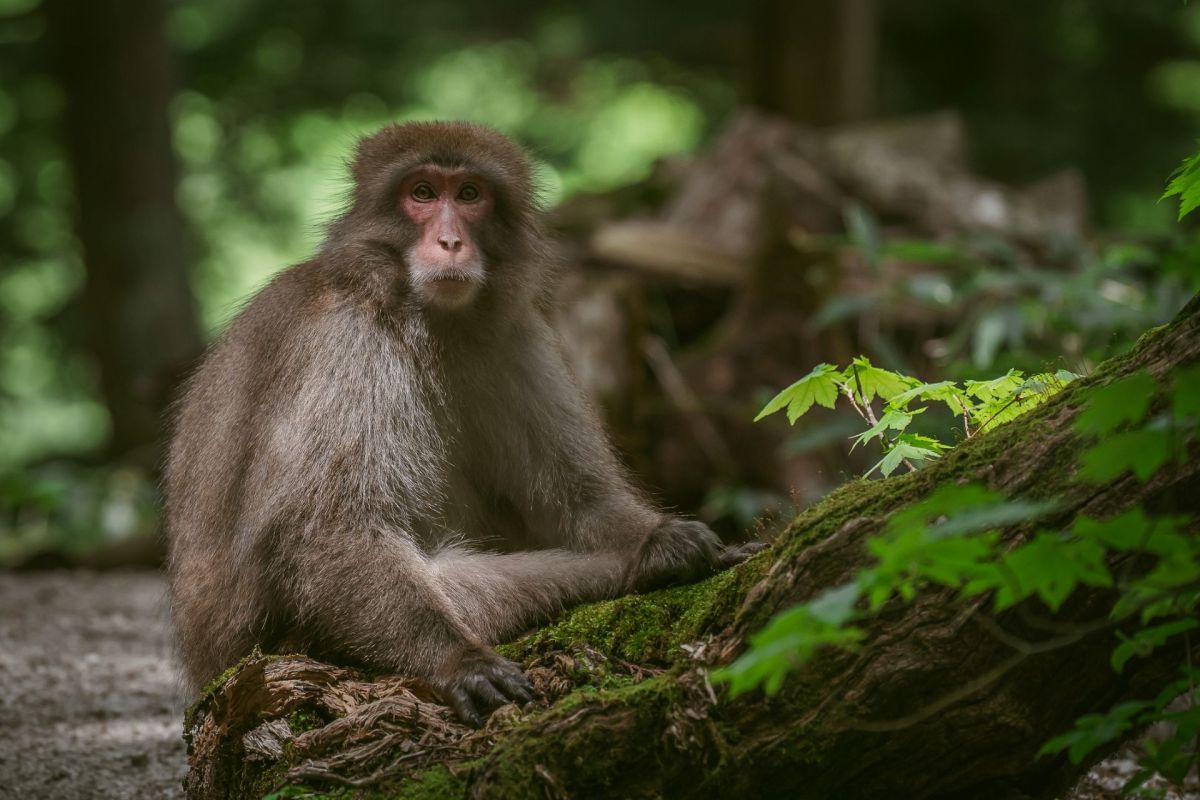
A new study found that monkeys spent extended time playing a touchscreen game even when no food reward was offered, a surprising result that has researchers taking a closer look at curiosity itself.
The unusual behavior suggests that, much like humans, monkeys may be naturally drawn to challenges that feel neither too easy nor too chaotic.
According to The Independent, researchers at Kyoto University examined curiosity in resident Japanese macaques with a touchscreen game inspired by hide-and-seek. The work, published in the journal iScience, was designed to test whether monkeys would engage with uncertain outcomes simply because they wanted to know what would happen next.
In the game, a monkey pressed one of several buttons, and a puppet then popped up somewhere else on the screen. Each button was tied to a different "noise" level, meaning the puppet's location was either more predictable or less predictable depending on the choice.
When scientists compared the monkeys' choices, the animals repeatedly went for the medium-noise option instead of the low-noise and high-noise alternatives. In other words, the macaques appeared to prefer a moderate level of uncertainty.
That pattern aligns with what researchers call the Goldilocks principle — the idea that curiosity is strongest when something is complex enough to stay interesting but not so confusing that it becomes overwhelming, per The Independent.
TCD Picks » Quince Spotlight
💡These best-sellers from Quince deliver affordable, sustainable luxury for all




The biggest surprise, however, may have been how long some monkeys kept playing: nearly 100 trials without any reward.
Researchers have long known that curiosity drives exploration, but they still do not fully understand why some forms of uncertainty draw interest while others do not. The findings could help scientists better understand how curiosity influences animal behavior beyond obvious survival needs such as eating and mating.
This matters because curiosity is closely linked to how animals learn about their environments. If scientists can better identify what naturally draws an animal's attention, they may be able to build better enrichment tools for animals living in labs or zoos.
The study also adds to a growing body of research showing that play and exploration are not trivial behaviors; they may be central to cognition, learning, and well-being.
For everyday readers, that broader lesson may sound familiar. Minds often stay more engaged when a task is challenging enough to feel rewarding but not frustratingly difficult.
And because the macaques appeared to seek out this middle ground on their own, the study offers a clearer picture of motivation that does not rely on external rewards alone.
For people, the takeaway is less about handing animals tablets and more about recognizing the value of meaningful stimulation. Whether for humans or other animals, environments that encourage safe exploration may support healthier, more engaged minds.

Get TCD's free newsletters for easy tips, smart advice, and a chance to earn $5,000 toward home upgrades. To see more stories like this one, change your Google preferences here.