


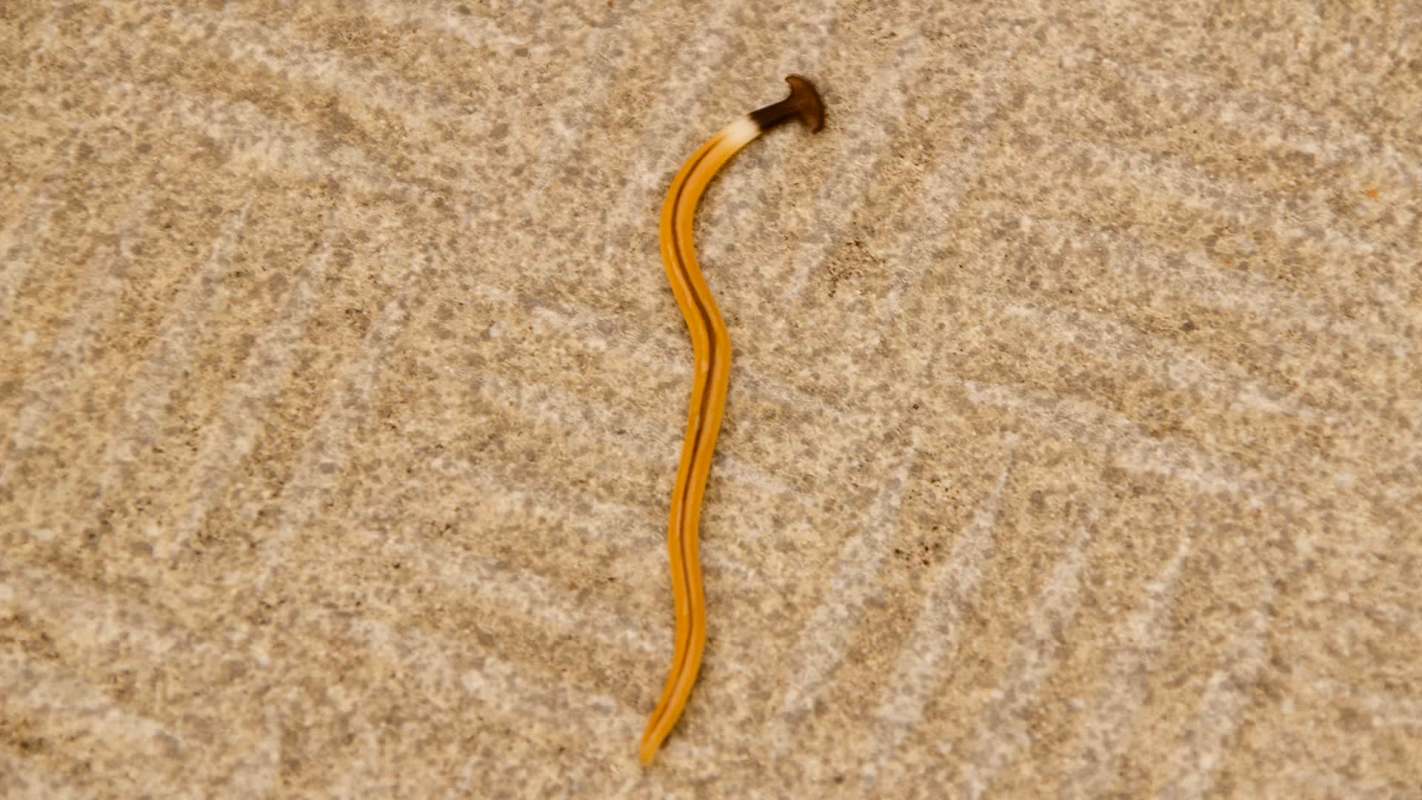
Move aside, hammerhead sharks, there's a much more menacing creature with a hammer-shaped head that is slithering its way through the Northeast.
A cluster of invasive hammerhead worms has been reported in New York, and while a shark may seem more threatening, these worms pose a serious problem for the entire ecosystem.
According to WBNG News, the sighting was reported by Conklin, New York, resident Amber Rockwell, who spotted five of the worms in her driveway. If you're thinking Rockwell should've just grabbed a shovel and chopped up the worms, though, that would only create a bigger problem.
Hammerhead worms can regenerate, so if you chop one in half, you will just create two worms. Some of these invasive worms also produce a neurotoxin called tetrodotoxin, the same as that of a pufferfish. While it doesn't pose much of a risk to humans unless ingested or gets into your eyes, it can irritate your skin and is potentially dangerous for pets.
Originally from Southeast Asia, hammerhead worms can grow up to 18 inches long and are incredibly difficult to get rid of without harming other creatures.
David Lodge, director of the Cornell Atkinson Center for Sustainability at Cornell University, explained that hammerhead worms likely arrived in the United States over a century ago via potted plants.
TCD Picks » Quince Spotlight
💡These best-sellers from Quince deliver affordable, sustainable luxury for all




"They were brought by humans accidentally, and they're really hard, if not impossible, to get rid of," Lodge told WBNG News. "And so we accidentally introduce species that can be killed individually when you find them, but there is no acceptable method of killing them broadly without killing other things. So like these other species, unfortunately, we're stuck with them."
Over the last 100 years, these invasive worms have gradually spread across the country, with sightings reported from coast to coast and even up in Canada — and news reports about sightings have only increased over the last few years. They're a threat to ecosystems because they prey on beneficial earthworms, which play a vital role in soil health.
Invasive species wreak havoc on ecosystems, as they spread quickly and often kill off native animals and plants. Burmese pythons — also from Southeast Asia — are currently eating their way through the Everglades in Florida, devastating animal populations.
The massive snakes reproduce in large numbers, up to 100 eggs in a single clutch, and they have no natural predator — except for humans now.
It's estimated that invasive species have cost the U.S. over $1.2 trillion since 1960, so their impact goes far beyond just environmental.
As for the hammerhead worms, if you run into one, be careful not to touch it. If you want to kill it, you can put it in a sealed container with salt or vinegar, or place it in the freezer for at least 48 hours.

Get TCD's free newsletters for easy tips, smart advice, and a chance to earn $5,000 toward home upgrades. To see more stories like this one, change your Google preferences here.







