


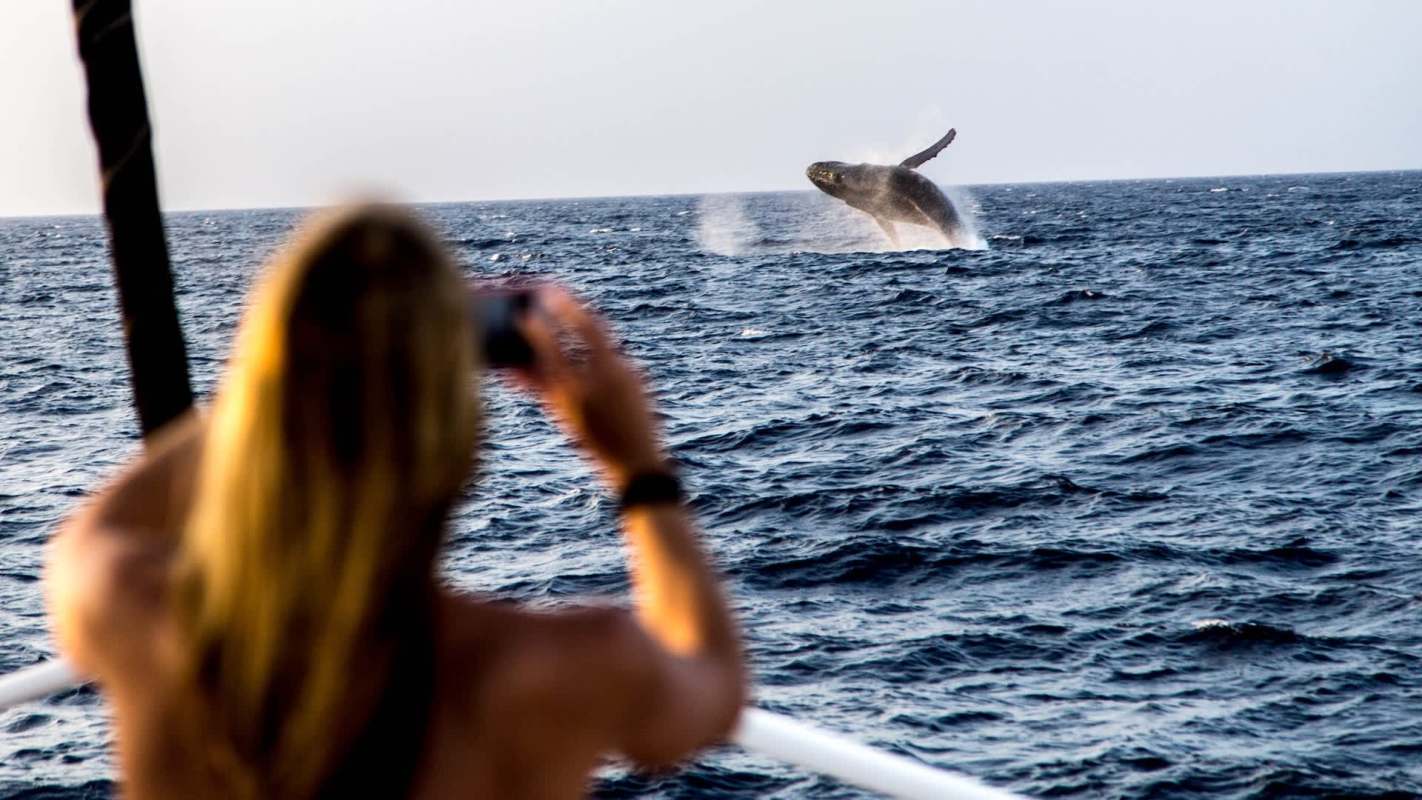
Before data centers began disrupting life on land, a noise pollution crisis was brewing in ocean waters. A new study examined how vessel traffic alters the behavior of marine animals.
What's happening?
For years, scientists have been investigating how ocean noise affects marine environments. The latest study, published in npj Ocean Sustainability in February, builds upon that knowledge by combining hundreds of peer-reviewed papers that span over 40 years of research.
All in all, researchers analyzed 1,850 comparisons of situations with and without vessels. They found that ocean traffic increased stress levels and forced large marine mammals, or "marine megafauna," to change their vocalization, migration, and feeding patterns. Threatened and endangered species appeared to be especially impacted by vessel activity.
"Even when vessels do not directly strike animals, their presence alone can disrupt feeding, movement, communication, and stress levels. These small, repeated disturbances can add up over time and affect populations," lead author Julia Saltzman, a doctoral student at the University of Miami's Shark Research and Conservation Program, said in a news release.
Why is this important?
The initial conclusion is likely not astonishing, especially given the results of past studies on marine noise pollution. However, the scientists also observed that certain marine megafauna, including large fish, sharks, and rays, were understudied compared to whales and dolphins.
This "critical gap" may mean the impacts of vessel noise on marine megafauna are more significant than realized. That could be a bad omen. Large marine animals transport nutrients, fertilize phytoplankton, and help regulate temperatures by sequestering carbon. Without them, the balance that sustains the food web and climate systems would unravel.
TCD Picks » Quince Spotlight
💡These best-sellers from Quince deliver affordable, sustainable luxury for all




What's being done about this?
The ocean is increasingly busy. In fact, U.N. Trade and Development estimates that over 80% of world trade occurs by sea.
Because animal habits, shipping routes, and weather patterns are dynamic, this presents a conservation challenge. As Earth.com noted in its coverage of the study, a "one-size-fits-all rule" for ocean use doesn't equate to year-round protection. But adaptive approaches can offer a way forward.
"Because vessel activity and wildlife distributions shift across space and time, static management approaches are not always sufficient to protect species from disturbance," said Catherine Macdonald, an associate professor in the Department of Environmental Science and Policy and director of the Shark Research and Conservation Program.
"Dynamic management strategies, including seasonal speed restrictions, adaptive buffer distances and targeted closures of key habitats, can provide flexible, evidence-based tools to reduce vessel impacts while allowing continued human use of the ocean."
|
Which of these savings plans for rooftop solar panels would be most appealing for you?
Click your choice to see results and earn rewards to spend on home upgrades. |
 Save $1,000 this year 💸
Get TCD's free newsletters for easy tips, smart advice, and a chance to earn $5,000 toward home upgrades. To see more stories like this one, change your Google preferences here.







