


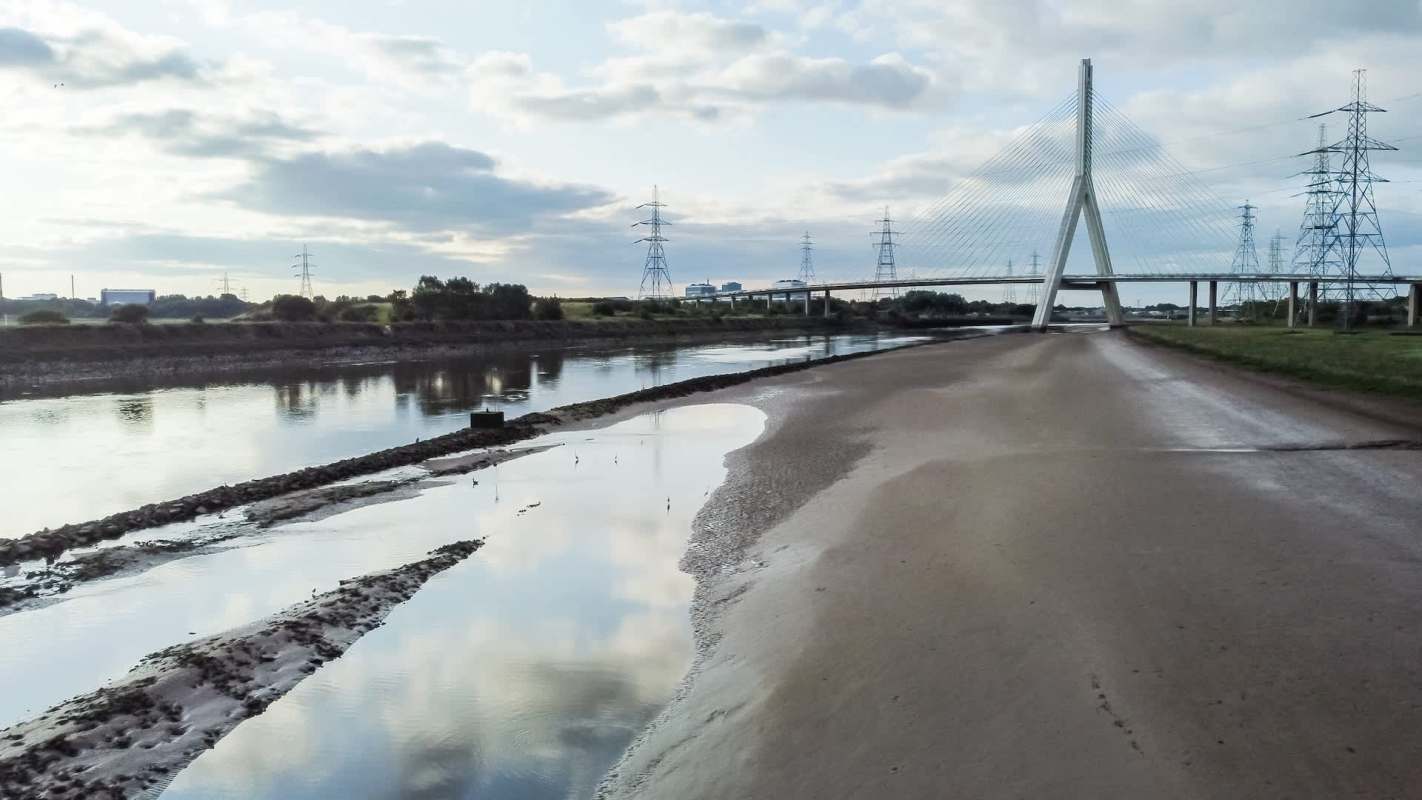
An independent research group has visualized what sea level rise could do to coastlines. It found several historic communities in the United Kingdom could be underwater in five years.
What's happening?
Climate Central used peer-reviewed research to develop user-friendly tools to show how the changing climate impacts daily lives. Its maps account for rising sea levels and coastal flooding; however, they do not incorporate flood simulations, erosion, rainfall, or storm intensity.
Local Welsh newspaper The Leader used the tools to examine how parts of Flintshire, Wales, could fare in the face of rising seas. "The map makes for grim reading for areas like Flint, Connah's Quay, Shotton, Greenfield, and Queensferry, which could be underwater by 2030," The Leader wrote.
Flint Castle and Connah's Quay Nature Reserve are among the landmarks that could be swallowed by the sea. One of the first castles to be built in Wales by King Richard I in the 1200s, Flint Castle was featured in Shakespeare's Richard II. As for the nature reserve, it is a popular recreational area and home to an array of flora and fauna.
Why is this important?
Flintshire has been inhabited for thousands of years. Now, its people may face displacement due to rising seas. The problem isn't isolated to one region. Islands and atolls across the Pacific Ocean are also at risk. In Tuvalu, the situation is so dire that mass migration is already underway.
"For decades, scientists have warned that our planet is facing a climate emergency that could alter life on earth for the foreseeable future," Climate Central wrote. "... Today, there is mounting evidence that the adverse impacts of climate change are growing more frequent and severe — forcing millions of people around the world to grapple with serious consequences, year after year."
TCD Picks » Quince Spotlight
💡These best-sellers from Quince deliver affordable, sustainable luxury for all




What's being done about this?
As frightening as warnings about sea level rise may seem, scientists aren't looking into a crystal ball and seeing the future. Rather, these predictions are scenario-based.
Points of analysis can include existing natural phenomena that may obscure climate trends, technological advancements, assumptions about human behavior (e.g., continued reliance on polluting fuels such as gas and oil), and factors still under investigation (e.g., underwater robots recently gave scientists fresh insights into ice-melt patterns in Antarctica).
Then, organizations like Climate Central can raise awareness about how to prevent or prepare for what may be down the road.
To that end, global renewable energy production continues to grow, reducing air pollution that is driving rising temperatures and sea levels. Meanwhile, coastal communities are adapting to rising seas through a combination of nature-based and engineering innovations, including oyster reef restorations, mangrove plantings, sea walls, and floating buildings.
Educating yourself about critical climate issues can empower you to make choices that contribute to a cooler, safer future.
|
What's the most you'd pay per month to put solar panels on your roof if there was no down payment?
Click your choice to see results and speak your mind. |
 $200 or more 💰
Get TCD's free newsletters for easy tips to save more, waste less, and make smarter choices — and earn up to $5,000 toward clean upgrades in TCD's exclusive Rewards Club.







