


Even with a gentle and innocent name, some invasive plant species can topple the balance of a region's ecosystem.
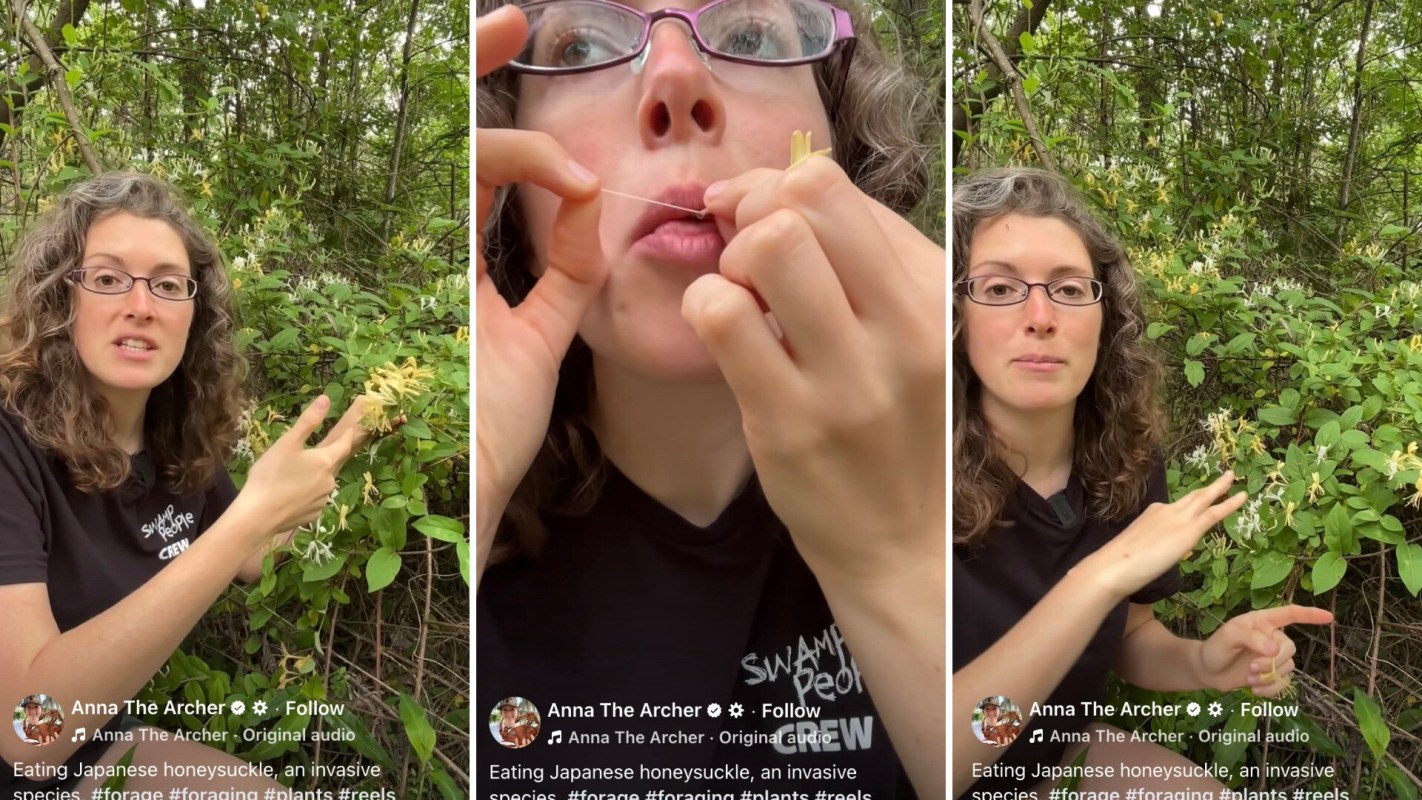
As Anna Ribbeck (@annathearcher), star of the TV series "Swamp People," explained on Facebook, this includes the unassuming Japanese honeysuckle plant.
With a degree in horticulture from Louisiana State University, Ribbeck knows a thing or two about plant life. She was excited to offer up this delicious piece of advice for when you come across Japanese honeysuckle on your property.
"There is a sweet nectar in these flowers that you can eat," said Ribbeck. "At the base of these flowers you're going to find a sweet treat."
As Ribbeck noted, once the Japanese honeysuckle has been properly identified, you can easily find the tasty nectar. Simply pinch the bottom of the flower and pull out the pistil, which is a flower's female reproductive part.
Ribbeck even suggested that the plant's nectar can be infused in items such as vodka, butter, and even syrup.
TCD Picks » Quince Spotlight
💡These best-sellers from Quince deliver affordable, sustainable luxury for all




While the plant offers up a tasty little reward for those who find it, Anna ended her demonstration with one final piece of advice.
"Please note, do not plant the Japanese honeysuckle. It is an invasive species in the United States and it displaces native vegetation," she explained.
As an alternative, she recommended similar plants such as coral honeysuckle or cross-vine. These two plants provide better support for local ecosystems specifically in the southeastern U.S. To find native plants in your area, use the National Wildlife Federation's Native Plant Finder.
Invasive plants can outcompete native plants for resources like sunlight, water, and nutrients. Over time, this can disrupt food webs by replacing essential food and habitat for wildlife that are accustomed to native plants. These plants can even worsen soil and water quality, making your landscaping job much more difficult.
|
What's the most you'd pay per month to put solar panels on your roof if there was no down payment?
Click your choice to see results and speak your mind. |
 $200 or more 💰
 Over in the comments section, a number of users shared their own experiences with Japanese honeysuckle plants.
"I ate them all the time when I was a little kid, I loved them and I still do, they grow wild in Arkansas," wrote one commenter.
"Our neighbor had them growing along her chain link fence and I would stand at the fence and eat them every day," noted another user.

Get TCD's free newsletters for easy tips to save more, waste less, and make smarter choices — and earn up to $5,000 toward clean upgrades in TCD's exclusive Rewards Club.







