


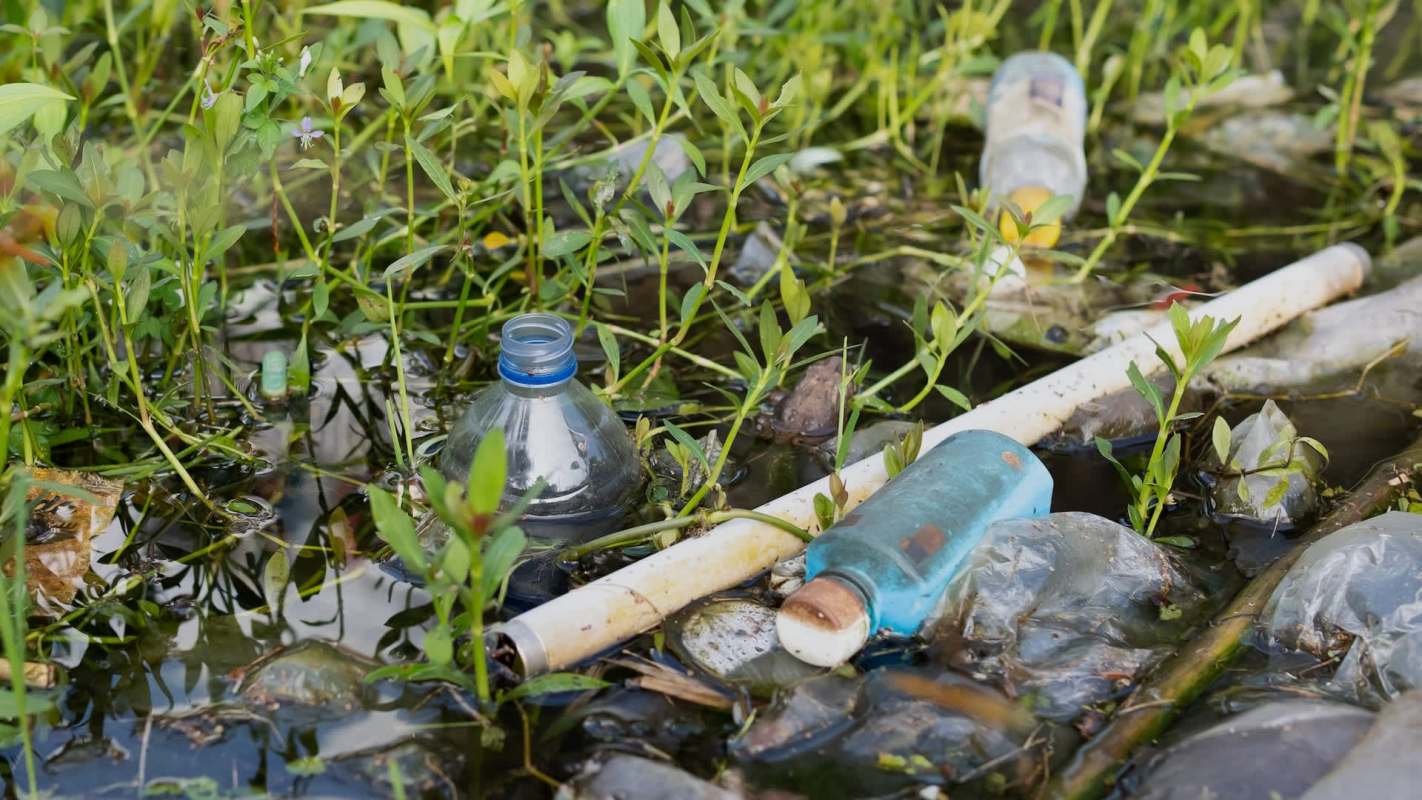
A new study, published in Science Advances, found that "microbubbles" are eroding plastic in the water, contributing to a higher release of microplastics.
What's happening?
A research team from Trinity College Dublin uncovered the effect that microbubbles are having on plastic in oceans and other waters. It found that "bubble-induced surface erosion" on plastic releases micro and nanoplastics (MNPs) into water.
"Our research shows that whenever plastic comes into contact with water, air bubbles that form on plastic surfaces cause erosion and the release of invisible MNPs," senior author of the study, John Boland, said in a statement.
"Microbubble-induced erosion of plastic surfaces occurs independently and in parallel with bulk mechanical breakdown or the UV-induced oxidative degradation," the authors wrote in the study.
Microplastics are small pieces of plastic, less than five millimeters in length, that are found everywhere in nature, from oceans to the human body. Scientists have viewed UV rays as a driver of plastic degradation that leads to the formation of microplastics. Now, this study shows another driving force in the creation of microplastics.
"Plastic degradation is an invisible threat to the environment and human health," Boland said. "Society urgently needs to come to grips with the enormity of the challenge posed by our ubiquitous use of plastics."
TCD Picks » Quince Spotlight
💡These best-sellers from Quince deliver affordable, sustainable luxury for all




Why is this study important?
While scientists are still uncovering the harmful effects of microplastics, they have been linked to fertility issues, an increase in cancer risk, liver fibrosis, and reductions in blood flow. And they are unavoidable, with an estimated 24.4 trillion pieces of microplastics in our oceans alone, with the number potentially even higher.
With an estimated 8.8 million tons of plastic entering oceans each year, the number is likely to climb. The study highlights the potential for even more microplastics entering the oceans with bubble erosion, making microplastics even more pervasive.
The scientists also recorded a higher rate of bubble erosion at higher temperatures. According to the study, they recorded "exponential increase in bubble density observed at higher temperatures across various water types."
According to the National Oceanic and Atmospheric Administration, the planet has warmed by two degrees Fahrenheit since the 1800s. The ocean absorbs 90% of the planet's excess heat, providing an even greater opportunity for bubble erosion to result in microplastics.
|
What's the most you'd pay per month to put solar panels on your roof if there was no down payment?
Click your choice to see results and speak your mind. |
 $200 or more 💰
 What's being done about microplastics?
"Removing plastic waste from the environment is an important first step, but it is not enough," Boland said.
Some groups, including the Ocean Cleanup and Seabin, are dedicated to removing plastic from the oceans. By using reusable water bottles and reusable grocery bags, you can help decrease your own plastic usage and reduce the amount of plastic entering the environment.
For microplastics that are already in the environment and in our bodies, scientists are looking at ways to decrease the harmful effects of microplastics. One report found that probiotics may be helpful in fighting the toxins in microplastics.
Other groups are looking to reduce the amount of microplastics entering your body, with new kinds of water filters. One startup claims to be able to remove microplastics with an expensive blood procedure that has grabbed the attention of some celebrities.

Get TCD's free newsletters for easy tips to save more, waste less, and make smarter choices — and earn up to $5,000 toward clean upgrades in TCD's exclusive Rewards Club.






