


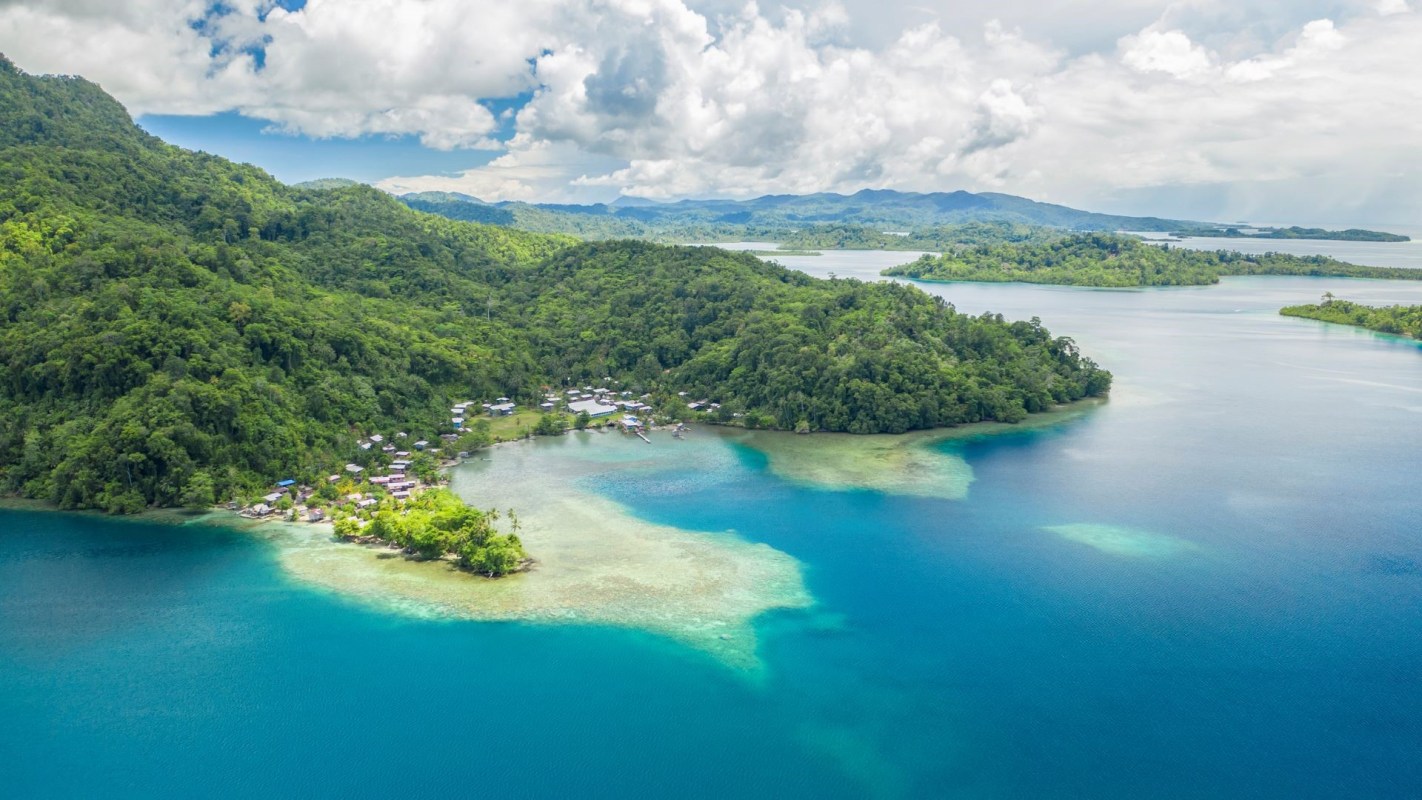
As a warming atmosphere melts polar ice sheets and raises sea levels worldwide, many low-lying islands face the possibility of eradication.
Experts suggest that submergence is no longer a distant hypothesis but a pressing reality.
What's happening?
Islands and atolls across the Pacific are at risk — from Tonga to Fiji to Samoa to the various islands composing Tuvalu.
According to New Scientist, sea levels in the South Pacific are so high that the majority of Tuvalu could face complete or near-complete immersion at high tide by 2100.
It's not just a question of water levels, though. Frequent flooding threatens local communities and infrastructure while gradually eroding coastlines, and the inundation of saltwater from the ocean damages crop yields and infiltrates drinking water supplies.
These same regions experience severe drought cycles when the flooding temporarily abates, increasing food and water insecurity.
TCD Picks » Quince Spotlight
💡These best-sellers from Quince deliver affordable, sustainable luxury for all




Why are rising Pacific levels concerning?
Inhabitants of these regions may soon be forced to relocate. In the more fortunate cases, space permitting, communities may be shifted inland to higher ground within the same island. Otherwise, in cases as dire as Tuvalu's, residents may have to abandon their homes altogether, sacrificing pieces of their culture and way of life in the process.
"People who have been relocated are heartbroken because it's a whole change of a life, and they keep on yearning for their home," explained one member of Tonga's Civil Society Forum, per New Scientist.
It's a phenomenon known as "climate migration": the process by which people become refugees as the land they live on becomes uninhabitatable.
While small Pacific Island nations may feel the effects of sea level rise first and most intensely, the rest of the world is far from unaffected by today's human-driven climate catastrophe.
|
What's the most you'd pay per month to put solar panels on your roof if there was no down payment?
Click your choice to see results and speak your mind. |
 $200 or more 💰
 Warmer, higher waters supercharge extreme weather events globally by adding moisture and intensity to hurricanes, floods, and storms.
Temperatures are increasing at an unprecedented rate as the carbon pollution from our energy production processes traps heat within our atmosphere.
Meanwhile, most of the planet is experiencing desertification to some degree, and as our land dries out, so do our natural resources.
What's being done to protect Pacific Island communities?
Although many climate refugees have the support of foreign governments in theory, it's far from enough in practice.
Australia, for instance, offers residency by ballot system to current Tuvaluans in crisis, but the final program only extends to 280 individuals each year out of the thousands who apply.
Meanwhile, migration programs like these function a little like slapping a Band-Aid on an open wound — they advance relocation without attempting conservation.
Earnest island conservation efforts, unfortunately, have been left to the inhabitants themselves, without substantial external support.
Per New Scientist, solutions like sea wall building and land raising are temporary, less reliable fixes, but strategies like planting rhythm modulation and coastal mangrove restoration may help prolong the security of these climate-afflicted regions.

Get TCD's free newsletters for easy tips to save more, waste less, and make smarter choices — and earn up to $5,000 toward clean upgrades in TCD's exclusive Rewards Club.







