


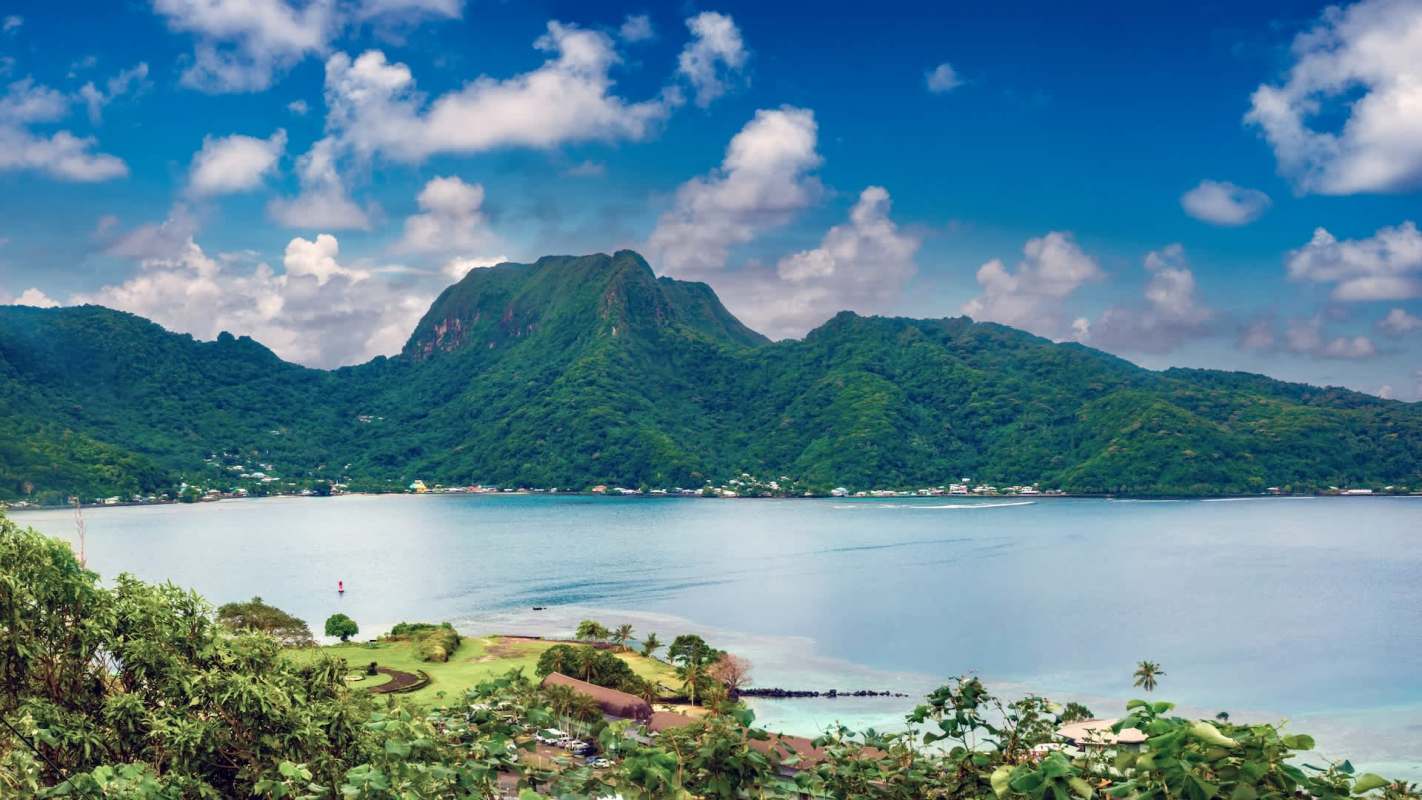
Giant clams in American Samoa are thriving, and it's thanks to local communities.
Researchers from the University of Hawai'i at Mānoa found that giant clams in areas managed by local villages exhibited higher density and larger sizes.
Surveys were taken across 88 sites in American Samoa from 2022 to 2024. According to findings published in the journal PeerJ, clam density was more strongly linked to island rather than time.
The experts found strong evidence that linked community management of marine reserves to higher population density of the giant clam. Tutuila, the most highly populated island of American Samoa, had a high density despite a high level of human activity.
"Villages that enforce traditional methods of resource protection typically enforce from within the local population of residents," the authors wrote.
"This not only increases buy-in of the local population, but also allows for multiple residents to act as lookouts for potential poaching and provide early warning systems to prevent harvest."
TCD Picks » Quince Spotlight
💡These best-sellers from Quince deliver affordable, sustainable luxury for all




Giant clams are a critically endangered species, according to a University of Colorado Boulder assessment. Septic system overflows, overfishing, and rising ocean temperatures have all contributed to the decline of giant clams. Some estimates indicate that clam populations have declined by 80% over the last century.
"Many expected that giant clam populations would be in sharp decline, especially near populated islands," said study author Paolo Marra-Biggs, a Ph.D. student at UH Mānoa, per Phys.org.
"Instead, we found that clam abundances have remained relatively stable over the past 30 years, and in some areas have maintained high abundances. The biggest surprise was that village-managed closures outperformed federally protected no-take areas, highlighting the efficacy of cultural stewardship."
While the US National Oceanic and Atmospheric Administration has outlined its own guidelines for giant clam conservation, the study highlights how local efforts may be more effective.
|
Do you think America does a good job of protecting its natural beauty? Click your choice to see results and speak your mind. |
 Definitely 👍
 "Our data show that in areas where federal no-take protection already exists, clam populations were among the lowest," said co-author Robert Toonen.
"Instead, areas under traditional Indigenous management had some of the highest densities of giant clams. If giant clams were listed as endangered species, these traditional practices that have maintained high clam densities in the region would become illegal."
Giant clams are crucial in maintaining coral reefs. According to The International Marine Science and Carbon Sequestration Foundation, "Clams release essential nutrients like nitrogen and phosphorus, which stimulate the growth of corals and other reef organisms."
Prosperous coral reefs are important to protect marine life and shield coastlines from extreme storms. Without coral reefs, aquatic ecosystems could collapse. Clams themselves also act as habitats and food for marine life.
"If the giant clam becomes extinct, it will have significant ecological impacts on tropical oceans," said Ruiqi Li, a researcher at the CU Museum of Natural History. "This is a major issue in the conservation world. … Marine invertebrates are very neglected."
The higher density of the giant clams in American Samoa shows the importance of indigenous practices and local action in protecting marine life. Last year, American Samoa also took steps to halt seabed mining, which could destroy aquatic habitats and pollute waters.
"I am grateful to be able to work alongside local agencies and resource managers who care deeply about their reefs," said Marra-Biggs.
"This study intersects science, culture, and conservation, and seeing our results highlight the value of traditional management and support community decision-making made the work especially meaningful. It is an honor to contribute to the stewardship of the absolutely stunning reefs of American Samoa."

Get TCD's free newsletters for easy tips to save more, waste less, and make smarter choices — and earn up to $5,000 toward clean upgrades in TCD's exclusive Rewards Club.







