


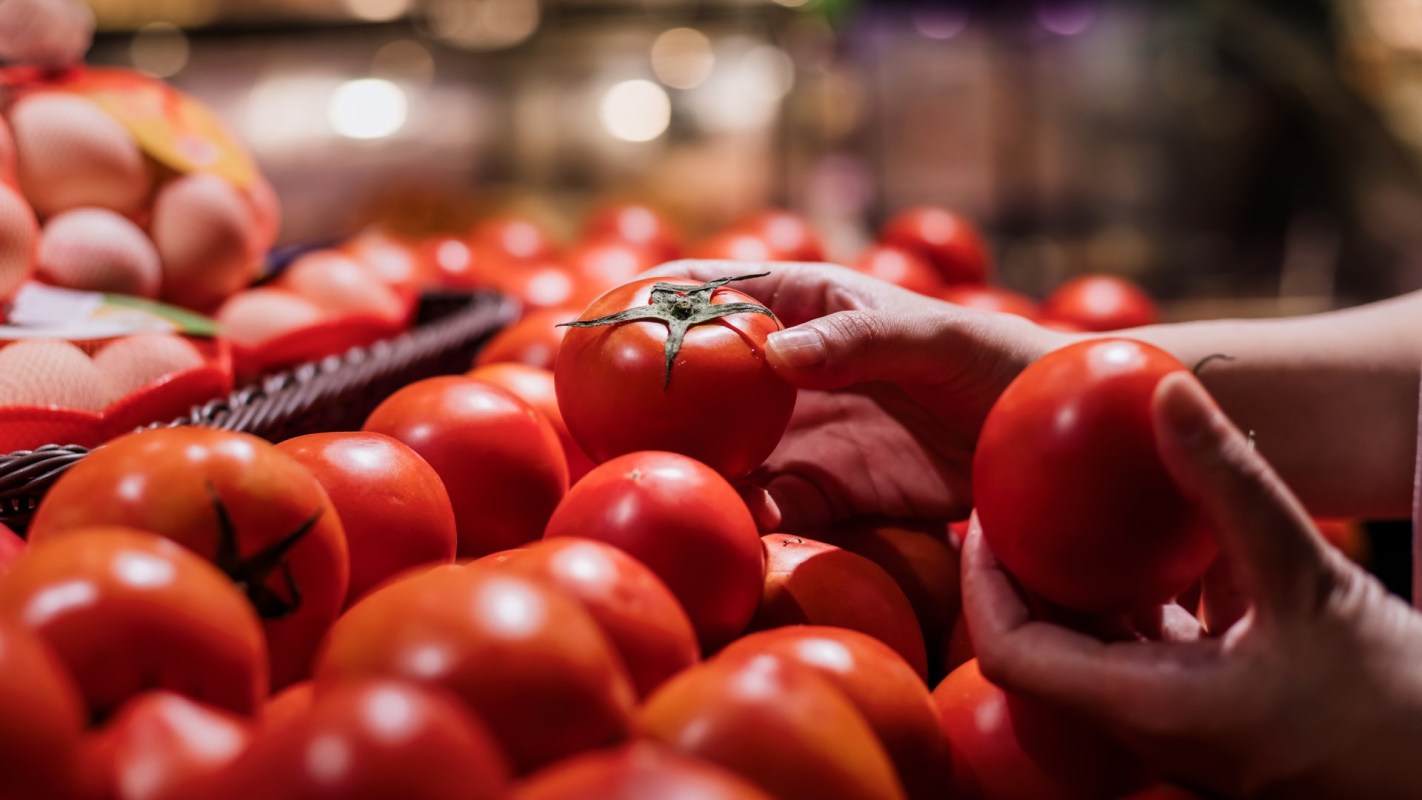
Shoppers across parts of southern India are feeling the squeeze at the grocery store as produce prices have surged, with tomato prices in particular on the rise.
What's happening?
The Deccan Chronicle reported that tomato prices have climbed, especially in the Chittoor belt, home to Madanapalle — one of Asia's largest tomato trading hubs.
At the wholesale market, first-grade tomatoes recently sold for ₹610 (about $6.78) per 10 kilograms, up from ₹440 (about $4.89) a week earlier. Second-grade tomatoes rose from ₹340 (about $3.78) to ₹480 (about $5.33). Retail prices also rose from ₹65 (about $0.72) to ₹80 ($0.89) per kilogram in many towns and topped ₹90 (about $1) per kilogram in some places.
Officials said persistent rains following Cyclone Montha caused crop losses.
"Nearly 10,000 hectares of tomato crops in Madanapalle, Tamballapalle, Punganur and Palamaner have suffered damage from excess moisture, rotting and pest infestation," a marketing official said, per the Deccan Chronicle. "Farmers were expecting a good season, but low yield has pushed prices up."
As a result, daily arrivals at the market dropped to about 140 metric tons, which is much lower than the average.
TCD Picks » Quince Spotlight
💡These best-sellers from Quince deliver affordable, sustainable luxury for all




It hasn't been limited to tomatoes, either. Carrots, beetroot, green chillies, brinjal, capsicum, drumstick, and even leafy greens have all seen prices jump, with many vegetables now selling between ₹50 (about $0.56) and ₹110 (about $1.22) per kilogram.
Why are rising food costs important?
For households already dealing with tight budgets, rising produce prices mean higher food bills and more difficulty putting food on the dinner table. According to the Deccan Chronicle, traders noted that the Karthika month, when vegetarian consumption traditionally increases, has added pressure to demand. To deal with it, shoppers are buying smaller quantities or switching to cheaper varieties.
This price surge also highlights how increasingly erratic weather — heavier rains, stronger storms, and heat waves — is disrupting food production all around the world. When crops fail or yields drop, the effects ripple outward, from farmers who lose income to families who pay more for staples. We've seen it in other regions and with other foods, from meat prices jumping in the U.S. to spikes in coffee prices, underscoring how vulnerable grocery costs are to environmental changes.
What can we do about rising food prices?
Planning ahead can help soften the blow at the checkout. Shopping seasonally, comparing store prices, and reducing food waste can make a difference in your grocery bill. These tips for shopping smarter at the grocery store offer practical strategies to save money.
In the longer term, experts emphasize the need for more resilient farming practices and better crop protection. These steps could prevent future shocks from hitting farmers and families as hard. Plus, addressing the underlying causes for rising global temperatures — burning planet-warming coal, oil, and gas — is a key step to slowing the climate shifts contributing to extreme weather.
|
What is the biggest reason you don't grow food at home? Click your choice to see results and speak your mind. |
 Not enough time ⏳
Get TCD's free newsletters for easy tips to save more, waste less, and make smarter choices — and earn up to $5,000 toward clean upgrades in TCD's exclusive Rewards Club.







