


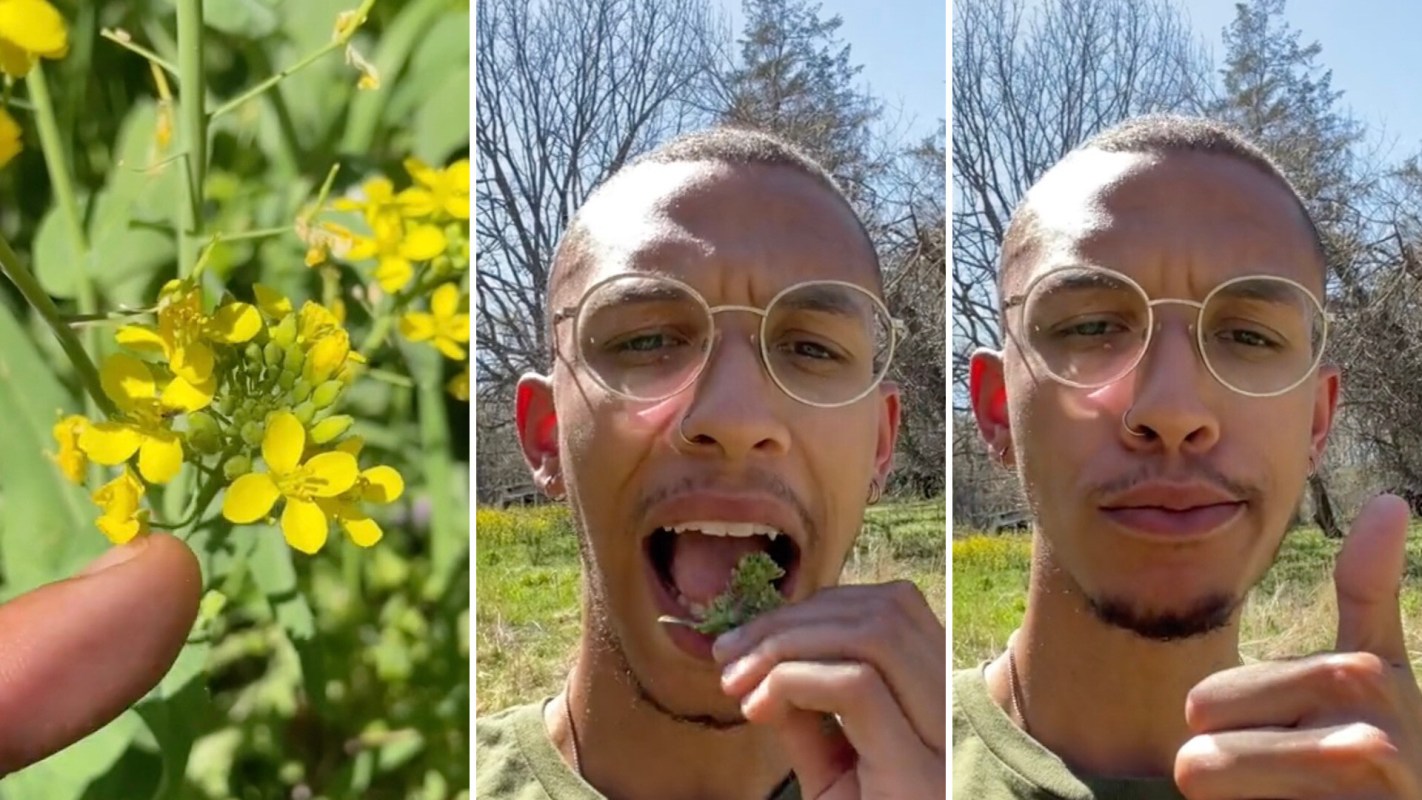
A TikTok creator has shared a tasty way to deal with a destructive invasive plant: eat it.
In the clip from Sustainability Matters' Kenny (@sustainabilitymattersva), the creator stands in a field overrun with field mustard. He explains that the invasive plant can spread widely and disrupt ecosystems — but also happens to be edible if you know what you're doing.
@sustainabilitymattersva An invasive on the page??? Well, we aren't telling you to plant it … we're telling you to eat it🍴🌼 Field Mustard (Brassica rapa) is an invasive species brought by European settlers in the 1700s for food and medicinal purposes. The leaves make a great addition to salads and you can even make mustard out of the leaves. Personally, we like the flower buds because they taste just like broccoli 🥦 #sustainability #conservation #edibleplants #foraging #wildfood #invasiveplants #plantsofinstagram #forage ♬ original sound - Sustainability Matters
"Thankfully, the entire plant is edible. So you can do your part to help stop its spread by simply eating it," Kenny says. "I tried a flower bud, and it tasted exactly like broccoli."
The advice is great news, especially among sustainability-minded viewers and home gardeners frustrated by invasive plants taking over fields, roadsides, and backyards. Invasive species like field mustard spread aggressively, often outcompeting native plants for space, sunlight, and nutrients.
Adding tasty field mustard to your home menu can save you money on produce at the grocery store. Foraging can also help manage the plant's spread naturally without using toxic pesticides or expensive removal methods.
Kenny also warns to take care when foraging, as some field mustard lookalikes can actually be toxic. Always be certain of what's on your plate before you eat it.
TCD Picks » Quince Spotlight
💡These best-sellers from Quince deliver affordable, sustainable luxury for all




Unchecked invasives can dramatically alter ecosystems by reducing biodiversity and destabilizing food chains. While eating them isn't a cure-all, community awareness and responsible management can help restore balance over time. Invasive plant control can even help native species rebound, improving soil health and habitat resilience.
Many other invasive plants are edible like Japanese knotweed and wineberry. Readers interested in foraging safely can check out tips from resources like the Institute of Culinary Education and from expert foragers like Robin Greenfield. But the important thing is to always do your research and never eat what you can't 100% identify.
"These grow in my backyard," one commenter responded.
Another user added, "I actually grew up eating this! Boiled, stir fried. Pretty good!"
|
What's the most you'd pay per month to put solar panels on your roof if there was no down payment?
Click your choice to see results and speak your mind. |
 $200 or more 💰
Get TCD's free newsletters for easy tips to save more, waste less, and make smarter choices — and earn up to $5,000 toward clean upgrades in TCD's exclusive Rewards Club.







