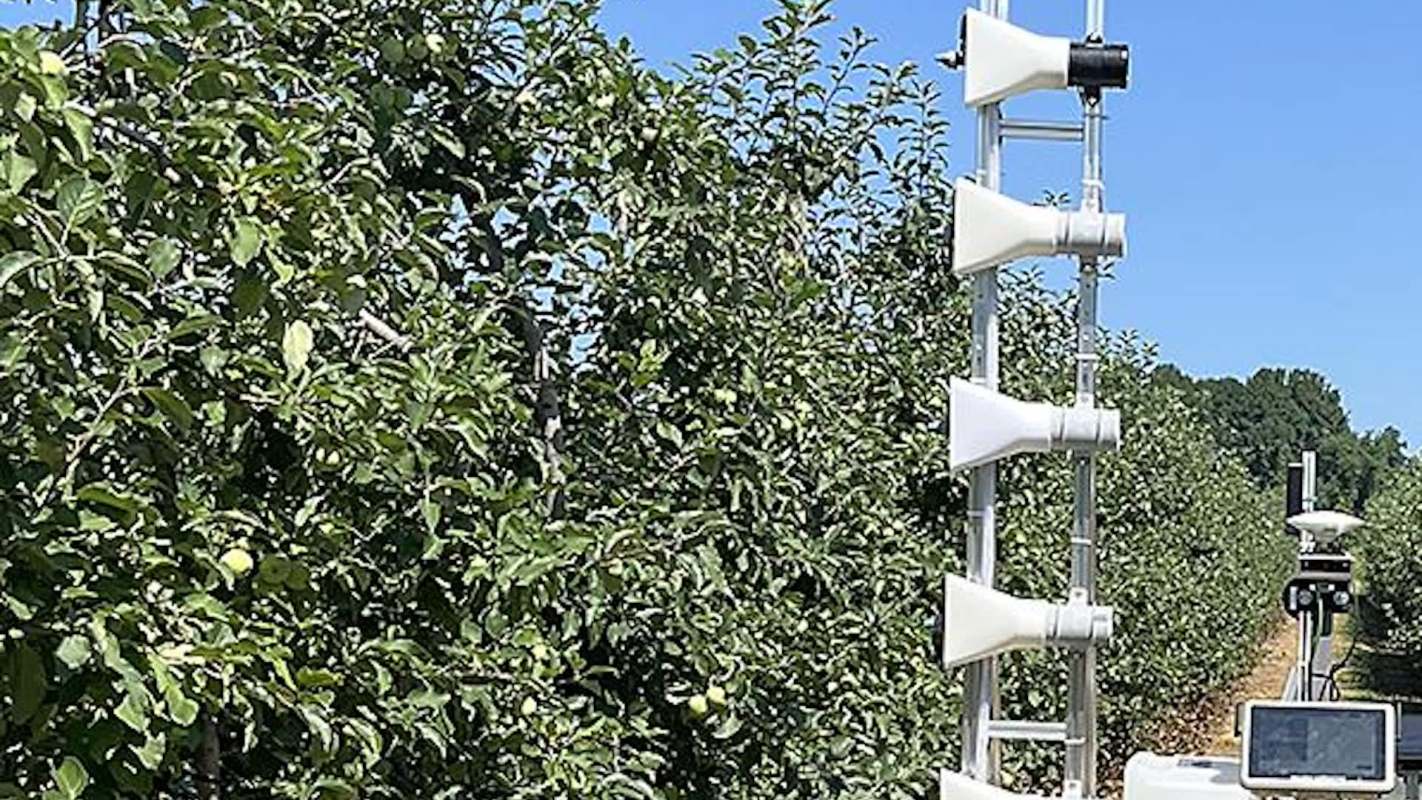
A handpicked team of experts is being trained at Penn State to become envoys for artificial intelligence.
The researchers are going to learn how AI can help orchard tenders grow better crops in changing conditions and then share the insight abroad, according to a news release.
"They'll be trained by a diverse team of experts and get opportunities to grow professionally — through research, mentorship, career planning, and public speaking. By the end, these doctoral fellows will become leaders in using AI to improve farming and adapt to climate change," associate professor Long He, the project leader, said.
It's an interesting project with clear pros and cons. Expanded AI adoption among farmers can expedite solutions for diseases, pests, and other tree ailments spurred by our overheating planet. NASA has linked Earth's warming to air pollution largely created by burning dirty fuels.
But AI data centers are sucking up electricity at an exceptional rate, ironically increasing demand from fossil-fueled power grids. Large computing hubs also use loads of water for cooling — up to 5 million gallons daily. That's enough to serve a town of up to 50,000 people, the Environmental and Energy Study Institute reported.
"Just because this is called 'cloud computing' doesn't mean the hardware lives in the cloud. Data centers are present in our physical world, and because of their water usage, they have direct and indirect implications for biodiversity," Noman Bashir, a fellow and postdoctoral student at the Massachusetts Institute of Technology, said in a report.
TCD Picks » Quince Spotlight
💡These best-sellers from Quince deliver affordable, sustainable luxury for all




The three-year Penn State program is powered by more than $738,000 in government and university funding, leveraging experts from multiple disciplines.
"These students will learn how to apply AI and precision tools to solve real problems in tree fruit farming," He said in the release.
Fast computing can help expedite advancements across all sorts of fields, including genetics. At the University of Maryland, experts tinkered with apple genes to create varieties that can withstand intensifying heat waves. Scientists elsewhere are also pursuing genes that can help crops survive extreme weather.
AI processing can be a boon to the work. Its power demand can be offset by cleaner solar energy. Companies such as Meta are already investing in renewable electricity to power data centers. What's more, sunrays can be harnessed at home to charge our phones, laptops, and other devices, too.
|
Should we use robots to help grow our food?
Click your choice to see results and speak your mind. |
 Definitely 🤖
 Upgrading to modern appliances, such as energy-saving heat pumps, can be combined with solar to reduce or even eliminate your electric bill. The Cool Down's Solar Explorer can match you with trusted partners to get started with curated quotes and connections to vetted installers in your area. The insight can save you up to $10,000.
At Penn State, one of the goals of the AI training project is to foster collaboration between academia, industry, and farmers.
"Our hope is that the doctoral students trained in our program emerge as scientists ready to lead innovation in climate-smart agriculture," He said.

Get TCD's free newsletters for easy tips to save more, waste less, and make smarter choices — and earn up to $5,000 toward clean upgrades in TCD's exclusive Rewards Club.