


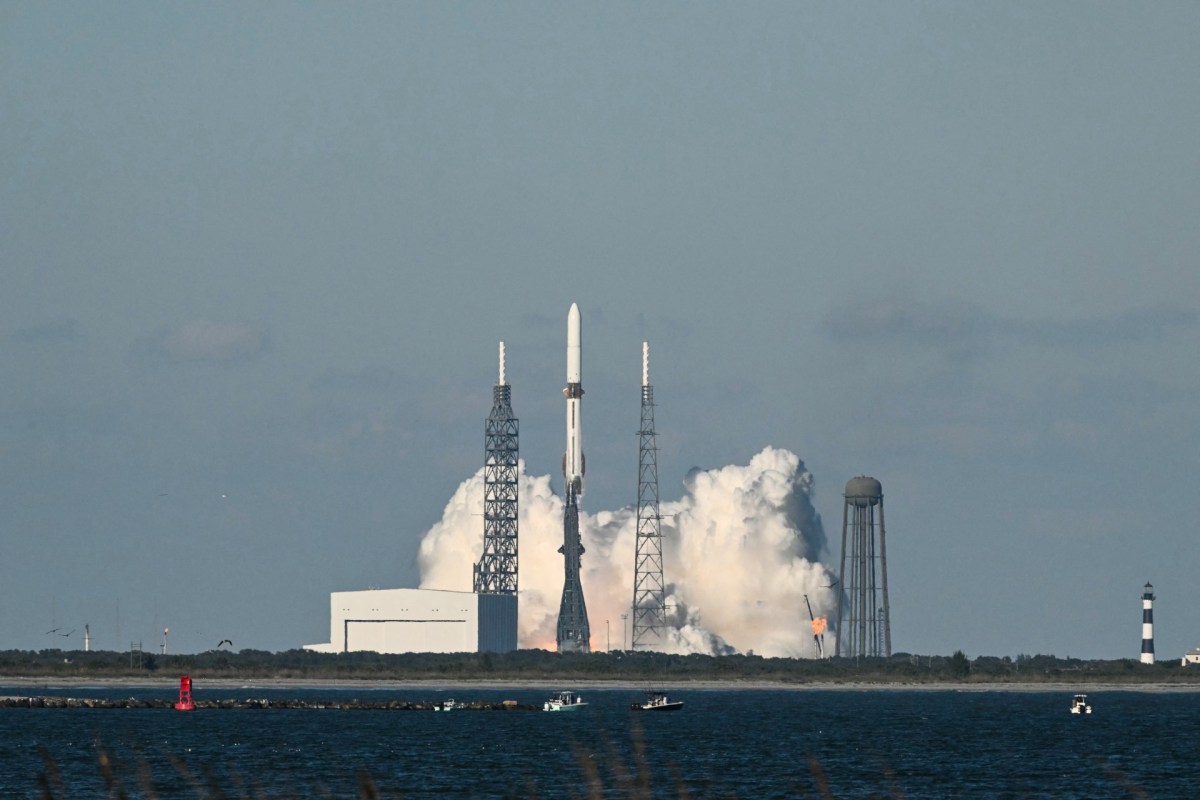
Powering and cooling the data centers that fuel the AI boom is a major problem. Thus, Elon Musk and Jeff Bezos are dreaming up a solution that is literally out of this world, and arguably too good to be true.
What's happening?
The Wall Street Journal reported on efforts by Musk's SpaceX and Bezos' Blue Origin to build orbital AI data centers — satellites equipped with advanced computing chips for data centers that employ space-based solar power.
Blue Origin has been tackling the tech for over a year, and SpaceX is aiming to create an $800 billion share sale concentrated on an improved version of its Starlink satellites that can pull off the feat.
Challenges include the expense associated with sending thousands of satellites into space and the myriad technical challenges that present themselves once there.
Contrary to popular belief, heat does not actually dissipate easily in the vacuum conditions of outer space. Instead, hot objects like computer equipment have nothing to transfer their heat to directly, more akin to how double-walled stainless steel tumblers retain heat so well due to a vacuum of air in between.
As a result, cooling data center equipment would actually be more difficult in space than on Earth. Despite those obstacles, there is optimism around this foray.
TCD Picks » Quince Spotlight
💡These best-sellers from Quince deliver affordable, sustainable luxury for all




"[It's] been an idea for years, but it has required launch and satellite costs to come down," said Will Marshall, chief executive of operator and builder Planet Labs. "We are nearing that point."
Why is Bezos and Musk's race to orbital data centers important?
Orbital data centers are a tantalizing prospect. On Earth, these centers demand immense energy, straining grids and contributing to pollution, as many rely on energy generated by burning oil and gas. Meanwhile, clean energy from the sun is abundant in space, where solar panels can function for continuous or at least much longer unobstructed periods.
So what's the reason to be skeptical? For one thing, you have to look at the track record of tech big-thinkers like Elon Musk. This is a big and splashy idea, which could attract billions. That doesn't mean it works out, or that it's the best way to proceed.
Instead of pouring billions into unproven tech, investing in Earth-based solutions to the problems posed by data centers is an alternate path. That includes moves like supporting clean energy production, or other non-carbon-polluting energy sources like nuclear fission.
A bigger swing could involve taking on nuclear fusion. Instead, Musk and Bezos are chasing a far-out solution that may be a bust.
What's being done about the race for orbital data centers?
SpaceX and Blue Origin aren't alone in tackling this technology, with tech heavy-hitters like Google, OpenAI, IBM, and a number of startups in various stages of working on their own plans.
|
Would you ever want to travel to space? Click your choice to see results and speak your mind. |
 Sign me up 🚀
 There's still plenty to figure out, and bringing down the costs of rockets is at the top of the list. With more demand for launches, efficiencies could arise with more aerospace companies entering the fold. Then, radiation, cooling without direct convection or conduction, and lag issues need to be solved to make the tech viable.
Jonny Dyer, CEO of Muon Space, has consulted with Google about the topic and expressed confidence that the obstacles could be figured out.
"I think those engineering challenges are all solvable," he told the Wall Street Journal. "It ultimately comes back to launch."

Get TCD's free newsletters for easy tips to save more, waste less, and make smarter choices — and earn up to $5,000 toward clean upgrades in TCD's exclusive Rewards Club.






