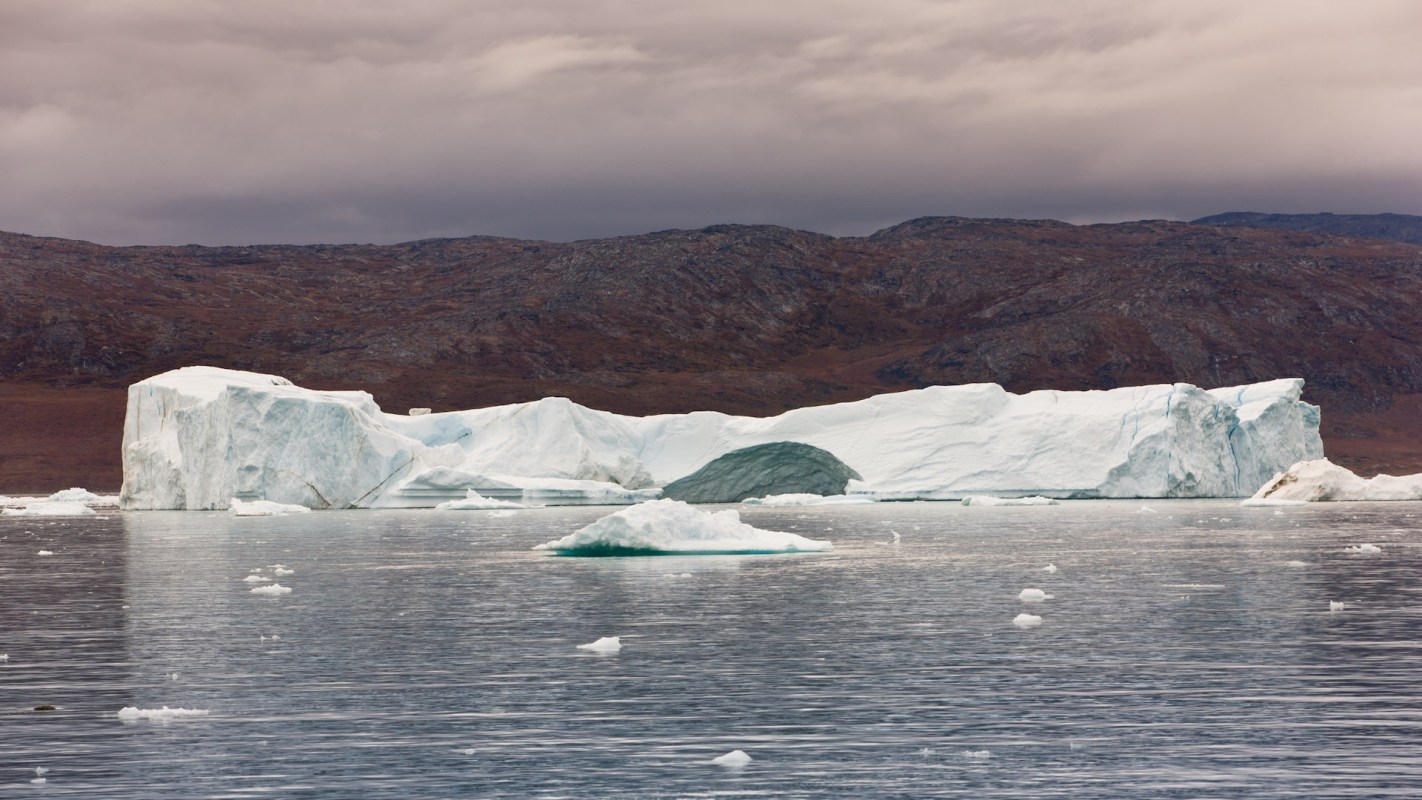
To plan for the future, it's a good idea to examine what has happened in the past. A new study looked back to the distant past to uncover clues about what may lie ahead for Greenland's ice sheet.
What's happening?
Researchers from the University of Connecticut investigated the impact of atmospheric rivers on the Arctic during the last interglacial period (approximately 115,000 to 130,000 years ago). The findings revealed some troubling signs for the future.
In simple terms, atmospheric rivers are long, narrow bands of concentrated vapor that resemble rivers in satellite imagery, per NOAA. They can release massive amounts of rain or snow when they reach land. They are typically found in mid-latitudes but sometimes get into the higher latitudes of the Arctic.
The last interglacial period was characterized by sustained global temperature increases, which can provide valuable insights into better understanding the present situation. Atmospheric rivers could impact Greenland's ice sheet in different ways.
On the plus side, they could deliver huge quantities of snow to shore up the ice. However, it's just as probable that the rivers will bring excess heat and rainfall, accelerating the Arctic's worrying decline. Elevation is key. At higher elevations, the rivers release snowfall, while at lower elevations, it's rain that hastens ice melt.
One of the study's authors, Ph.D. student Joseph Schnaubelt, explained: "That's trouble for the future, because we know that the Arctic's getting warmer, we could expect there to be more summertime storms, and when this happened, we saw more ice sheet melt."
TCD Picks » Quince Spotlight
💡These best-sellers from Quince deliver affordable, sustainable luxury for all




Why is the research concerning?
The Arctic is already warming much faster than the rest of the world as the harmful impact of planet-heating pollution takes its toll in the world's most vulnerable regions. In the not-too-distant future, there could be periods in the summer when the area is ice-free. That will have disastrous repercussions for wildlife and the planet.
Melting ice sheets will contribute to rising sea levels and warming oceans, which in turn will exacerbate the problem of extreme weather events in the Arctic.
What's being done about the Arctic's ice sheet?
The research builds upon similar work on the increasing frequency of atmospheric rivers over Antarctica; however, there's still a great deal that we don't yet understand. Accordingly, the study concludes with a call for more analysis to help raise awareness of the problem and uncover the most effective management strategies.
In the short term, it may be possible to slow down ice melt through direct intervention, buying more time; however, that could have unintended consequences. The ultimate priority is to dramatically reduce planet-heating pollution through clean energy, ending deforestation, and stopping other harmful practices.
|
Do you worry about the quality of the air inside your home?
Click your choice to see results and speak your mind. |
 Yes — often 😬
Join our free newsletter for good news and useful tips, and don't miss this cool list of easy ways to help yourself while helping the planet.