


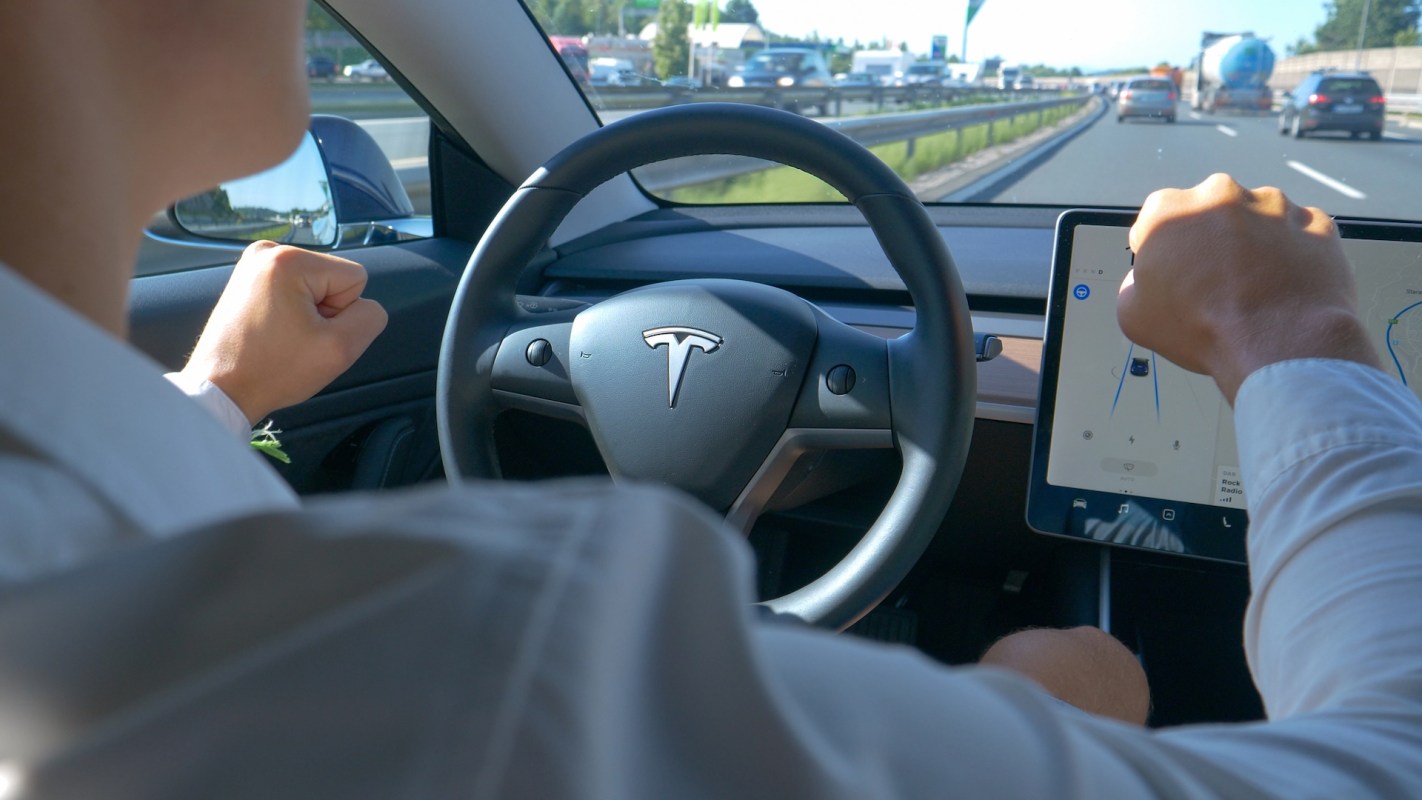
An Iowa man decided to put the latest version of Tesla's Full Self-Driving to the test, using the autonomous-vehicle technology on an 800-mile drive to Colorado, according to Supercar Blondie.
The YouTuber, who goes by Iowa Tesla Guy (@iowatesla), posted about his journey online.
From the YouTuber's perspective, the trip ended up being a resounding success.
"There you have it," he said after completing the journey, per Supercar Blondie. "The FSD experiment is done. 800 miles from Iowa to Boulder, Colorado, using nothing but FSD — I would say 99.9% of literally all of the driving."
However, not all Tesla enthusiasts who have put the latest supervised Full Self-Driving to the test have enjoyed similar success.
Two other Tesla influencers attempted to pull off a comparable, yet more ambitious, experiment, aiming to drive from California to Florida without human intervention.
TCD Picks » Quince Spotlight
💡These best-sellers from Quince deliver affordable, sustainable luxury for all




The trip was intended to belatedly fulfill Elon Musk's 2016 promise that, by the end of 2017, a Tesla would be able to drive itself coast-to-coast autonomously.
Despite setting out on a 3,000-mile journey from Los Angeles to Jacksonville, the Tesla enthusiasts found their vehicle unable to continue any further after experiencing a crash only about 60 miles into the trip. Running into trouble so early may have been bad luck, but it seemed to highlight how Tesla's optical detection system has had documented cases of missing or underestimating objects in the road.
While Iowa Tesla Guy might have successfully completed his 800-mile trek using Full Self-Driving, some experts have remained skeptical of the technology's reliance on cameras without lidar or radar to assist in detection.
In a recent analysis of the newest version of Full Self-Driving, Forbes found the technology to be "error-prone." In fact, the software made so many serious mistakes that the author questioned whether it should even be legal.
|
Would you buy an EV if it only took you five minutes to charge? Click your choice to see results and speak your mind. |
 Sign me up 👍
 "During a 90-minute test drive in Los Angeles, in residential neighborhoods and freeways, the 2024 Model Y with Tesla's latest hardware and software (Hardware 4, FSD version 13.2.9) ignored some standard traffic signs and posted speed limits; didn't slow at a pedestrian crossing with a flashing sign and people present; made pointless lane changes and accelerated at odd times, such as while exiting a crowded freeway with a red light at the end of the ramp," wrote Alan Ohnsman, a Forbes senior editor who covers cleantech and advanced transportation.
Perhaps most concerning, Ohnsman pointed out that Tesla still had not corrected a serious flaw that had been known for years: the failure to stop at a school bus with its lights flashing, which indicates that children are present and might be crossing the street. That shortcoming led to a Tesla hitting a child-sized mannequin in a June test in Austin, Texas.
Under California law, drivers in both directions must stop when a school bus is flashing its lights.
Such glaring performance issues have led some to question why the technology has been allowed on the streets at all.
"A drug company wouldn't call something a universal, full cancer cure when it didn't actually cure cancer," Dan O'Dowd, a software developer who has become a vocal critic of Tesla's Full Self-Driving, told Forbes. "But [Tesla CEO Elon Musk] does it every day because no one in government will take action. No regulators will take action at this point."
"It should never be in a customer's hands," O'Dowd added. "It's just a prototype. It's not a product."
For those interested in an EV, such as a Tesla, and concerned about self-driving capabilities, the good news is that drivers can choose not to use the Full Self-Driving feature if they own a Tesla, as it is actually sold as an add-on.
Furthermore, those looking to upgrade to an electric vehicle have never had as many options as they do today, with an increasing number of EV models entering the market each year. There hasn't been a case of an EV forcing self-driving mode on a user, though both electric and gasoline-powered cars often come with passive driver-assist features nowadays that may help avoid obstacles or drifting across lanes.
EVs are not only responsible for considerably less planet-heating pollution per mile than gas-powered cars, but they also can save drivers thousands of dollars per year on fuel costs.
To take the cost savings and environmental benefits of driving an EV to the next level, you can install solar panels on your home. Charging an EV with home solar is cheaper than doing so using the electrical grid or at a public charging station.
Think installing a home charger is too complicated? Qmerit makes it easy to install Level 2 EV chargers by providing free, instant installation estimates.
Similarly, EnergySage takes the guesswork out of home solar with powerful, easy-to-use online tools that allow you to compare quotes from prescreened installers in your area while helping ensure that you take maximum advantage of tax rebates and other incentives.
Federal tax credits of $7,500 for new EVs sunset on Sept. 30, 2025, and tax credits for home solar end Dec. 31, so you must act now to save thousands of dollars.

Join our free newsletter for easy tips to save more and waste less, and don't miss this cool list of easy ways to help yourself while helping the planet.






