


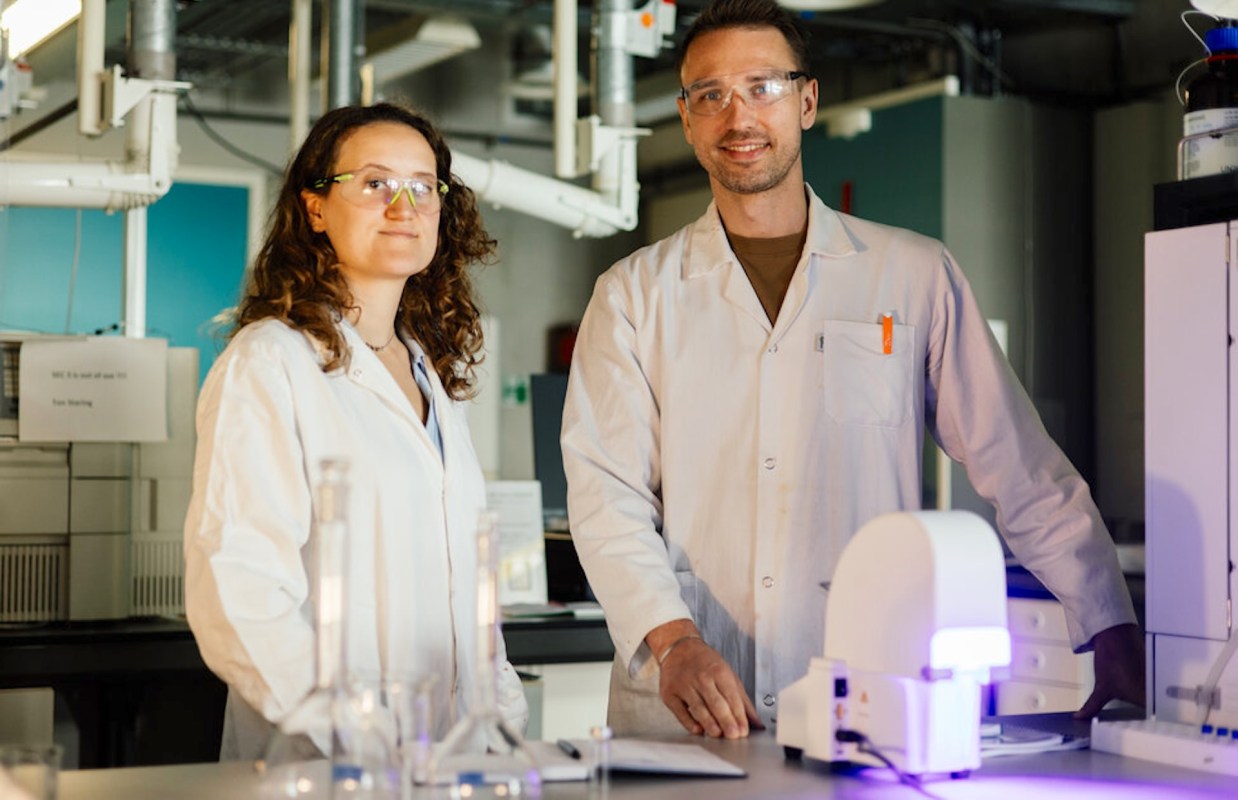
Recycling plastics may have just gotten as simple as flipping a switch, thanks to scientists from Eindhoven University of Technology.
The school reported on the study, recently published in the Advanced Materials journal, which used an LED light to break down and create a new class of high-performance plastics.
The research team is part of the Polymer Performance Materials research group, whose focus is on developing new polymers with organic materials and no toxic substances that can enable inventive ways to recycle plastics. The goal of creating these polymers is to establish a chemical closed-loop recycling system.
Currently, the recycling of plastic involves melting down and reshaping plastics made of moldable polymer chains, which leads to deterioration over time, meaning these plastics cannot be recycled indefinitely.
However, with photochemical recycling, an LED light selectively splits stable chemical bonds in the polymer, allowing original building blocks of the polymer chain to be recovered and then used to create new plastic. This allows the polymer to be recreated indefinitely, resulting in circular recycling without any quality loss.
Assistant Professor Fabian Eisenreich explained in the school's summary, "We see it as a breakthrough in sustainable chemistry that can reshape the way we deal with plastic waste in the future."
TCD Picks » Quince Spotlight
💡These best-sellers from Quince deliver affordable, sustainable luxury for all




If the recycling industry can utilize this newly developed polymer and recycling loop on a broader scale, it could significantly contribute to the reduction of global plastic waste and waste in general. In turn, this could lead to cleaner water and fewer microplastics in the environment, and reduced health issues in our communities.
A significant reduction in plastic waste would also go a long way in helping to protect wildlife; particularly marine life, which currently suffers from plastic waste dumped in the ocean. Plastic waste is responsible for contributing to the deaths of thousands of sea creatures each year and damages the ecosystems in which they live.
However, achieving this feat on a broader scale may take a while. Eisenreich said, "At the moment, our designer polymer is still a niche material and therefore not suitable for everyday plastic applications."
|
Which of these factors would most effectively motivate you to recycle old clothes and electronics?
Click your choice to see results and speak your mind. |
 Giving me money back 💰
Join our free newsletter for weekly updates on the latest innovations improving our lives and shaping our future, and don't miss this cool list of easy ways to help yourself while helping the planet.






