


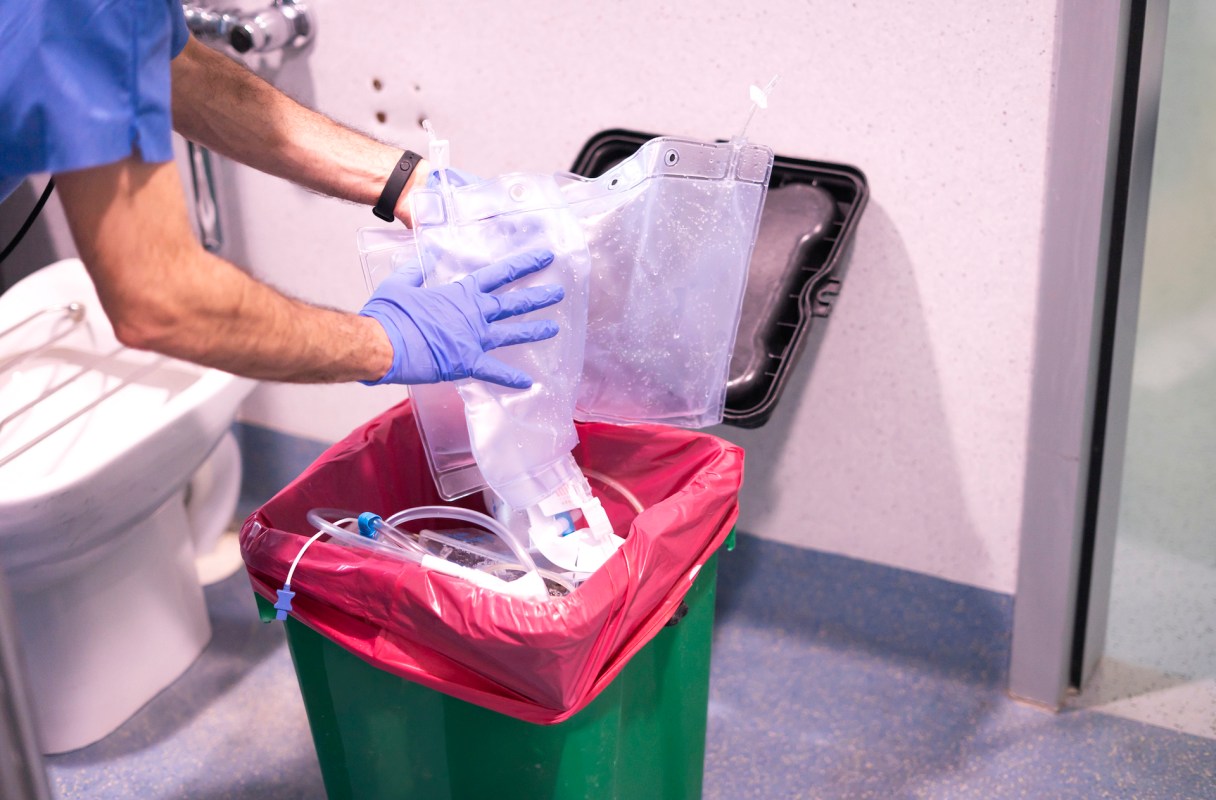
While experts agree that plastic waste poses a significant risk to public health, you might not know it based on the healthcare industry's own practices.
A new study has revealed the incredible amount of plastic waste generated by the very industry that one might expect to make public health concerns a top priority. However, the study's authors described the industry's systems for handling its own plastic waste as "complex, inconsistent, and fragmented," according to Waste Dive.
What's happening?
The report, produced by Eunomia and Systemiq, was funded through a grant from Takeda Pharmaceuticals and includes input from a group of industry experts and stakeholders.
For decades, the use of plastic has delivered many benefits to the healthcare industry and the patients it treats.
"From gloves and gowns to syringes and fluid bags, plastics enable hygienic, safe, and scalable care delivery across all levels of healthcare systems — from high-tech operating rooms in major hospitals to remote primary care clinics," the study's authors wrote. "Its durability, sterilizability, and low cost have made it the default material choice for countless single-use and multi-use applications since the 1990s."
Despite these benefits, growing concerns over high levels of plastic waste and the impact of microplastics on human health have led some to begin questioning the healthcare industry's overall approach to the massive amounts of plastic it consumes.
TCD Picks » Quince Spotlight
💡These best-sellers from Quince deliver affordable, sustainable luxury for all




To shed more light on this issue, the study's authors examined the use and disposal of plastic-containing products in a variety of healthcare settings. What they discovered was an industry in dire need of reform.
Across North America and Europe, the study's authors revealed that less than 5% of all healthcare-related plastic waste undergoes mechanized recycling processes. Meanwhile, those same regions have generated 2.31 million tons of plastic waste every year. Additionally, the industry's plastic use was responsible for 4.73 million tons of carbon-equivalent heat-trapping pollution.
Why is plastic waste in the healthcare industry important?
Unlike organic materials, when discarded, plastic does not biodegrade. Instead, it breaks down into smaller and smaller particles known as microplastics and their even tinier counterparts, nanoplastics.
Microplastics have permeated the globe, from the deepest parts of the ocean to the top of Mount Everest to inside our own vital organs. While much remains to be learned about the impact of microplastics on human bodies and natural ecosystems, experts have agreed that microplastics pose an enormous risk to public health and the environment.
|
Should the U.S. government invest more money in recycling programs?
Click your choice to see results and speak your mind. |
 Yes 👍
Yes 👍 What's being done about plastic waste in the healthcare industry?
By shining a spotlight on the healthcare industry's plastic problem and quantifying the scale of the issue, the study's authors have helped to raise awareness and, hopefully, inspire large-scale change.
As the study's authors pointed out, many actors within the healthcare industry have already taken steps toward drastically reducing plastic waste. For example, Medtronic, a healthcare technology company, "has exceeded its goal of reducing plastic packaging for specific product lines by 25%," or about 143 tons.
While the healthcare industry explores ways to reduce its own plastic waste, there are steps you can take to lower the environmental and public-health impacts of plastic. By choosing plastic-free options for everyday products and supporting brands that use plastic-free packaging, you can lower your own plastic consumption while also encouraging companies to use more plastic alternatives.

Join our free newsletter for good news and useful tips, and don't miss this cool list of easy ways to help yourself while helping the planet.






