


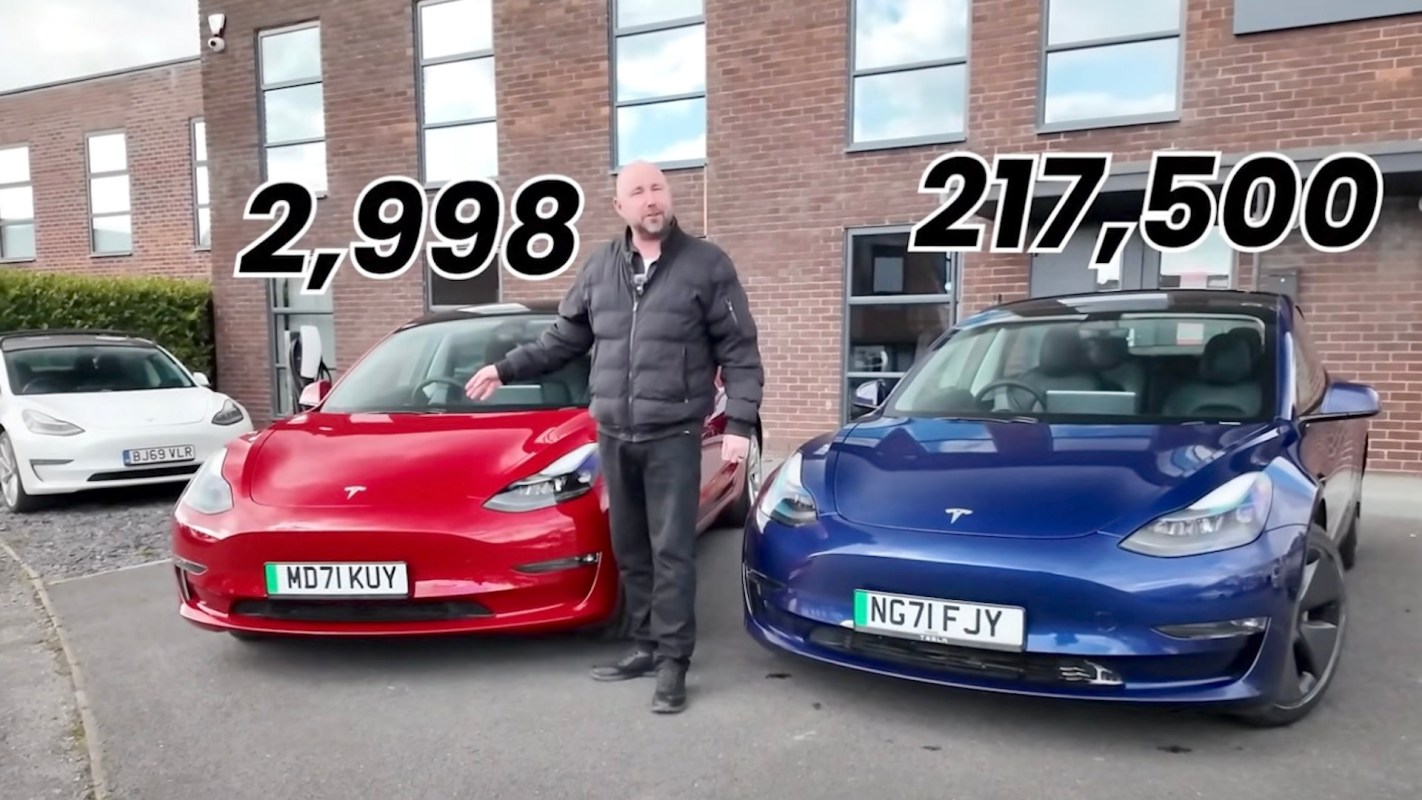
A YouTuber who specializes in electric vehicles tested out a Tesla Model 3 with over 200,000 miles and made a surprising discovery regarding its battery.
Auto expert RSymons (@RSEV) pitted the extensively used Tesla Model 3 against the exact model, which only had around 3,000 miles on its odometer. Although each vehicle was three years old, they had been utilized in entirely different ways.
However, when it came to the wear and tear of each vehicle's battery, the difference was less noticeable than you might imagine. Despite being rarely used, the Tesla Model 3 with less than 3,000 miles still had a battery capacity of 99.5%. Typically, EV batteries degrade from either temperature, cycles, or time.
Meanwhile, the Tesla Model 3 with over 200,000 miles driven had a battery that still had a capacity clocked in at 88.5%. Generally, Tesla's EV batteries have an eight-year warranty that covers between 100,000 and 150,000 miles. The company notes that any battery that drops below 70% within the warranty can be replaced for free.
"Well they feel very much the same," RSymons said of the comparison. "Same efficiency, same performance."
Despite averaging well over 65,000 miles driven a year and outliving the original warranty, the heavily used Tesla Model 3 had a battery that still appeared to have plenty of life left in it.
This can go a long way in retaining resale value, especially when using a service like Recurrent to sell your used EV, which can net sellers an average of $1,400 more for their car. Recurrent also offers perks such as the ability to connect sellers with a network of dealers and free checkups to monitor your EV's battery health.
As noted by the U.S. Environmental Protection Agency, there is a common myth that most EV batteries are not built to last and will need to be replaced often. This misconception has been disproven by many studies over the years. In fact, a recent study has suggested that EV batteries may even have a lifespan that can last up to a third longer than originally thought.
Selling your EV? Watch this first to protect your investment and make $1,400 more
Recurrent is a free service that maximizes the resale value of your EV by documenting battery health and getting you top-dollar offers from a national network of dealerships. |

In the comments section, a few users relayed their experience with Tesla's durability.
|
Do you trust Tesla to produce quality products? Click your choice to see results and speak your mind. |
 Absolutely 👍
"The Models 3 and Y are turning out to be very reliable and durable, but with bad resale value because the general public thinks they may not be," one user wrote. "That opens the door of opportunity for many people who can't afford a new car to get a really good car for not a lot of money."
In its most recent quarterly earnings report, Tesla reported a massive drop in revenue. The company has faced increased scrutiny in recent months over CEO Elon Musk's involvement with the U.S. government.
However, as noted by RSymons, EV batteries have proven to retain their value over their lifespan. This may make selling your used EV easier than ever, especially when using a free service like Recurrent.
"Impressive … Tesla's quality is very high. And it's not known by other than owners," added another commenter. "Maintenance costs are super low."
In addition to saving money on maintenance and repairs, EV owners can also save a bundle of cash by installing solar panels. Fueling with solar energy can be much cheaper than using public charging stations or relying on the grid. EnergySage provides a free service that makes comparing quotes from vetted local installers simple, also helping to navigate government incentives to save up to $10,000 on solar installations.

Join our free newsletter for good news and useful tips, and don't miss this cool list of easy ways to help yourself while helping the planet.






