


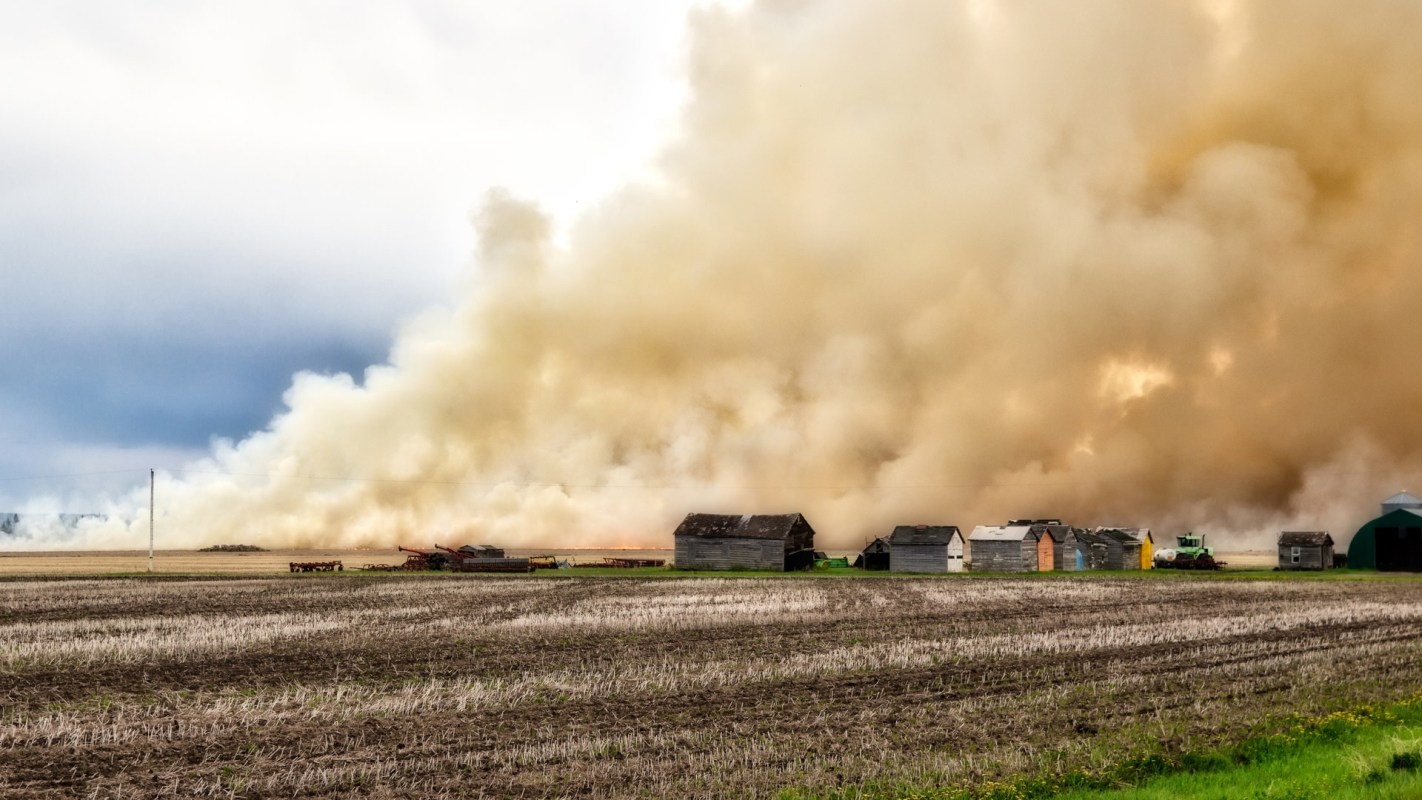
Smoke from record-breaking Canadian wildfires is drifting into Wisconsin and other Midwestern states, reported the Wisconsin State Farmer.
What's happening?
Nearly 14 million acres of forest in Canada has burned this year, double the typical amount for this period.
Officials said 561 fires were active as of mid-July, with 69 burning out of control. The smoke has traveled hundreds of miles south, carried by wind patterns and jet streams into America's agricultural heartland.
The timing couldn't be worse for Midwest farmers. Corn crops are in their pollination phase, while soybeans are developing their canopies. Both plants need strong sunlight for photosynthesis to produce good yields.
"We know there are ways that smoke can affect crops, and overall it could negatively impact crop yield," said Mark Jeschke, an agronomy manager, per Wisconsin State Farmer.
Why is wildfire smoke concerning?
Your grocery bills could rise if smoke continues disrupting crop production.
Corn and soybeans form the foundation of America's food system, feeding both livestock and appearing in countless processed foods. When yields drop, prices increase throughout the supply chain.
Studies demonstrate that heavy smoke during grain development can cut corn yields in half. Plants under stress from smoke become weaker and more vulnerable to diseases. If stalks weaken enough, entire fields could collapse before harvest.
Farmers already dealing with drought or disease face compounded challenges when smoke adds another layer of stress to their crops. The combination of multiple stressors poses greater risks than any single factor alone.
What can I do to help mitigate the effects of wildfire smoke?
If you live in fire-prone areas, create defensible space around your property. Clear dry vegetation at least 30 feet from structures and maintain your yard to reduce fire fuel.
TCD Picks » Quince Spotlight
💡These best-sellers from Quince deliver affordable, sustainable luxury for all




|
Do you worry about the quality of the air inside your home?
Click your choice to see results and speak your mind. |
 Yes — often 😬
 Support forest management policies that reduce fire risk. Contact your representatives and voice your support for prescribed burns and forest thinning programs.
During smoky days, protect your health while being mindful of agricultural impacts. Run air purifiers indoors, and try not to burn candles or use fireplaces that add to particle pollution. Check air quality apps before you participate in outdoor activities.
Consider buying produce directly from local farms when possible. This supports farmers dealing with smoke damage and reduces transportation pollution that contributes to climate patterns driving extreme fire weather.
Install high-efficiency air filters in your home's HVAC system with a Minimum Efficiency Reporting Value of 13 or higher to capture smoke particles. This protects your family's health while demonstrating the kind of adaptation strategies communities need as smoke events increase.
Monitor and share accurate fire and air quality information with neighbors. Understanding when smoke will affect your area helps everyone prepare, from farmers timing their field work to families planning outdoor activities.

Join our free newsletter for easy tips to save more and waste less, and don't miss this cool list of easy ways to help yourself while helping the planet.
Cool Picks




