


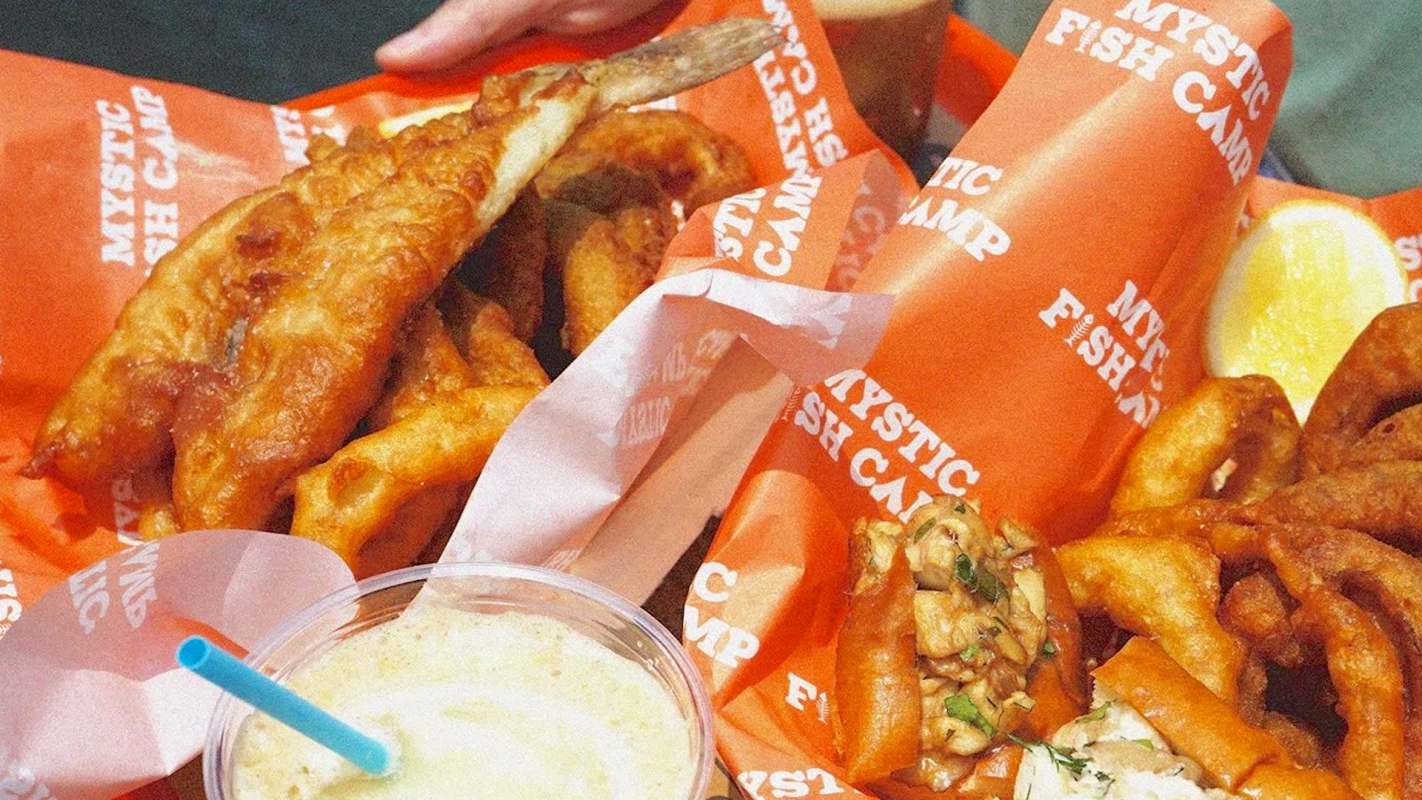
An award-winning chef has launched a new restaurant in Mystic, Connecticut, that focuses on sustainable seafood and tackles an invasive species problem.
As Eater Boston reported, the James Beard Best Chef Northeast winner of 2024, David Standridge, started a new counter-service restaurant called Mystic Fish Camp.
The nostalgic and family-friendly restaurant serves 100% local, sustainable, and wild-caught seafood. Fish on the menu are whatever is biting that day, such as monkfish and bluefish.
Standridge is even addressing local invasive species concerns with his new seafood menu. For example, he uses the oil from the green crab, a non-native species, to poach monkfish and create a tasty, more affordable version of lobster.
"All our fish are living and sourced, and landed within 20 or 30 miles, sustainably harvested, and sustainable species, which truly just means eating a diversity of catch," Standridge said.
The menu at Mystic Fish Camp also features fried local fish-of-the-day sandwiches, seafood salads with local squid, and burgers made with yellowfin tuna and grass-fed beef. Meanwhile, the restaurant's ambiance offers a perfect seaside vibe and is a throwback to the carefree days of summer camp with branded merch.
Standridge's new restaurant is inspiring because it prioritizes sustainability in the seafood industry while addressing a local invasive species issue.
Sustainable seafood helps protect our ocean ecosystems while providing nutritious meals to people who dine out. Restaurants that source fish sustainably focus on species that have low environmental impacts and high nutrient densities.
Therefore, you can live a healthy lifestyle and feel good about your order without contributing to harmful overfishing practices or depleting natural resources.
Many coastal communities are turning invasive marine species into food that is delicious and serves a broader purpose.
TCD Picks » Quince Spotlight
💡These best-sellers from Quince deliver affordable, sustainable luxury for all




|
Which sustainable cooking change are you most interested in trying?
Click your choice to see results and speak your mind. |
 Reducing my food waste 🗑️
 Meanwhile, researchers are calling upon governments to minimize the impacts of commercial fishing to reduce ocean pollution and help fish populations thrive.
If you enjoy seafood, look for local, sustainable options in your area and support businesses that genuinely care about the fish they source. You can also help minimize the impacts of unsustainable fishing by exploring more plant-based food options at restaurants.
Aundré Bumgardner is a state representative who worked with Standridge to pass a bill that allows fishermen to harvest invasive species for restaurant use without a special permit.
"By turning these crabs from a threat into a resource, the law helps protect our waters while creating new opportunities for local chefs and the seafood economy," Bumgardner said.

Join our free newsletter for easy tips to save more and waste less, and don't miss this cool list of easy ways to help yourself while helping the planet.
Cool Picks




