


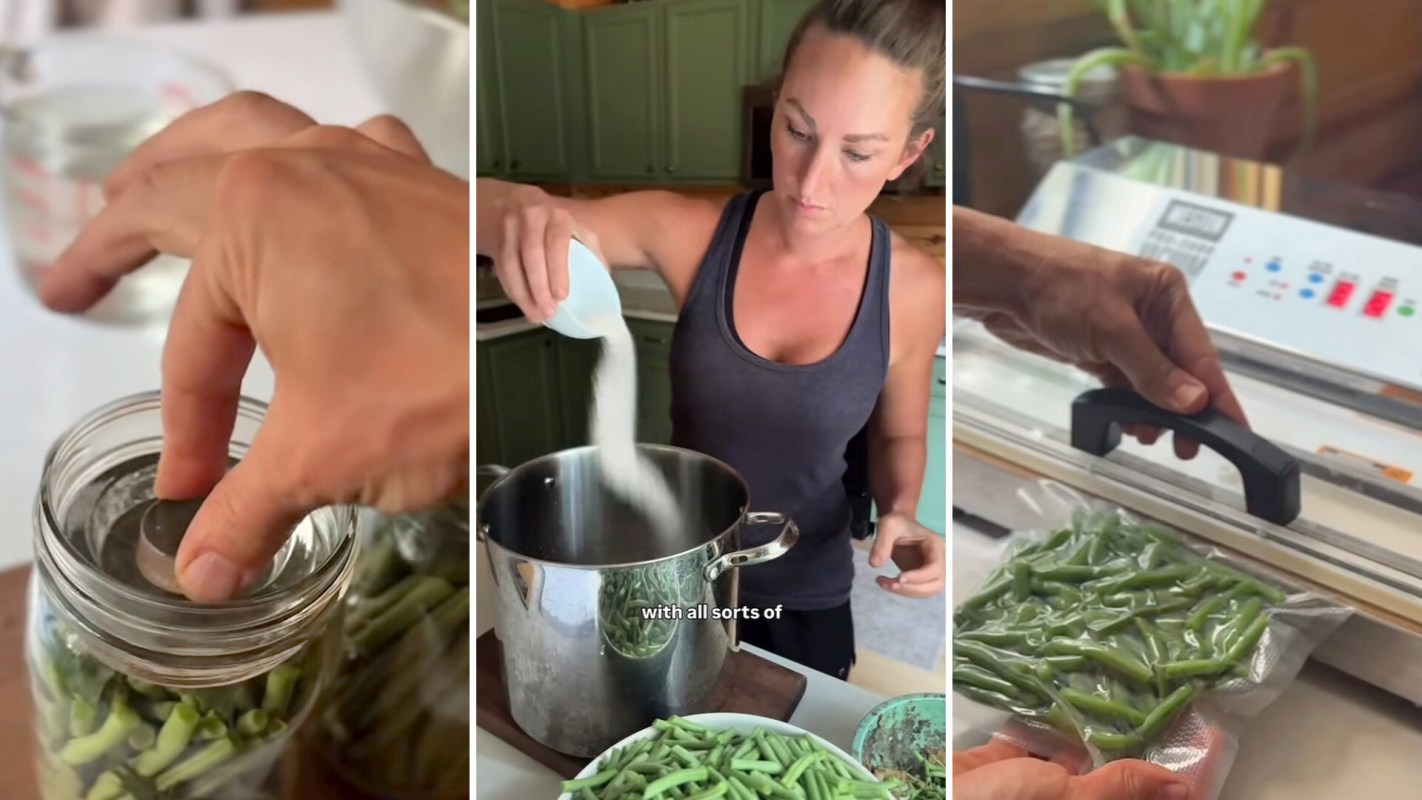
If your garden is producing green beans faster than you can eat them, you do not have to settle for limp, plain canned vegetables.
A registered dietitian homesteader says a better solution is to choose a preservation method based on how you actually want to eat them later — crunchy, fermented, frozen, freeze-dried, or pickled.
What's happening?
In a YouTube video, Katie, The Homesteading RD (@thehomesteadingrd), said she grows "a year's worth of green beans every summer," yet is "not a big fan of mushy pressure canned beans."
Instead, she walked viewers through four other options.
For fermented dilly beans, she starts with quart jars and adds seasonings including garlic, red pepper flakes, bay leaves, dill, black peppercorns, mustard seed, and coriander, along with a sea-salt brine mixed in the proportion listed in the video caption.
The jars sit in a dark spot for nearly a week to a week and a half before moving to the refrigerator, where they last roughly 6 to 12 months.
TCD Picks » Quince Spotlight
💡These best-sellers from Quince deliver affordable, sustainable luxury for all




Freezing is another method she recommends. Her process is to blanch the beans for 3 minutes, cool them quickly, drain them, and then bag them. She said she likes storing three cups per bag, about four servings.
She said blanching also comes first if you plan to freeze-dry them, and the video caption says that approach can keep beans shelf-stable for 10 to 20 years.
Another option she shared is dilly beans preserved in a vinegar brine and finished with a 10-minute water-bath process.
One commenter wrote, "Um!! Thank you so much! I'm going to try your canned dilly bean recipe as I'm not a fan of regular canned beans either."
Why does it matter?
For home gardeners, a green bean glut can quickly shift from a bonus to a waste problem. Preservation methods like these can help households stretch a summer harvest into the colder months instead of losing extra produce to spoilage or the compost pile.
Fermented jars, canned dilly beans, or freeze-dried beans for emergency meals can replace a notable portion of future grocery spending.
People who dislike soft canned beans may be more likely to preserve and eat what they grow if the final product stays crisp, tangy, or freezer-fresh.
That can mean less waste, more control over ingredients, and a pantry or freezer stocked with food that actually gets used.
What can I do?
For many households, freezing may be the easiest starting point: after blanching the beans, cool them quickly, drain them well, and divide them into meal-size bags. This can be especially helpful for families who want simple weeknight side dishes and don't mind using freezer space.
If you want shelf-stable options, fermented dilly beans and vinegar-based canned dilly beans can add variety without relying only on plain canned vegetables.
Freeze-drying, while less accessible for many households, can also help with long-term storage and emergency planning.
Use clean jars and equipment, follow safe preservation steps carefully, and start with small batches if you are trying a new method for the first time.
As Katie put it, fermented dilly beans "are so delicious and easy to whip up."
Another commenter wrote, "Home canned green beans are all we'll eat. We raw pack and then can, no mushy beans here!"

Get TCD's free newsletters for easy tips, smart advice, and a chance to earn $5,000 toward home upgrades. To see more stories like this one, change your Google preferences here.







