


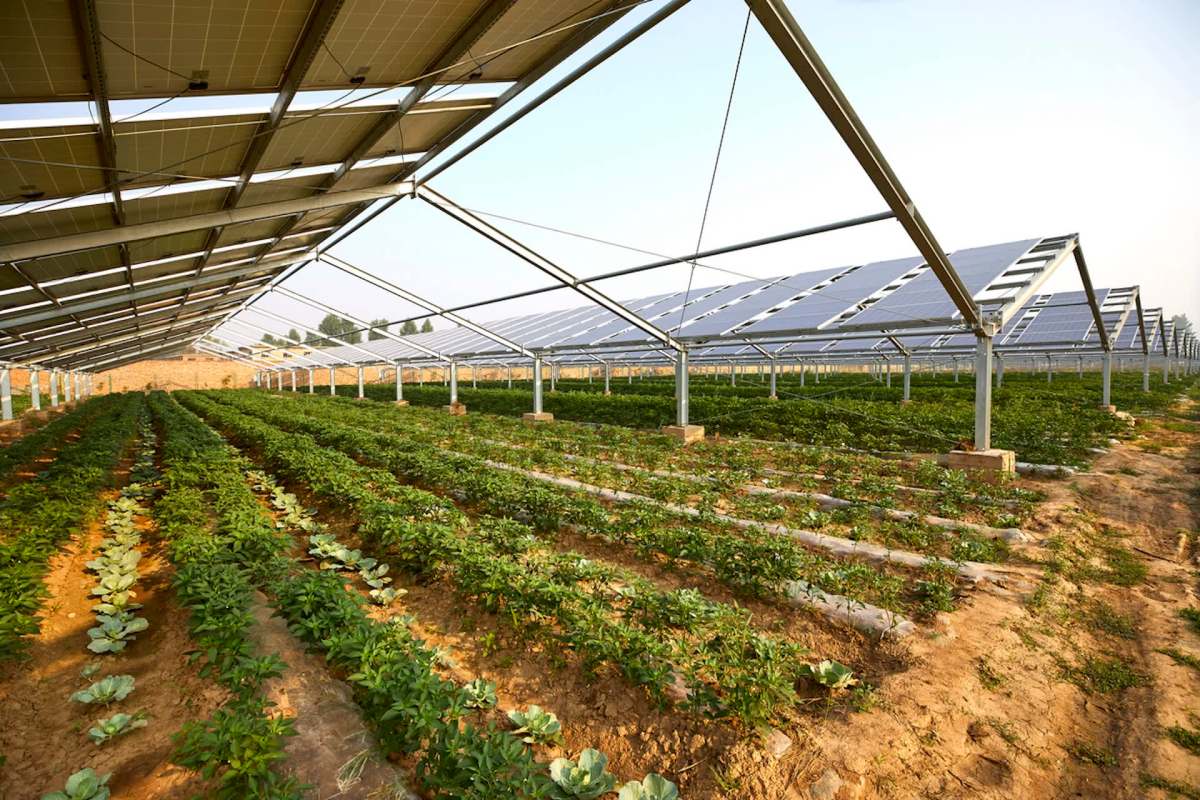
Scientists studying how land devoted to large-scale solar arrays can best be used to also grow food have made a breakthrough discovery that could allow such combined-use projects to flourish.
One of the key challenges facing so-called agrivoltaic projects, which combine solar panels and crop production, has been limiting the impact of shade on plant growth and energy production.
Large solar panels can block sunlight from reaching the plants below, reducing the amount of food those plants produce. Similarly, tall plants and trees can prevent sun from reaching the panels during certain times of day.
However, according to the study, scientists have discovered that, by placing solar panels at least eight meters (about 26 feet) apart, they can optimize both crop production and electricity generation, PV magazine reported.
"Increasing row spacing has a significant impact on production, which increases quickly up to 10 meters [32.8 feet], though above 20 m [65.6 ft] the gains start to saturate," the researchers wrote.
The study involved double-sided vertical solar panels, which are well-suited for high latitude locations where the sun shines from lower angles in the sky.
Combining energy-producing solar arrays with crop production not only produces both electricity and food, but it also has the potential for making large-scale solar arrays more profitable, increasing the financial incentives to build additional solar-power capacity.
For example, owners of solar arrays can lease the available land to farmers, creating an additional source of income. Experimenting with different crop types, the researchers found that winter barley allowed the panels to generate the most electricity, while oats resulted in the lowest amount.
Additionally, the study examined whether east-west oriented or south-facing solar panels generated more power at higher latitudes. South-facing panels captured more sunlight, creating more electricity.
As the world seeks to transition away from fuels that create planet-overheating pollution and toward cleaner renewables such as solar, optimizing the productivity of agrivoltaic projects can play a big role by making such endeavors more financially viable. As a bonus, they also can generate electricity and food, two vital resources, using the same land.
TCD Picks » Quince Spotlight
💡These best-sellers from Quince deliver affordable, sustainable luxury for all




|
Are you thinking about installing solar panels in the near future? Click your choice to see results and speak your mind. |
 Yes 👍
Yes 👍 
Get TCD's free newsletters for easy tips to save more, waste less, and make smarter choices — and earn up to $5,000 toward clean upgrades in TCD's exclusive Rewards Club.
Cool Picks




