


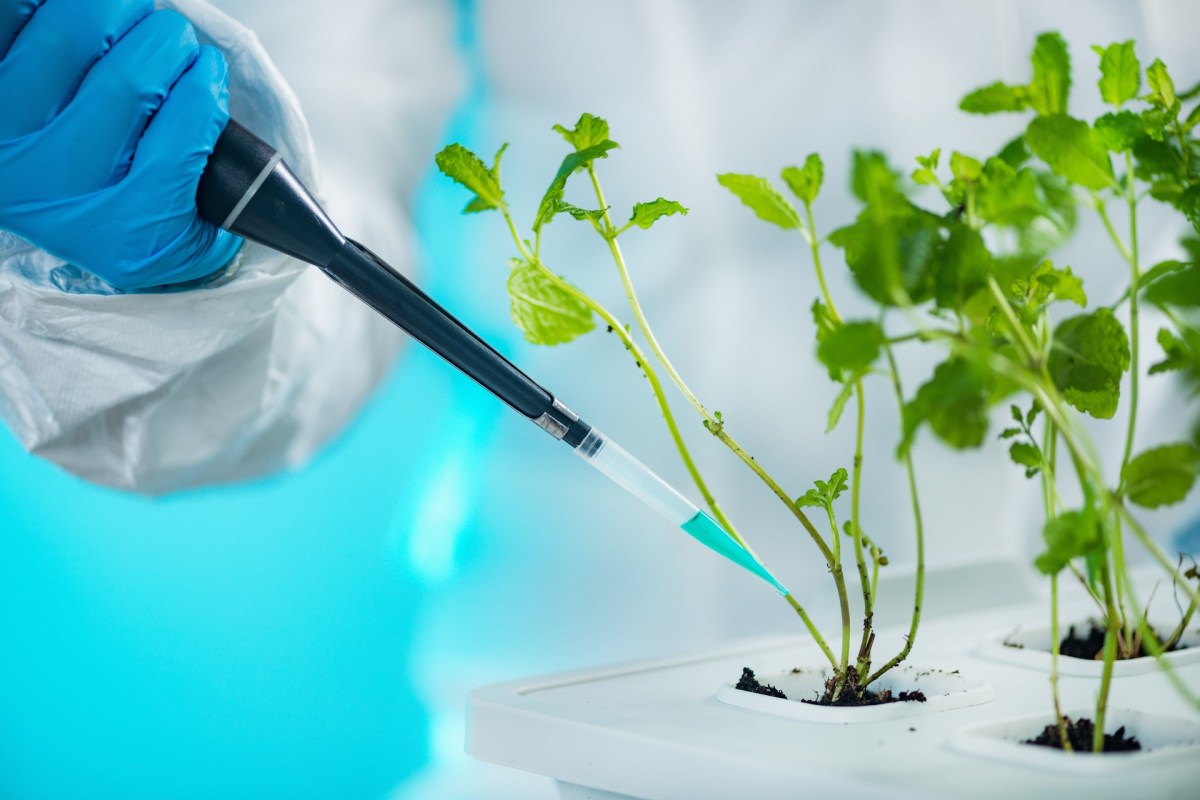
Researchers in Spain have made a breakthrough that helps plants resist drought more effectively than their natural defenses.
According to HortiDaily, a team of researchers led by the Spanish National Research Council has developed a molecule called inverted cyanobactin (iCB) that mimics the plant hormone that regulates drought resistance, abscisic acid.
Extreme weather conditions like drought are threatening the global food supply, and the situation will only get worse as the planet continues to overheat.
According to the World Resources Institute, about 34% of global crop production — nearly 3.5 billion tons — is grown using irrigation. Of that, roughly 60% are grown in areas facing high or extreme water stress, meaning the demand for water is high compared to the availability of freshwater.
Water loss in plants primarily occurs when they allow water to evaporate into the atmosphere through small pores on leaves, which is called transpiration. Plants close those pores to retain water when water isn't available, a process regulated by abscisic acid. By spraying iCB onto the leaves of tomatoes, the same drought response was activated.
But iCB goes a step further by activating other molecules like proline and raffinose that work to protect plants when they're stressed, helping photosynthesis recovery. On top of that, iCB was also shown to stimulate root growth toward moisture.
Pedro L. Rodríguez, co-leader of the research, explained, "This molecule not only regulates transpiration, but also activates the expression of many drought-adaptation genes."
The researchers engineered iCB to work with a wide range of plants using molecular design techniques and X-ray structural analysis. If successful with staple crops like corn, wheat, and rice, iCB would go a long way in stabilizing the global food supply amid increasingly unstable weather conditions.
"The results are spectacular," said Armando Albert, who co-led the study. "Plants treated with a foliar spray containing iCB withstand severe drought and are able to recover photosynthesis after stress."
|
Would you want a garden that can take care of itself? Click your choice to see results and speak your mind. |
 Sign me up 👍
💰Get TCD's free newsletters for easy tips to save more, waste less, and make smarter choices — and earn up to $5,000 toward clean upgrades in TCD's exclusive Rewards Club.
TCD Picks » Quince Spotlight
💡These best-sellers from Quince deliver affordable, sustainable luxury for all




Cool Picks




