


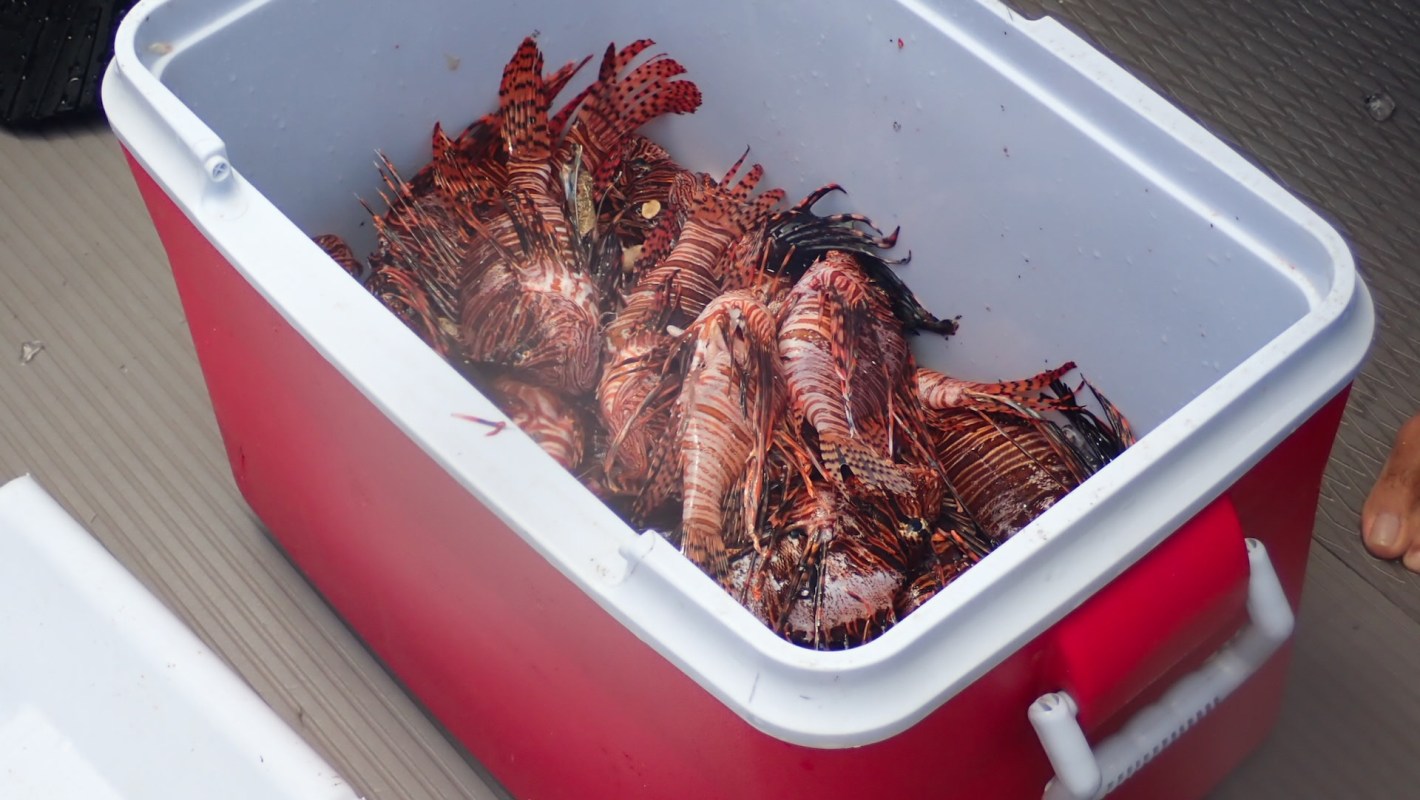
The lionfish is an invasive pest in the Mediterranean Sea, so locals have turned it into a delicacy.
A profile by The Washington Post examined the invasion of lionfish on the Greek island of Elafonisos. Although the lionfish is a beautiful sea creature — introduced to the Mediterranean after its popularity as a pet — it is destroying the ecosystem and multiplying at an alarming rate.
In an effort to rid the ocean of invasive species, marine researchers are encouraging restaurants to add lionfish to their menus.
The invasion of the lionfish is a warning sign that the Mediterranean Sea is getting hotter. According to The Washington Post, the temperature of the Mediterranean Sea has risen by 4.7°F over the last forty years. This makes the conditions similar to the Indo-Pacific Ocean, where the lionfish are native.
Because lionfish don't have natural predators in the Mediterranean, their population keeps swelling, and they are obliterating the ecosystem by competing with native species for food. Lionfish also use their venomous spines to prey on other native fish, which further harms the balance. Efforts to control invasive species, such as the lionfish, can help restore ecological equilibrium.
Divers on the Greek island have taken to clearing the ocean of these creatures by hunting them down with spears. In other parts of the world, such as Mexico, competitions are even held to see who can catch the most lionfish.
Currently, lionfish isn't a popular dish, but it is gradually finding its way onto more menus. If more of these fish are caught to supply a rising demand, population numbers will be kept in check.
An ichthyologist for the Hellenic Center for Marine Research in Greece, Paraskevi Karachle, commented to The Washington Post, "The most promising option is eating them."
Though tourists picture calamari and octopus when they think of traditional Greek food, the shifting temperature and influx of invasive species mean that squid and octopus are much harder to find.
Enrico Toja, the founder of. The environmental NGO Elafonisos ECO is spreading awareness of the dangers of this invasive species and encouraging locals and tourists alike to try a lionfish dish.
TCD Picks » Quince Spotlight
💡These best-sellers from Quince deliver affordable, sustainable luxury for all




The founder of the NGO, Enrico Toja, is a big supporter of lionfish becoming a more widespread cuisine. "This," he said of the invasive fish, "is the local catch."
|
What community solar benefit appeals to you most? Click your choice to see results and speak your mind. |
 No need for panels 😅
Join our free newsletter for easy tips to save more and waste less, and don't miss this cool list of easy ways to help yourself while helping the planet.
Cool Picks




