


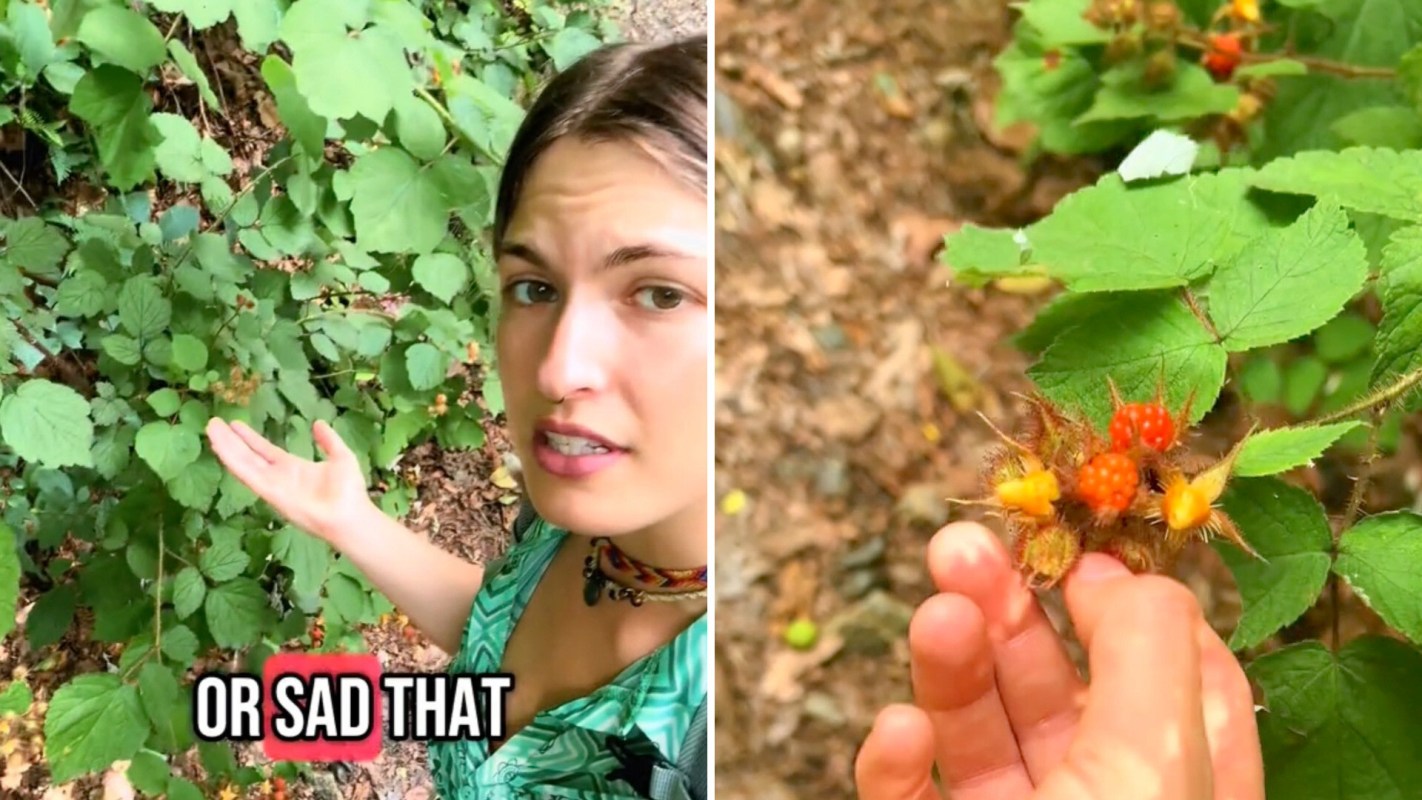
New Jersey forager @ecologenius encountered an invasive plant with an unexpected benefit on a hike recently, and took to TikTok to share the details.
@ecologenius I took a chance on the not fully ripe one for the bit lmao go for the bright red one!!#nj#newjersey#wineberry#foraging#edibleplants#invasiveplants#ecology#njforaging#berries#nature#environment#invasivespecies ♬ original sound - ecologenius
"Whenever I find this plant this time of year, I don't know if I'm happy or sad that I found it," she said in her introduction.
The plant she's talking about is the wineberry. Named after its rosy color, it bears fruit similar to raspberries. In her area, wineberries are invasive. Luckily, they are also delicious.
Wineberries are native to China, Japan, and Korea. It forms in dense thickets that prevent other plants from accessing areas. Its root structures are weak enough that mechanical removal can be effective, according to New York Invasive Species Information.
Invasive plants are generally transported to new areas by people. In a new habitat, a species might be free of the checks and balances it evolved with, allowing it to rapidly outcompete other species in its new home. As an invasive species monopolizes key resources, native species recede, biodiversity declines, and with it, ecosystem services that humans depend on. One study suggests hundreds of billions of dollars in economic costs are incurred every year thanks to invasive species worldwide.
On the upside, the overabundance of wineberries makes them ripe for endless picking. By capturing fruit before the seeds get a chance to spread, foragers are engaging in local action to slow the spread of invasives. Other enterprising chefs have found similar solutions for lionfish, creeping bellflower, and Japanese knotweed.
Best of all, there are no poisonous lookalikes in the wineberry's Appalachian territory, so it's relatively safe to pick. Of course, @ecologenius reminded viewers to do their homework and properly identify plants before eating from them. TikTok commenters were largely familiar with wineberry.
"Most people call it wild raspberry. Been eating them for 50 years," said one commenter.
"There's a bunch of wine berries at my house," said another.
|
What is the biggest reason you don't grow food at home? Click your choice to see results and speak your mind. |
 Not enough time ⏳
Join our free newsletter for easy tips to save more and waste less, and don't miss this cool list of easy ways to help yourself while helping the planet.
TCD Picks » Quince Spotlight
💡These best-sellers from Quince deliver affordable, sustainable luxury for all




Cool Picks




