


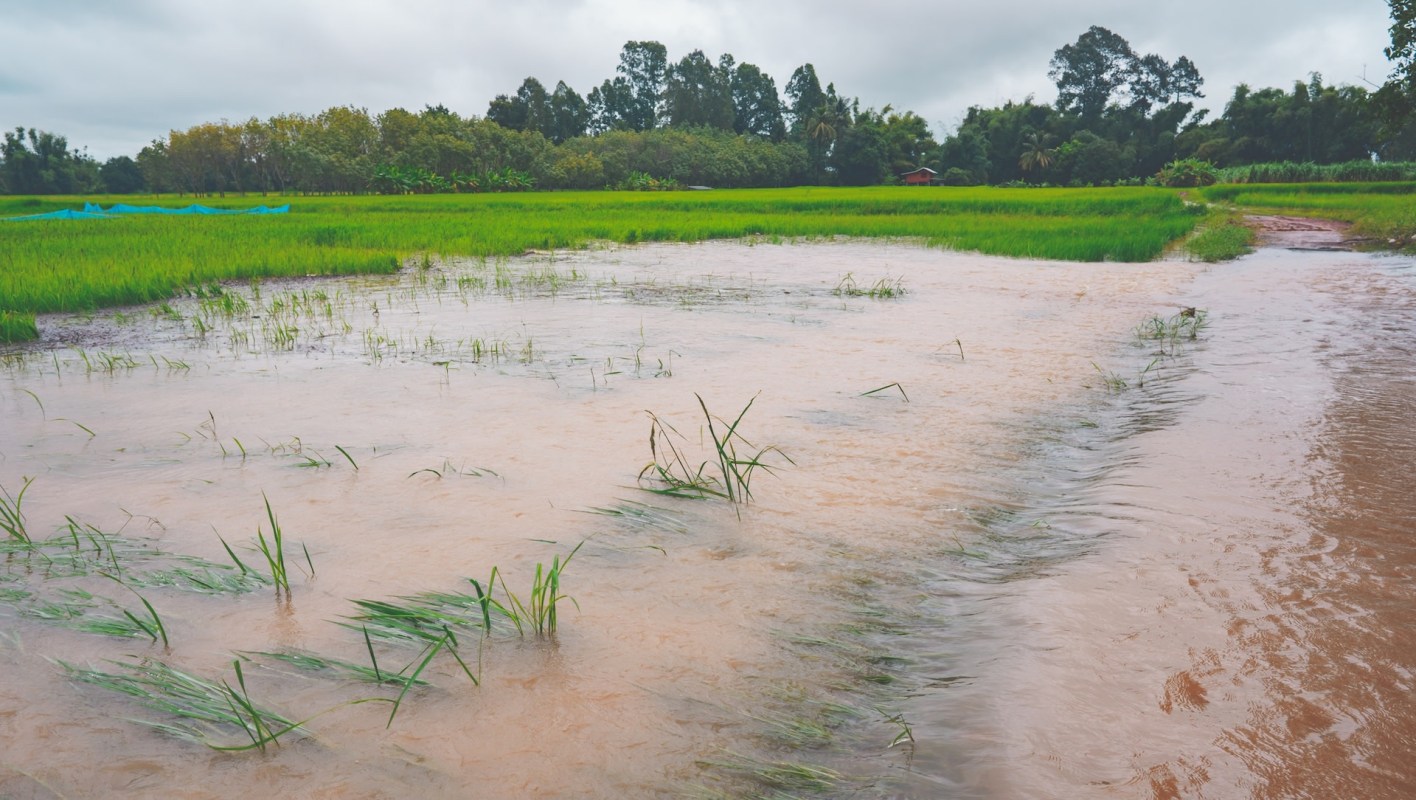
Another staple food is under growing pressure as increasingly severe floods slash rice yields worldwide, revealing a troubling trend that threatens both farmers' livelihoods and families' grocery budgets.
What's happening?
After simulating global floods from 1980 to 2015, researchers noted more frequent occurrence of rice-killing floods — extreme events that fully submerge plants for at least seven days. While rice thrives in wet environments, it cannot survive prolonged underwater conditions.
In a study published in Science Advances, the researchers highlighted the need for flood-resistant rice varieties. The study found that rice yields drop by 4.3% annually due to extreme flooding — that's as much as 18 million tons of rice lost every year.
Such massive losses of a crop that sustains more than half of the global population pose a grave threat to food security.
"That's a huge impact," lead researcher Zhi Li told ABC News.
Why is this issue alarming?
More than 4 billion people rely on rice for their daily sustenance. In some countries, rice provides up to 70% of total caloric intake, according to the World Economic Forum. When rice yields are lost, millions can starve.
Rice isn't the only crop under threat. Prolonged drought, destructive storms, and plant diseases are disrupting agricultural lands across the world.
All these are tied to a steadily warming planet. The World Meteorological Organization's latest report showed that the world recorded the highest ever global average temperature last year at 2.79 degrees Fahrenheit higher than pre-industrial levels — and scientists warn that more warming is likely in the coming years.
The hotter the world becomes, the more erratic the weather gets, and the harder it becomes for farmers to grow their crops. Many countries are already grappling with shortages in vegetables, wheat, olive oil, and other staple crops — pushing prices up and straining family budgets.
As such, food scarcity no longer becomes just an environmental issue; it becomes a social and economic one. When crops fail, farmers lose income. Local businesses struggle, people lose jobs, everyone loses buying power, and food becomes harder to afford.
TCD Picks » Quince Spotlight
💡These best-sellers from Quince deliver affordable, sustainable luxury for all




|
Do you worry about the longevity of EV batteries? Click your choice to see results and speak your mind. |
 For sure 💯
 What's being done about the issue?
Researchers and governments are working together to develop solutions that would make crops pest-resilient, flood-tolerant, and climate-adaptive. Farmers are also implementing new farming methods to adapt to shifting climates.
But broader awareness is also much needed. People should have meaningful conversations and encourage others to explore critical climate issues. When individuals are more aware of how their choices affect global food systems, they become more intentional about how they consume and conserve resources.
Through individual and community action, everyone can help protect the crops and communities that feed the world — help that's much needed because on a warming planet, every impact feeds into the next.

Get TCD's free newsletters for easy tips to save more, waste less, and make smarter choices — and earn up to $5,000 toward clean upgrades in TCD's exclusive Rewards Club.
Cool Picks




