


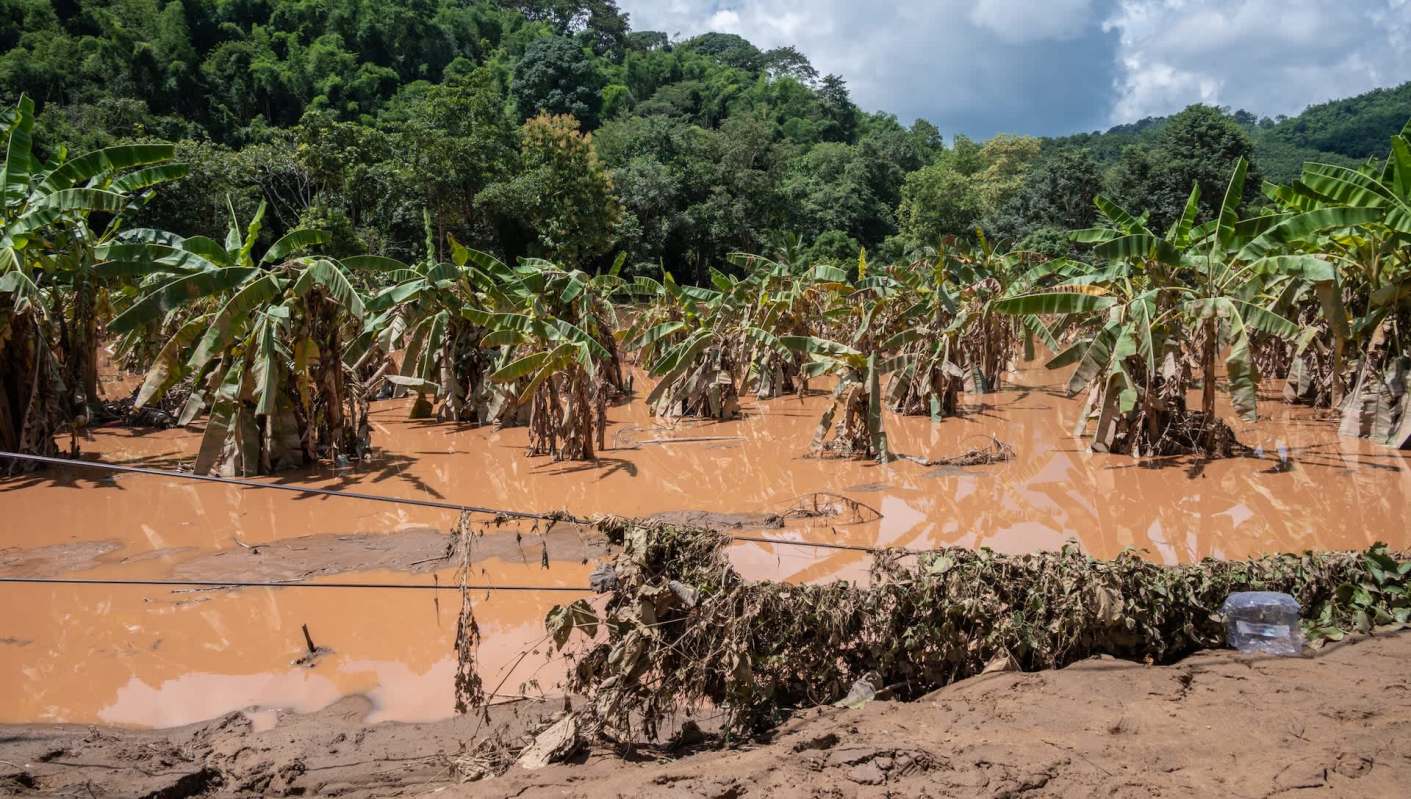
Banana farmers in southern India were forced to harvest their crops by boat after torrential downpours caused massive flooding, according to The New Indian Express.
What's happening?
After devastating monsoon rains, water levels in some areas reached 4 feet and were expected to rise to as high as 8 feet, per the Express.
Fearing that their banana crops could be destroyed by the water, farmers in the region had no choice but to use floating vessels to salvage what they could.
While government officials explained that the area was a natural catchment for water, farmers argued that a drainage canal needed to be constructed to prevent such flooding.
Why is it important?
The heavy monsoon rains and the resulting flooding are just one example of the devastating impact that severe weather can have on crops, putting food supplies and livelihoods at risk.
As average global temperatures continue to rise, severe weather events have grown more extreme and more destructive. When food crops are destroyed by such events, it not only imperils local economies but also can cause food prices to increase far from the disaster's reach.
According to one study, rising global temperatures could reduce crop yields by a staggering 24% by the year 2100.
"When global production falls, consumers are hurt because prices go up and it gets harder to access food and feed our families," said Solomon Hsiang, the study's senior author, per the Stanford Doerr School of Sustainability.
"If the climate warms by 3 degrees, that's basically like everyone on the planet giving up breakfast," he added.
What's being done about it?
Developing new farming techniques and adapting to the changing climate can help to slow the reduction in crop yields. However, to truly address the situation, humans must drastically reduce the amount of pollution entering the atmosphere.
TCD Picks » Upway Spotlight
💡Upway makes it easy to find discounts of up to 60% on premium e-bike brands





To do so, the global economy needs to transition away from burning dirtier, extracted fuels like coal and natural gas and toward cleaner, renewable sources of energy like wind and solar.
|
Do you think America does a good job of protecting its natural beauty? Click your choice to see results and speak your mind. |
 Definitely 👍
Get TCD's free newsletters for easy tips to save more, waste less, and make smarter choices — and earn up to $5,000 toward clean upgrades in TCD's exclusive Rewards Club.
Cool Picks




