


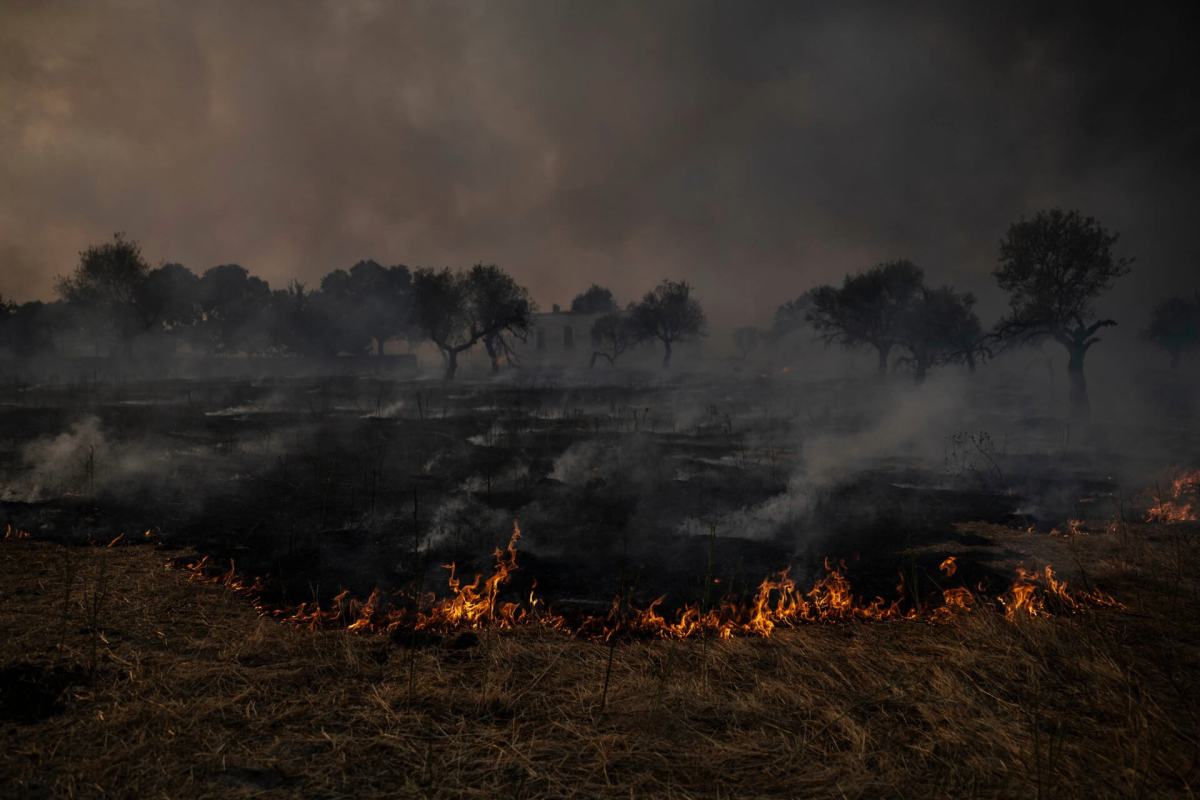
With temperatures forecast to soar to upward of 110 degrees Fahrenheit, officials in Spain have warned of the "extreme risk" of new wildfires even as personnel continue to battle existing blazes, the BBC reported on Friday.
Pedro Sanchez, Spain's prime minister, warned in an online post that conditions were predicted to be "very tough again," per the BBC.
What's happening?
Wildfires have broken out across southeastern Europe as Portugal, Spain, Greece, France, and parts of the Balkans have faced yet another scorching heat wave. On Spain's north coast, fires have charred 579 square miles of land, leaving seven people dead, per the BBC.
With more fires expected, Spain already was battling 14 major blazes, according to Reuters.
"In the western part of the country the situation is extremely worrying," said Virginia Barcones, Spain's director general of emergency services, per Reuters.
Fires raging in Galicia forced the closure of major highways and the suspension of high-speed rail service to the capital city of Madrid, according to Al Jazeera.
The shutdowns came as Catholics across Spain and Portugal attempted to celebrate the annual Feast of the Assumption, an occasion typically marked by large family gatherings and processions.
Meanwhile, Portugal experienced a fire-related fatality, as more than 4,000 firefighting personnel were deployed to battle seven different blazes. A former mayor was killed while assisting in the firefighting efforts, Al Jazeera reported.
To the east, Greece continued to wage its summer-long battle against raging wildfires, with high temperatures and wind gusts fueling the flames, per Al Jazeera.
What do wildfires in Europe mean for the rest of the world?
For decades, scientists have warned that releasing enormous quantities of heat-trapping gases into the atmosphere would cause global temperatures to rise, increasing the severity of extreme weather events.
TCD Picks » Quince Spotlight
💡These best-sellers from Quince deliver affordable, sustainable luxury for all




|
Do you think your city has good air quality? Click your choice to see results and speak your mind. |
 Definitely 🥰
 Europe is now experiencing the consequences of those actions firsthand in the form of record-shattering heat waves and the resulting wildfires.
As the world's fastest-warming continent, Europe has served as the canary in the coal mine, giving the rest of the world a foreshadowing of what the future holds in store as global temperatures continue to rise. Since the 1980s, Europe has warmed twice as fast as any other continent, according to the U.N.
Extreme heat has cost millions of human lives over the past two decades.
From 2000 through 2019, 500,000 people around the world died every year from heat-related causes, per the World Health Organization, a figure that is only expected to rise in the coming years.
In addition to the tragic loss of human life, wildfires also destroy homes, businesses, crops, and livestock, raising food prices and insurance premiums far beyond the flames' reach. Similarly, wildfire smoke carries toxic fumes and particulate matter for hundreds of miles beyond the fire zone.
What's being done about rising temperatures?
To reverse the trend of rising global temperatures, the world's economy must transition away from burning dirtier, nonrenewable fuels like coal and oil and toward cleaner, renewable energy sources like wind and solar.
While doing so will take coordination on an unprecedented scale among government, industry, and NGOs, there are still steps that can be taken at the individual and community level to make a difference.
To help spark political action, you can use your voice, contact your elected representatives, and support candidates who pledge to take action against rising global temperatures.
Taking things a step further, installing solar panels or driving an EV can reduce planet-heating pollution while also saving you money on electricity and gas.

Join our free newsletter for good news and useful tips, and don't miss this cool list of easy ways to help yourself while helping the planet.
Cool Picks






