


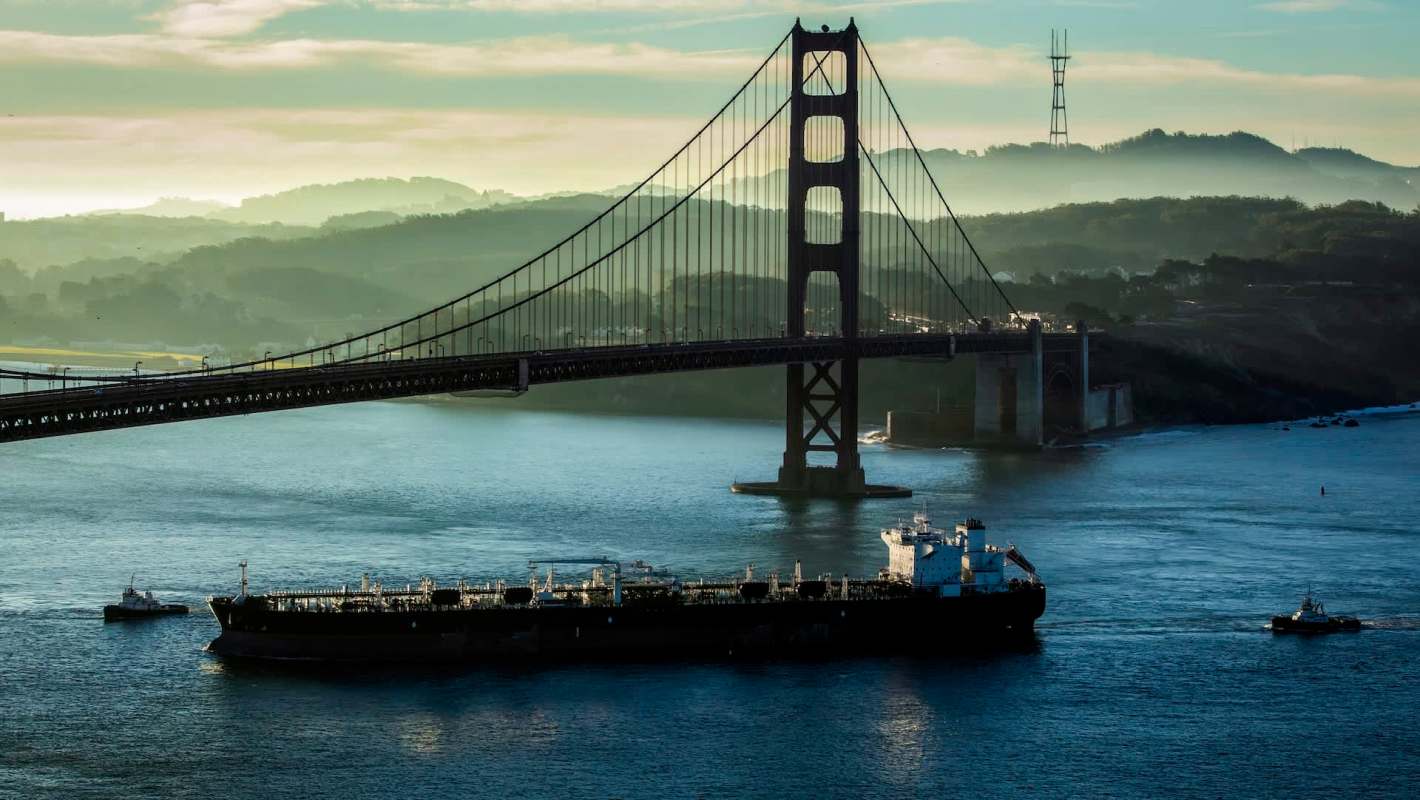
Gray whales are appearing in San Francisco Bay in unusually high numbers — and too many are not surviving the trip.
In response, researchers and transit officials have launched an AI-powered whale alert system to warn mariners in real time and prevent deadly ship strikes.
What's happening?
A new detection network called WhaleSpotter is continuously monitoring the San Francisco Bay for whale spouts and thermal cues at distances of up to 2 nautical miles, according to the Associated Press. When the system flags a possible whale, trained marine mammal observers confirm the sighting before notices go to ferry operators, vessel traffic controllers, and the public.
The system arrived after a devastating year for gray whales in the Bay Area. According to The Marine Mammal Center, 21 dead gray whales were found across the wider Bay Area last year, the most in 25 years; ship strikes caused at least 40% of those deaths. The AP also reported that at least 10 more gray whales have died in the Bay Area this year.
Scientists say the true number is likely even higher, as many carcasses are never recovered. Researchers noted that this is the bay's first system to link shore-based and vessel-mounted detections with official mariner alerts on a near-real-time basis.
The AP noted that this was especially significant because whale activity is clustering in a busy passage near Angel Island, Alcatraz, and Treasure Island — an area crowded with ferries, tankers, and cargo ships.
TCD Picks » Quince Spotlight
💡These best-sellers from Quince deliver affordable, sustainable luxury for all




Why does it matter?
Gray whales typically migrate along the California coast between breeding areas in Mexico and feeding waters in the Arctic, but scientists say rising temperatures and changing sea ice are disrupting the northern food web on which they depend.
As a result, more whales appear to be arriving malnourished and veering into San Francisco Bay, sometimes staying for extended stretches in one of the most dangerous places possible, the AP reported. According to NOAA, the eastern North Pacific gray whale population has dropped by roughly half in the past decade, to about 13,000 animals.
For nearby communities, this is not only a wildlife issue. San Francisco Bay is a working waterway that supports commuters, tourism, and shipping. Improved whale detection could help ferry crews and ship captains avoid traumatic collisions and make marine traffic safer overall.
It is also another sign that climate-driven ocean changes are reshaping coastal ecosystems, with ripple effects for transit systems, fisheries, and the people whose livelihoods depend on them.
What's being done?
One of the whale alert system's biggest strengths is continuous monitoring. According to the AP, thermal cameras can keep working overnight and through the bay's common foggy conditions, unlike human observers. One camera is already operating on Angel Island, and another is slated for a ferry that runs between downtown San Francisco and Vallejo.
Researchers hope to expand the network with added cameras at sites including the Golden Gate Bridge and Alcatraz. Doing so could give captains a better understanding of where whales are spending time and help agencies adjust routes during peak whale season.
For everyday people, supporting whale-safe seafood practices, following boating slowdown rules, and respecting wildlife advisories can strengthen the broader effort to make coastal waters safer.

Get TCD's free newsletters for easy tips, smart advice, and a chance to earn $5,000 toward home upgrades. To see more stories like this one, change your Google preferences here.







