


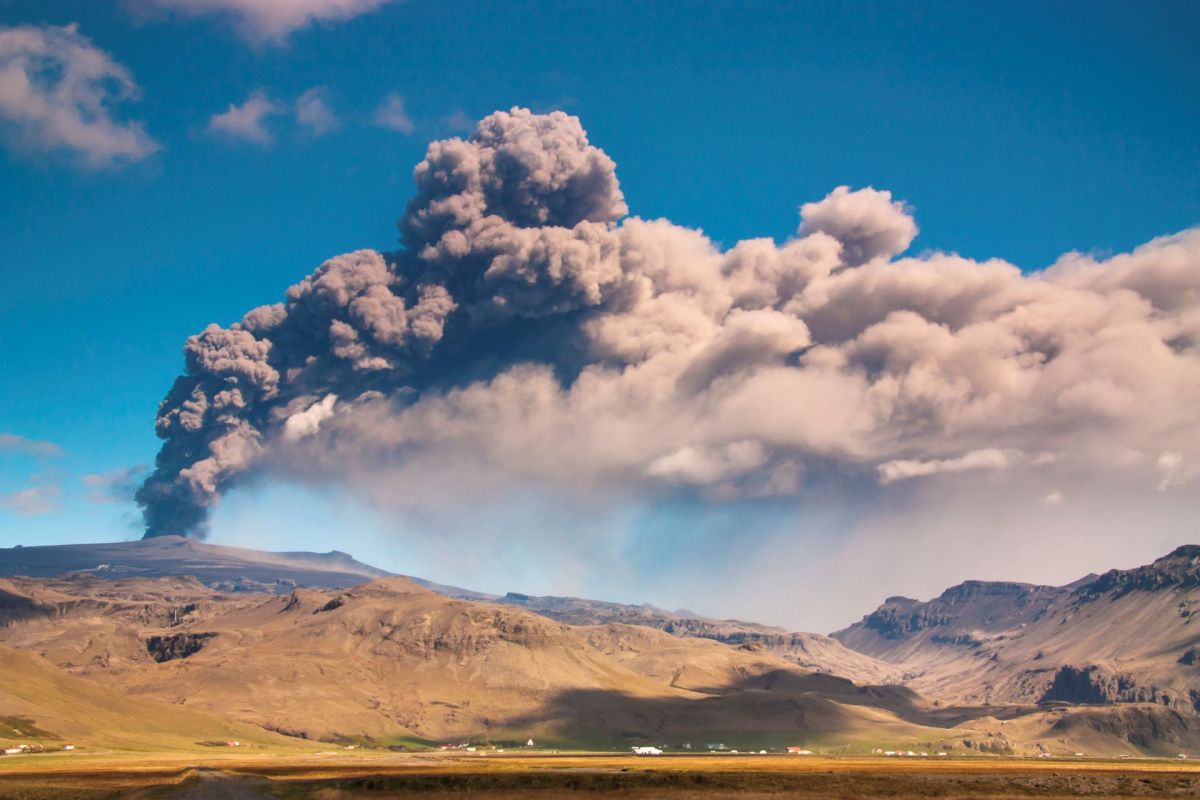
University researchers made a game-changing discovery that could help Italian farmers deal with a nuisance they've been grappling with for millennia: volcanic ash.
According to The Guardian, researchers at the University of Catania found that volcanic ash could be recycled into a fertilizer, turning a longtime annoyance into a potential boon for farmers in southern Italy.
Sicilian farmers around Mount Etna have been dealing with volcanic ash for generations.
Throughout that time, the ash has been a plague; it can pollute water, slow crop growth, and requires special equipment to clean it up. That nuisance became a full-scale problem in 2011, when frequent eruptions dumped more and more ash on villages and surrounding farms.
Enter the study, which analyzed the chemical structure of Etna's ash and discovered that it could be converted into a substance that helps crops grow, rather than one that hinders them.
"It allows us to use fewer chemicals, which makes fertilising cheaper and more sustainable, respecting the equilibrium of nature without abusing it," said Sicilian farmer Andrea Passanisi.
"It's the future of agriculture," Passanisi added.
While the soil around volcanoes has long been known to be among the most fertile on Earth, this study showed that the ash could be just as valuable a resource for farmers.
It also highlighted alternatives to chemical fertilizers that researchers have been investigating, like the biochar fertilizer discovered last year.
Using fertilizer produced from ash instead of chemical fertilizer reduces the likelihood that potentially harmful substances, like PFAS, will taint crops. However, there are still some major hurdles before the new fertilizer can become commercially available.
TCD Picks » Quince Spotlight
💡These best-sellers from Quince deliver affordable, sustainable luxury for all




|
Which of these savings plans for rooftop solar panels would be most appealing for you?
Click your choice to see results and earn rewards to spend on home upgrades. |
 Save $1,000 this year 💸
 While the process costs 30 euros per tonne ($31.65 per ton) — compared to 300 euros per tonne ($316.58 per ton) to dispose of it as waste — current Italian and European regulations designate volcanic ash as waste that cannot be recovered or recycled.
Although regional guidelines have allowed for ash to be recycled following the study, the private sector has been slow to adapt.
"But more than a year since then, there's still no list of companies registered to collect and refine ashes to reallocate them for production purposes," said Paolo Roccaro, an environmental engineering professor and the study's lead researcher.
"For now, the goal is to instill the idea that this alternative approach can work, to make its systemic reuse more palatable in the near future."

Get TCD's free newsletters for easy tips to save more, waste less, and make smarter choices — and earn up to $5,000 toward clean upgrades in TCD's exclusive Rewards Club.
Cool Picks






