


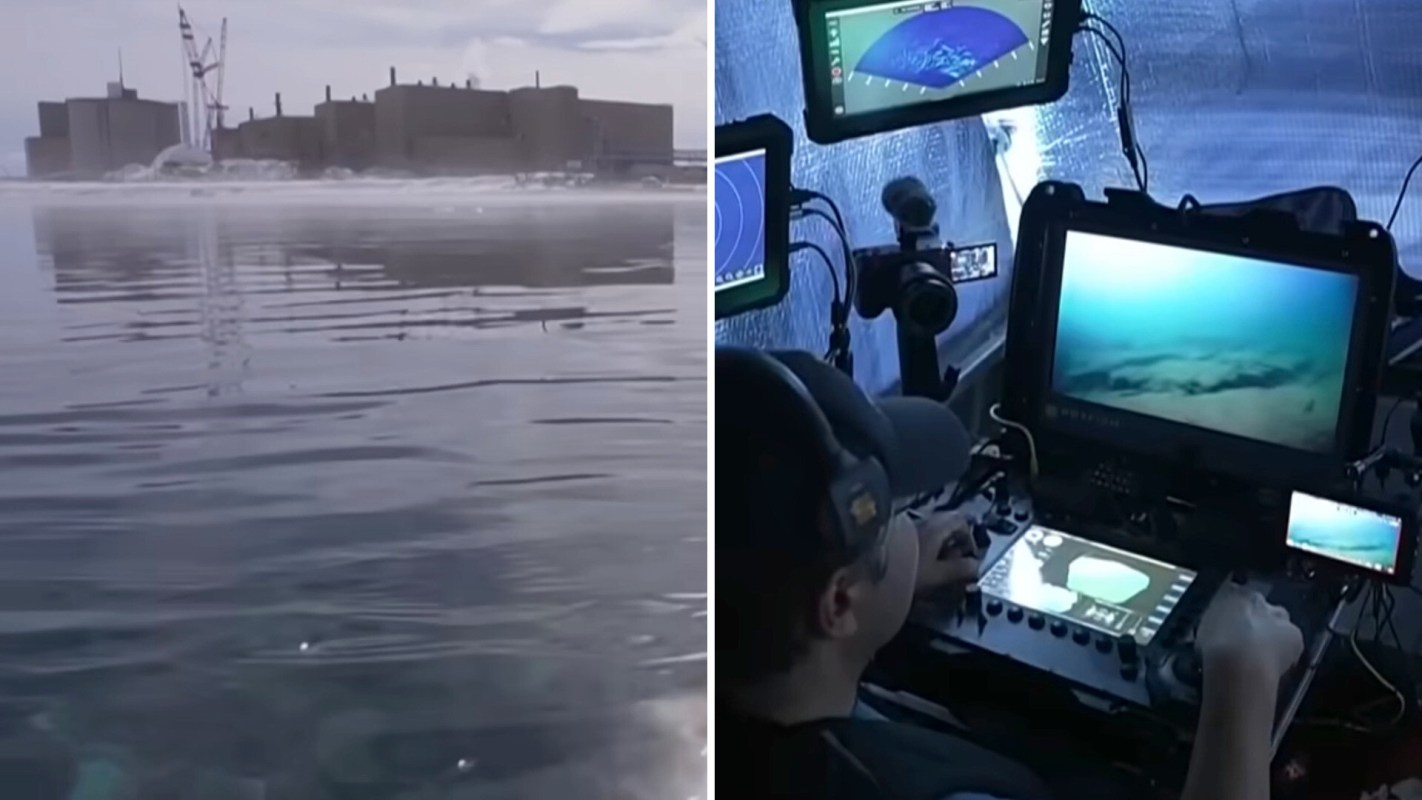
Incredible underwater footage of fish gathering near a nuclear plant outflow in Lake Huron in Ontario, Canada, has captured significant attention, revealing a phenomenon known as "fish city" that appears to stem from ecosystem disruptions.
As reported by CBC News, the remarkable footage was captured by an innovative underwater drone. This $250,000 drone is one of only about 10 in existence, and the nine other units are specifically designed for saltwater environments.
Documentarians Yvonne Drebert and Zach Melnick, co-founders of Inspired Planet, are using the drone for their upcoming film, "Hidden Below: The Great Lakes," to closely document how various fish species congregate around the Bruce Nuclear Generating Station, the world's largest nuclear facility.
"No one really had a chance to look under the water there and it was pretty jaw-dropping," Drebert said.
The nuclear station releases warm water into the lake as part of its reactor cooling system. The warmer water, referred to as a thermal plume, has become a literal hot spot for fish to gather, as it artificially speeds up algae growth and increases the food supply, creating a feeding ground.
However, while the presence of a "fish city" may initially suggest a thriving ecosystem, the reality is that it may be influenced by invasive mussels. Nicholas Mandrak, a University of Toronto biologist who joined Drebert and Melnick for a livestream — which can be viewed here — of a drone dive into Fish City, believes zebra and quagga mussels are to blame.
TCD Picks » Quince Spotlight
💡These best-sellers from Quince deliver affordable, sustainable luxury for all




"The fact they're concentrating at thermal plumes because there's a lack of food in the main lake is an unhealthy sign of what the mussels have done," Mandrak said, according to the CBC. "If the food levels were still high through the Great Lakes like they were before the mussels, we would probably see less concentration of fish in these plumes."
The two pistachio-sized invasive species from Europe were introduced to the Great Lakes in the 1980s, and since then, have caused widespread ecological and economic damage. The mussels have severely impacted the local food chain by filtering and consuming plankton, which are vital for fish survival.
For the Ojibwe people, who have historically inhabited the region for millennia, the presence of invasive mussels, nuclear plants, and harmful algal blooms has led to significant ecological challenges. These changes include dead zones that threaten fish populations essential for the local ecosystem, clean drinking water, and regional economies.
The Saugeen Ojibway Nation has urged the Canadian and Ontario governments to take steps to protect the lake. According to the CBC, a 2020 report prepared for the Saugeen Ojibway Nation linked the warmer water to poor survival rates of young whitefish in one nursery area.
It's estimated that invasive species cost the U.S. at least $1.2 trillion between 1960 and 2020. From Burmese pythons in Florida to lionfish along the East Coast and 20-pound rodents across the South, invasive species are wreaking havoc all around the country.
The mussels aren't even the only invasive species causing problems in the Great Lakes. The federal government is spending $1 billion, along with over $100 million from Michigan and Illinois, to protect the Lakes from invasive carp.
The adverse effects of invasive species like mussels and carp may take years to remedy, and fully restoring the Great Lakes to their former health may be unrealistic.
According to the CBC, York University professor Sapna Sharma, who studies environmental stressors on lakes, is concerned about what the "fish city" means for the local ecosystem.
"It raises questions about what's behind it — especially whether warm water discharge from nearby industry is changing the ecosystem, and what that means for the people who depend on it," Sharma said.

Get TCD's free newsletters for easy tips, smart advice, and a chance to earn $5,000 toward home upgrades. To see more stories like this one, change your Google preferences here.







