


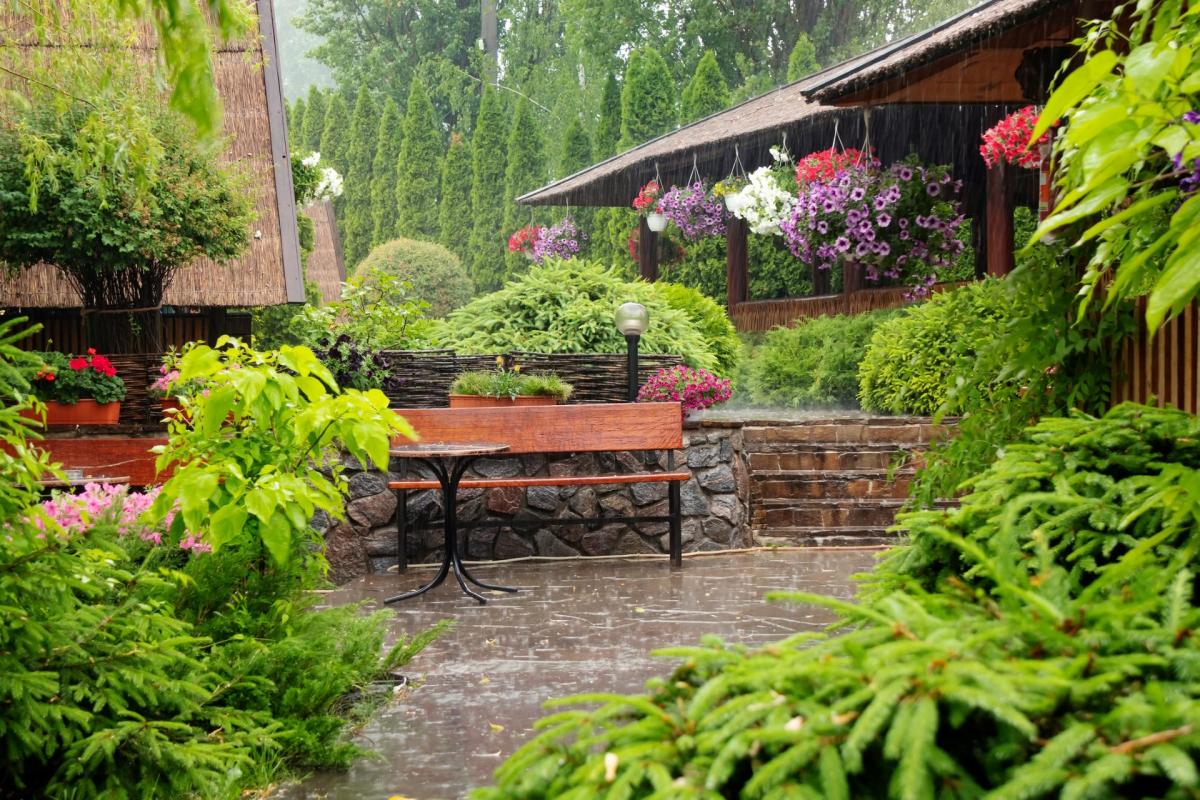
Last January, the United Kingdom's Royal Horticultural Society revealed its plan to conserve water amid severe droughts. According to the Guardian, the RHS will invest more in water-capture and management projects in 2026, encouraging gardeners throughout the U.K. to follow its example.
The RHS manages five renowned gardens across England, including Hyde Hall in Essex, Rosemoor in Devon, and Wisley in Surrey. To save water, the RHS will create rain gardens and install rainwater storage facilities, both of which reduce water consumption. In fact, rainwater capture can save 600 gallons (2,271 liters) from a one-inch rainstorm, according to the University of Arizona.
The charity will also examine which plants consume the most water, to predict water-use patterns and better allocate resources.
Tim Upson, the RHS's director of horticulture, told the Guardian that the charity's new plans get into the "nitty-gritty" of where a last bucket of water might be used in a garden.
"That's the reality of the situation we need to prepare for and we would be foolish not to," he said.
The updated water management plans come in the wake of the driest spring seen in the U.K. since the Victorian era, according to the U.K. Environment Agency. Though some months saw heavier rainfall than average, 15 key reservoirs fell below 50% by the end of September. Summer 2025 was also England's hottest on record, with an average temperature of about 17°C (around 63°F).
These droughts devastated people and their businesses; in Yorkshire, for example, the dry weather limited grass growth, shrinking livestock food supply.
As global temperatures rise and heat waves worsen, organizations like the RHS are searching for the most effective courses of action. Rain-capture is one; native plants could be another.
Because they're adapted to their environments, native plants consume much less water than their non-native counterparts. According to the U.S. National Audubon Society, native plants use four times less water per year than monoculture lawns. While native plants weren't explicitly named by Upson, the RHS's water consumption research could very well lead it down that path.
Native plants also save organizations and homeowners alike on time and money. They require less maintenance, water, and treatment, as they are innately able to thrive in their native environments. Even a partial garden or lawn replacement can produce many benefits.
TCD Picks » Quince Spotlight
💡These best-sellers from Quince deliver affordable, sustainable luxury for all




|
Which of these savings plans for rooftop solar panels would be most appealing for you?
Click your choice to see results and earn rewards to spend on home upgrades. |
 Save $1,000 this year 💸
 In the wake of extreme weather, municipalities are adopting similar methods to the RHS. Los Angeles, for example, has constructed rain gardens that redirect flood runoff to plants. It saves water that would otherwise flow through cities and collect pollution before being drained into the ocean.
Upson told the Guardian, "Water is the lifeblood of any garden — important not only to human health and wellbeing but the broader environment and wildlife — and we, like the U.K.'s 34 million gardeners, are having to adapt to the new normal…"

Get TCD's free newsletters for easy tips to save more, waste less, and make smarter choices — and earn up to $5,000 toward clean upgrades in TCD's exclusive Rewards Club.
Cool Picks




