


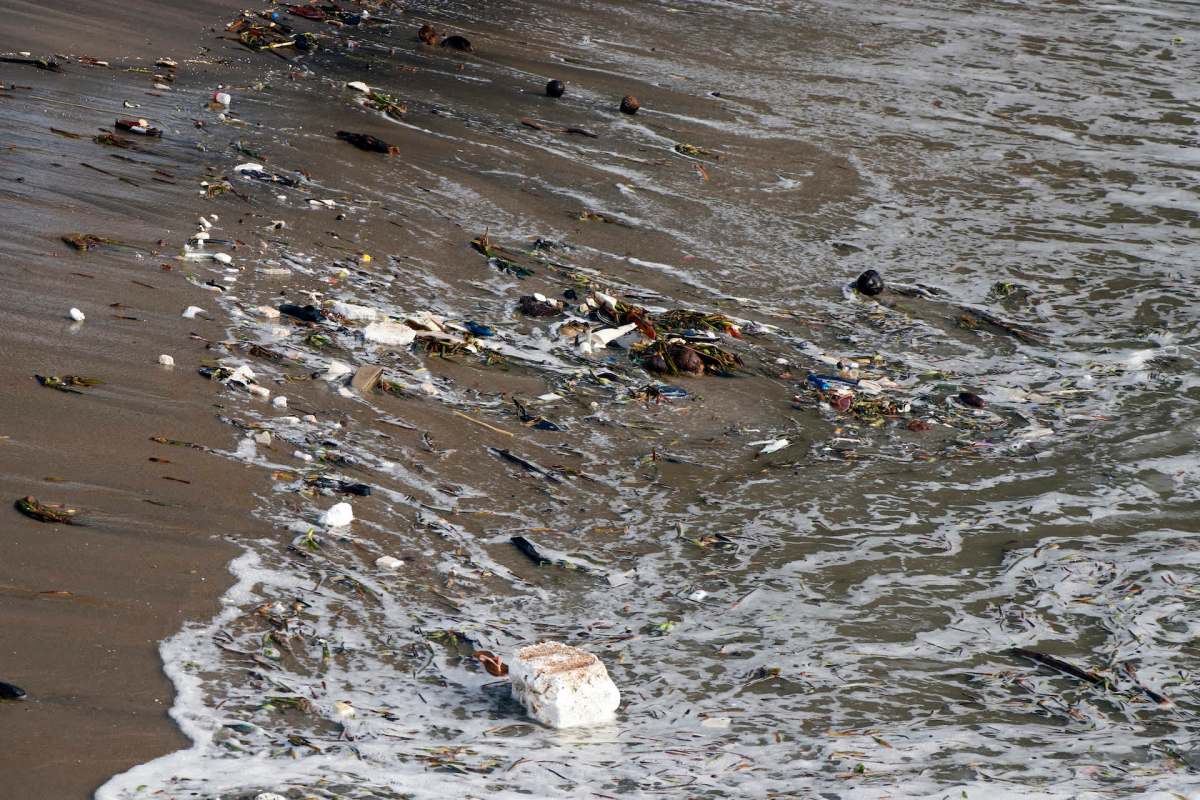
Sweden's government is taking action to help protect the Baltic Sea, one of the world's most polluted bodies of water.
Two pieces of legislation passed in June that will help keep the Baltic a little cleaner, WeAreAquaculture reports. The first legislation bans bottom trawling fishing in protected areas, such as marine parks and nature reserves. The second action created Nämdö Archipelago National Park, the country's first marine national park in the Baltic.
As an inland sea, the Baltic has little exchange with other bodies of water, meaning pollution such as microplastics stays in the sea. And as global temperatures have risen, the sea's bacterial overgrowth has also increased, leading to a lack of oxygen that's needed for marine life to thrive.
This has led many researchers to refer to the Baltic as one of the most polluted seas in the world and prompted Sweden's actions.
Bottom trawling is a common commercial fishing practice in which heavy nets or chains are dragged over the ocean floor to capture fish. The method is reportedly used to capture about one-quarter of the world's wild-caught seafood, making any ban on it controversial within the industry.
But bottom trawling also causes major environmental damage. One study found that the practice results in about 408 million tons of carbon being released from the ocean into our atmosphere — the same type of pollution that has led to increased global temperatures.
"The bill affirms the ecosystem approach as a fundamental guiding principle for marine policy. This approach becomes more important every day," Romina Pourmokhtari, Sweden's minister for climate and the environment, told a United Nations conference. "Action must be taken from source to sea."
Sweden's ban on bottom trawling follows in the footsteps of several other European nations. Greece has announced a ban on the practice that takes effect next year in national parks and in all marine protected areas by 2030. And the United Kingdom already has a ban in place for its protected areas, but is considering expanding the ban area by more than 150%.
|
Do you think we should place solar panels over bodies of water? Click your choice to see results and speak your mind. |
 Absolutely 👍
Join our free newsletter for good news and useful tips, and don't miss this cool list of easy ways to help yourself while helping the planet.
Cool Picks






