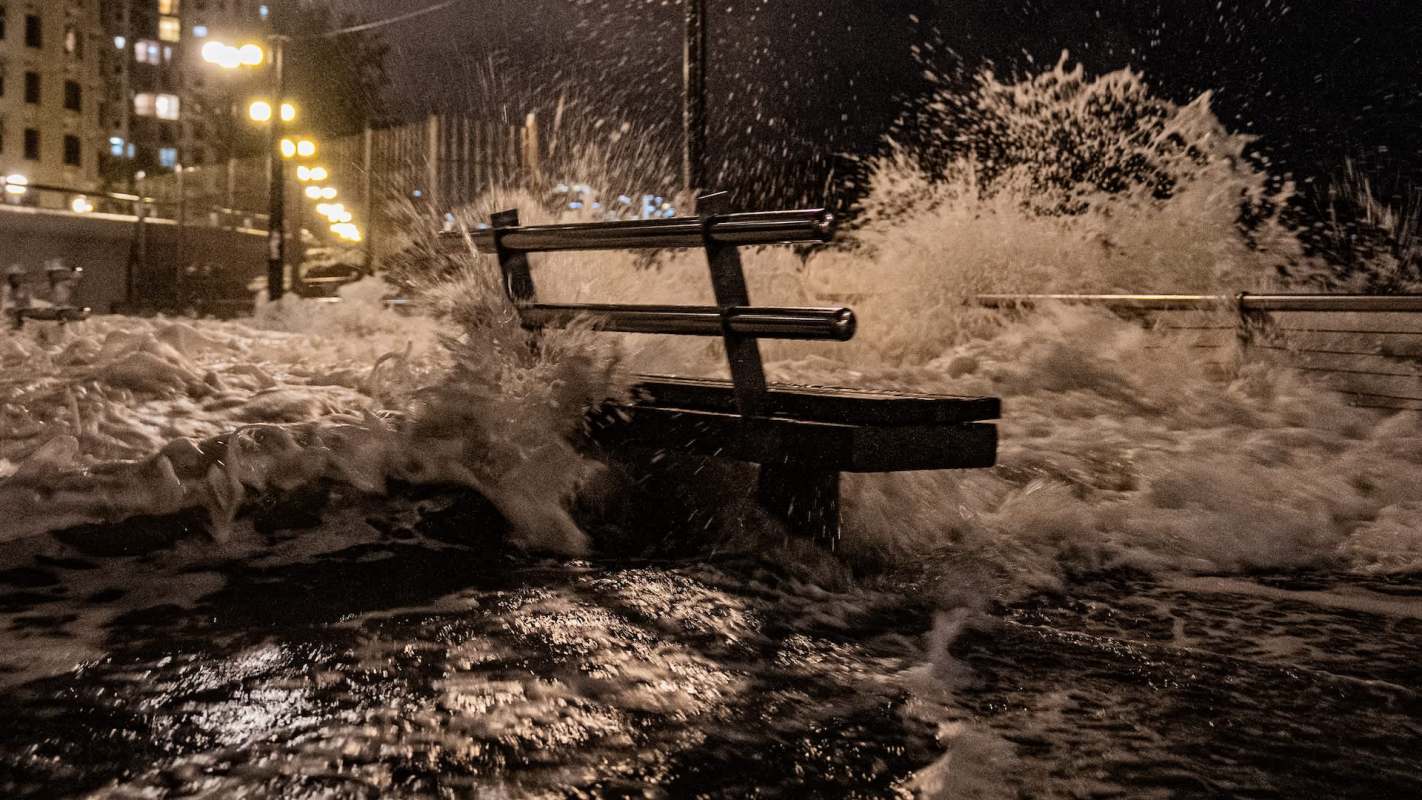
Footage circulating online showed dramatic scenes of devastation that appeared to be straight out of a disaster movie, as a massive storm made its way across densely populated parts of East Asia.
With sustained winds reaching as high as 165 miles per hour, Super Typhoon Ragasa has left a trail of destruction in its wake. The storm most recently battered Hong Kong and southern China, as authorities labeled Ragasa the most powerful typhoon of the year so far, the Guardian reported.
What's happening?
Before reaching Hong Kong and mainland China, Super Typhoon Ragasa had ravaged Taiwan and the northern Philippines, leaving nearly 30 people dead, according to the AP.
In Guangdong Province, a vital hub of economic activity in mainland China, more than two million people had been ordered to evacuate. Factories, schools, transportation services, and other facilities were closed across dozens of cities, as officials allocated tens of millions of dollars toward relief efforts, per the AP.
In Macau, a popular tourist hub known for its casinos, the storm surge turned roadways into temporary rivers. Despite official orders to stay indoors, residents were observed catching fish with makeshift nets as water rushed through the city, the Guardian reported.
Officials said it was not only the most powerful storm of the season so far, but one of the most intense to strike Asia in recent years, per the AP.
Perk up the winter blues with natural, hemp-derived gummies Camino's hemp-derived gummies naturally support balance and recovery without disrupting your routine, so you can enjoy reliable, consistent dosing without guesswork or habit-forming ingredients. Flavors like sparkling pear for social events and tropical-burst for recovery deliver a sophisticated, elevated taste experience — and orchard peach for balance offers everyday support for managing stress while staying clear-headed and elevated.
Learn more → |

Losing strength, authorities have downgraded Ragasa to a tropical storm, as it continued on a path toward Vietnam, according to the Guardian.
As rescuers searched for those still in peril and cleanup crews used heavy equipment to remove thousands of downed trees and clear roadways, residents had already begun to question officials' handling of the storm, leading to dramatic political infighting, the South China Morning Post reported.
Why is it important?
For decades, experts have warned that rising global temperatures would fuel extreme weather events, making them more severe and increasing their devastation. While it is difficult to scientifically prove that any single weather event was caused by increasing temperatures, the changing climate has made such storms far more likely.
The Environmental Defense Fund explained how hotter temperatures lead to more powerful and destructive storms.
TCD Picks » Upway Spotlight
💡Upway makes it easy to find discounts of up to 60% on premium e-bike brands





|
How often do you experience power outages? Click your choice to see results and speak your mind. |
 Pretty regularly 😠
 "Evaporation intensifies as temperatures rise, and so does the transfer of heat from the oceans to the air," the environmental advocacy group said on its website. "As the storms travel across warm oceans, they pull in more water vapor and heat, adding more energy to the storm."
"That means heavier rainfall, stronger wind and more flooding when the storms hit land," the EDF continued.
In addition to the devastating destruction and tragic loss of life, Super Typhoon Ragasa has served as an example of how these massive storms can cause wide-ranging, even global, impacts far beyond the disaster area.
According to Forbes, China is the world's largest manufacturer, accounting for nearly a third of all global manufacturing. Guangdong Province is China's most important manufacturing hub, with tens of thousands of factories churning out everything from electronics to textiles to machinery.
With Super Typhoon Ragasa having caused the evacuation of millions of people and the closure of thousands of factories, the impact could be felt around the world in the form of shortages of key goods and potentially higher prices.
What's being done about it?
Local and national governments around the world have been racing to beef up their infrastructure, making their cities more resilient to the new era of higher sea levels and more powerful storms. Governments have plunged billions of dollars into flood-mitigation projects, building massive sea walls and expanding the capacity of storm drains, for example.
However, over the long term, the only way to turn the tide on more intense storms is to greatly reduce the amount of planet-overheating pollution entering the atmosphere. This means transitioning the global economy away from its reliance on dirtier, nonrenewable fuels like coal, oil, and natural gas and toward cleaner, renewable energy sources like solar.
To help spur change at the political level, you can use your voice, contact your elected representatives, and vote for candidates who make rising global temperatures a priority.

Join our free newsletter for good news and useful tips, and don't miss this cool list of easy ways to help yourself while helping the planet.
Cool Picks