


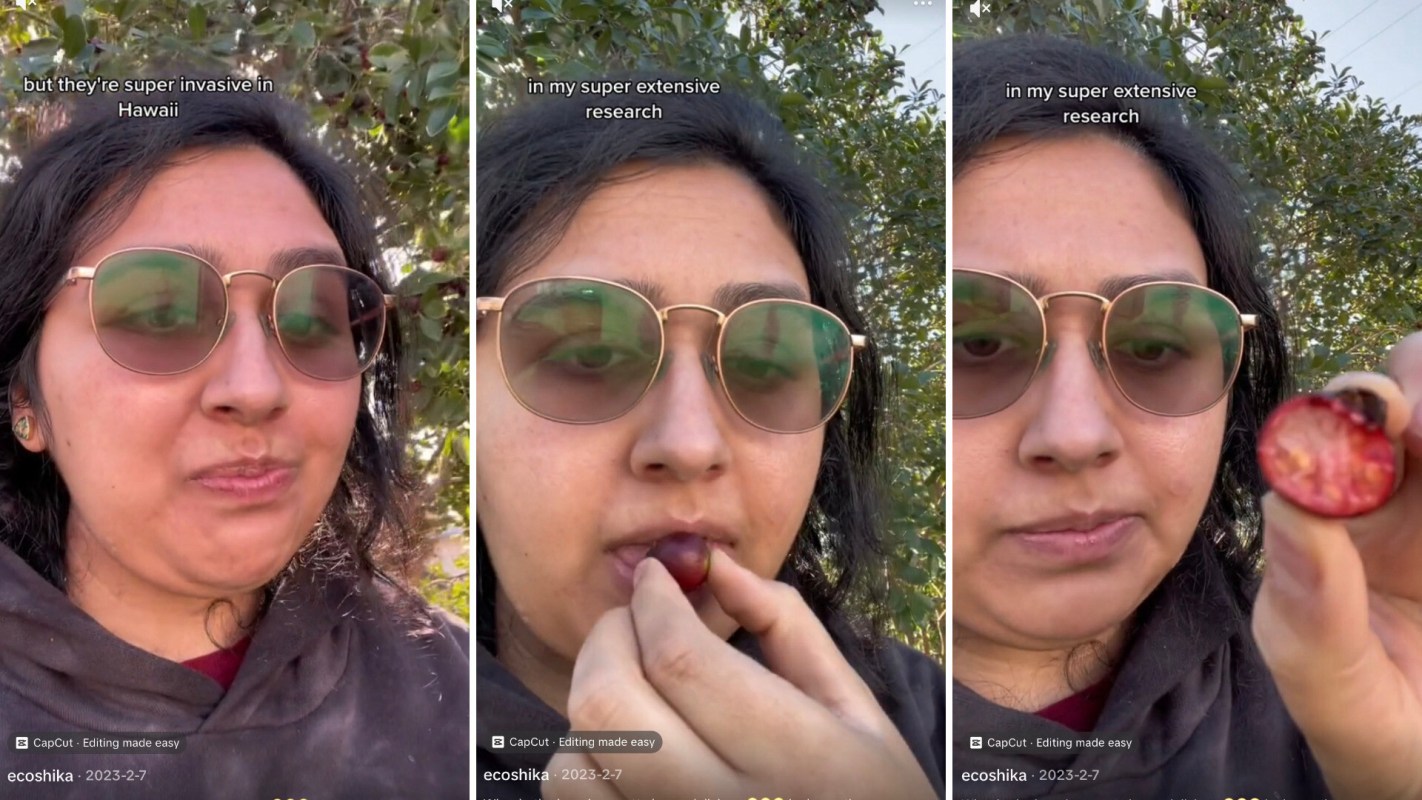
In a clip that's now making the rounds online, one forager explains how a casual walk led to the discovery of a fruiting tree they didn't recognize.
After noticing squirrels happily snacking on the small pink fruits, they Googled the plant and learned it was strawberry guava — a highly invasive species in Hawai'i. Curious, they tried one, and it was delicious.
Rather than gatekeeping the find, the forager Ecoshika (@ecoshika) shared the experience on TikTok to encourage others to harvest the fruit too, saying, "Wow they were delicious."
@ecoshika Why do the invasives gotta be so delicious 😢🙃😞 im honestly shook at how fast theyve spread in hawaii. Anyway, rn all i can do is share, learn, and enjoy some fresh fruit! #strawberryguava #foraging #urbanforaging #invasivespecies #invasiveplants #foragingfinds #ecotok #bipocecotok ♬ Dreamy Vibes - Ocean Bay Jazz
Strawberry guava spreads aggressively across Hawaiian forests, crowding out native plants, harming soil health, and reducing habitat for pollinators, such as birds and insects (which are essential to our food supply). Once established, it forms dense thickets that are notoriously difficult to remove. State agencies and conservation groups have spent years trying to control it, but community participation can also help slow its spread.
When invasive plants take over an area, it can destabilize an entire ecosystem — affecting both the wildlife and local communities that rely on it for food, water, and other resources.
Invasive outbreaks slow progress toward a better, safer future for all of us by reducing biodiversity and causing ripple effects across the entire food chain. When communities learn how to manage them responsibly — whether through removal, restoration projects, or even mindful foraging — it helps native plants and animals recover while empowering people to take part in caring for their surroundings.
Residents can support efforts to battle invasive species simply by adding them to the menu. For people living in affected areas, harvesting invasive plants — from Himalayan blackberries to invasive Japanese knotweed — can mean free food, fewer chemical control methods, and making more room for native species to thrive.
Viewers were quick to cheer on the idea in the comments.
"Their flowers are edible too!!! Sweet petals," one person wrote.
"This makes me so excited omg," the original poster responded.
TCD Picks » Upway Spotlight
💡Upway makes it easy to find discounts of up to 60% on premium e-bike brands





Another added, "I bet you could make some mean jelly out of that."
|
What's the most you'd pay per month to put solar panels on your roof if there was no down payment?
Click your choice to see results and speak your mind. |
 $200 or more 💰
Get TCD's free newsletters for easy tips to save more, waste less, and make smarter choices — and earn up to $5,000 toward clean upgrades in TCD's exclusive Rewards Club.
Cool Picks






