


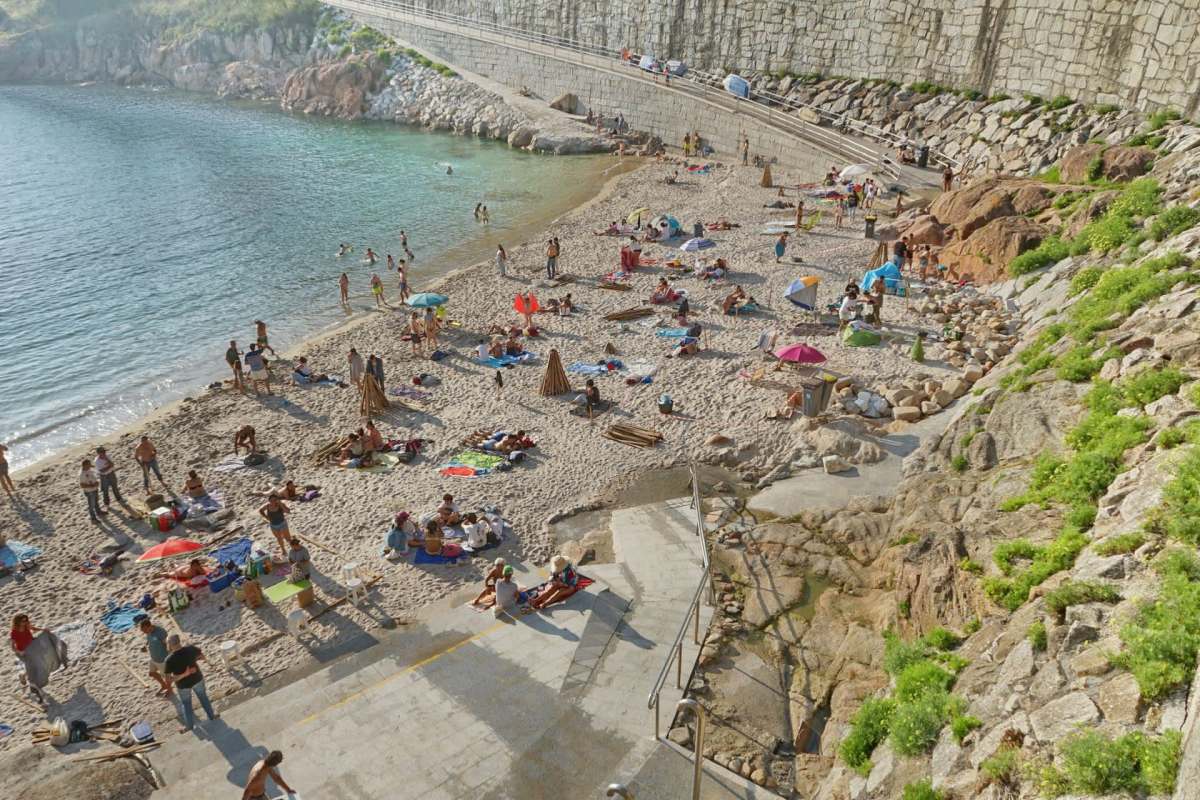
With rising sea levels altering coastlines and threatening to destroy some of Spain's beaches entirely, authorities are working to protect popular resorts nationwide.
What's happening?
The i Paper examined how rising water levels and disappearing sands are threatening to end Spain's tourism boom, which began in the 1960s.
Now, millions of British tourists flock to the country's beaches every year. However, rising sea levels and an increasing number of severe storms are chipping away at the beaches.
In Calafell, a town outside of Barcelona that relies heavily on holidaymakers, authorities hope the removal of a walkway next to the sand will help a dune recover.
Dunes serve as natural flood barriers, support biodiversity, and protect against erosion. Yet they can only do so much when powerful waves encroach deeper inland due to rising seas.
"In the next 100 years, beaches are going to change a lot. This will happen across Spain," Aron Marcos, the head of environment at the council in Calafell, told The i Paper.
Why is this important?
The National Institute of Statistics confirmed that tourism solidified its status as Spain's top economic engine last year, according to Sur in English. If Spain's beaches are destroyed, the country could lose billions in revenue, and family businesses would likely be hit the hardest.
Carla Garcia-Lozano, a doctor of physical geography at the University of Girona, acknowledged to The i Paper that false beaches have contributed to today's problems. With tourism surging, municipalities across Spain began to replace natural features with sand to meet demand.
However, natural beaches are still in trouble as sea levels rise, with glaciers melting at unprecedented rates and water volume expanding as the climate warms.
What's being done about this?
Locals have protested mass tourism in parts of Spain, saying it diminishes their quality of life, and have called for governmental support. A more sustainable approach could support their ambitions, reduce air pollution linked to rising seas, and benefit the nation's economy in the long term.
TCD Picks » Quince Spotlight
💡These best-sellers from Quince deliver affordable, sustainable luxury for all




|
What's the most you'd pay per month to put solar panels on your roof if there was no down payment?
Click your choice to see results and speak your mind. |
 $200 or more 💰
 Meanwhile, Dr. Lozano told The i Paper that "we will lose a lot of beaches in the medium term." However, she believes natural solutions like dunes can protect some beaches. The strategic removal of infrastructure in overdeveloped areas will also help mitigate future losses.
"We still see some developments which do not take into account sea level rises. We have to reclaim the first part of the coastline which is where these ecosystems help to protect the effects of climate change," added Elvira Jimenez, spokeswoman for the coastal environment for Greenpeace in Spain, according to the report.

Get TCD's free newsletters for easy tips to save more, waste less, and make smarter choices — and earn up to $5,000 toward clean upgrades in TCD's exclusive Rewards Club.
Cool Picks




