


South Dakota officials have added another county to a pest quarantine list as they try to slow the spread of the killer emerald ash borer.
The Department of Agriculture and Natural Resources (DANR) expanded the ban on the movement of firewood to Grant County, Keloland News reported. Brookings, Minnehaha, Lincoln, Turner, and Union counties were already under the embargo.
The beetle has been doing its worst in the cities of Brookings, Canton, Dakota Dunes, Milbank, and Sioux Falls, infesting and threatening millions of ash trees. Residents within 15 miles of Milbank were encouraged to contact a commercial applicator to save their trees, the TV station noted.
John Ball, DANR forest health specialist, said the insect could survive in a felled tree for a year, meaning cutting down affected trees is not a solution by itself.
"We'll never stop the insect, but the longer we can slow it moving from county to county, that buys more time for communities to prepare for it," Ball told Keloland News.
The outlet said it is forbidden to transport firewood and ash materials outside of the quarantined counties for one year. Untreated firewood has been prohibited from entering South Dakota from states to the east, as well as where the emerald ash borer has been found.
"Then we're able to prevent the spread as best we can by limiting essentially the firewood and other regulated articles, such as ash nursery stock, ash logs, ash lumber, ash chips or mulch, wood packing material," Brenda Sievers, DANR plant industry program manager, told Keloland News.
The invasive species was found in the United States in 2002 and South Dakota in 2018. It is damaging and killing perhaps billions of trees throughout the Eastern U.S. and Canada.
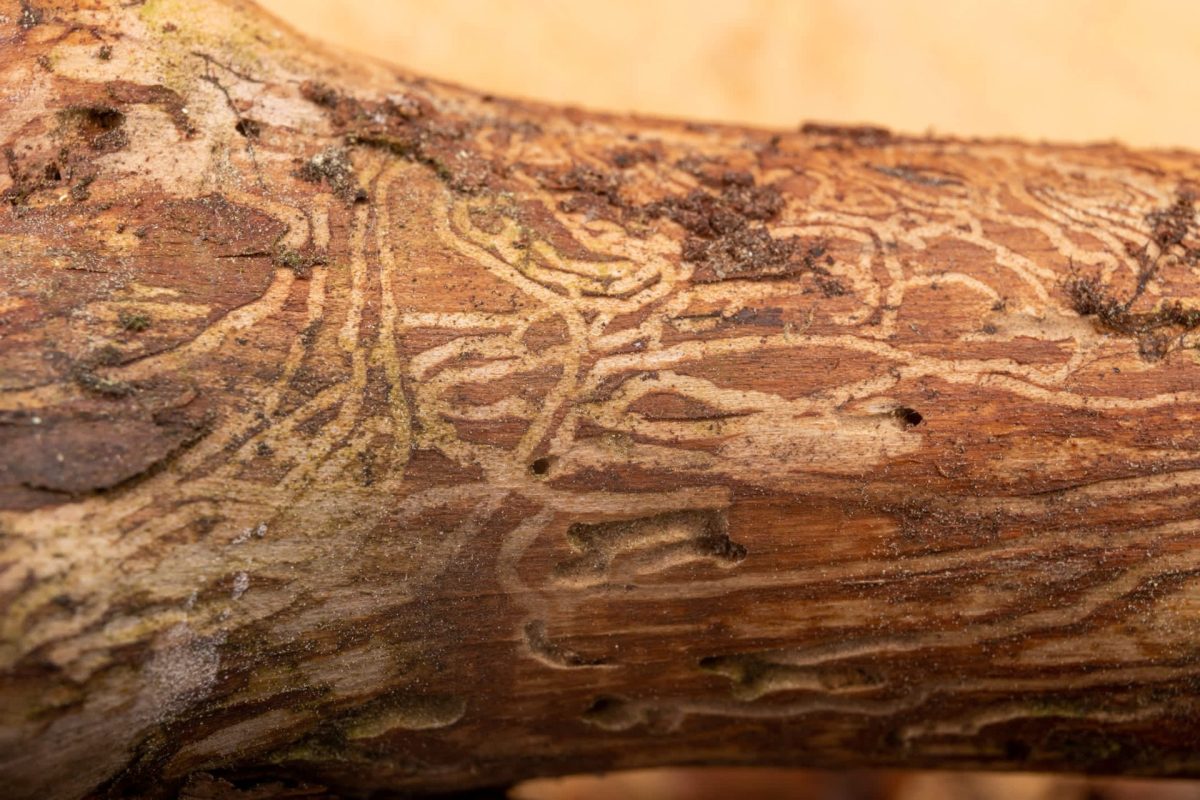
The emerald ash borer, originally from China, lays eggs on the bark of ash trees. After hatching, larvae burrow into the tree to feed, cutting off the trees' conveyance of nutrients and causing quick dieoffs. When the young become adults, they exit the trees, leaving D-shaped holes.
Researchers have found that ash trees in the Western U.S. have a genetic variation that could protect them from the beetle, which kills 90% of the trees it infects. An Oregon ash in the southern part of the state has proved more resilient than other species to the emerald ash borer as well as higher temperatures, offering hope that not only the trees can be saved but also ecosystems and other species, including fish, that rely on the protection, such as shade, provided by the plant.
TCD Picks » Quince Spotlight
💡These best-sellers from Quince deliver affordable, sustainable luxury for all




|
Should the government be able to control how we heat our homes? Click your choice to see results and speak your mind. |
 Definitely 👍
 This shows the importance of mitigating the spread of invasive species. The state Department of Agriculture advises that small ash trees should be cut down before they are infested, while larger trees should be treated with insecticide. Parasitoid wasps, which prey on the beetles, have also proved helpful.
"We've certainly slowed the spread in South Dakota," Ball told Keloland News. "Not only do the quarantines work, but we both appreciate the fact that South Dakotans are actually following the quarantine and not moving firewood."

Join our free newsletter for good news and useful tips, and don't miss this cool list of easy ways to help yourself while helping the planet.
Cool Picks






