


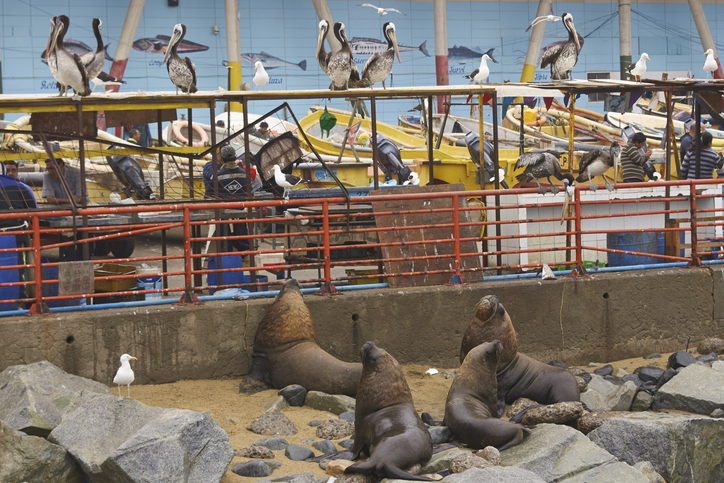
A video reshared by the Stewartville Star shows an unexpected guest interrupting the work of local fishermen.
What's happening?
The video shows a South American sea lion approaching fishermen as they move their haul into a truck. One fisherman allows the sea lion to get close, and even tosses it a few fish in a video posted to Facebook by Nature Heaven.
The South American sea lion is prevalent along the coast of Peru, around the southern Cape Horn, up along Argentina, and then north to southern Brazil. The population is a stable 425,000, though they were aggressively hunted by humans. Their current population is roughly a third of their original size.
Why are wild animal encounters important?
It might be easy to see encounters like this as cute. The Star described it as "a child in a candy store." However, behavior like this is an indication of natural imbalances.
For one, it shows human activity bordering too closely with wildlife, which affects their behaviour in maladaptive ways. If this sea lion gets used to fishermen as a source of food, what happens when the fishermen aren't there, or if they refuse to feed an expectant animal?
The other challenge is that dwindling prey and habitat loss can force predators into human territory to find more food. In either instance, it's dangerous for people to be this close to large wild animals. When it comes to food or protecting their children, animal instincts can quickly turn violent.
TCD Picks » Quince Spotlight
💡These best-sellers from Quince deliver affordable, sustainable luxury for all




What's being done about protecting sea life?
Wildlife has been able to make significant recoveries in areas that are banned from fishing activity. Restoration projects for coral reefs, for example, are reigniting the basis of sea life in many areas. Fundamentally, we need greater habitat conservation and the ability to enforce protection policy in order to ensure animals like this sea lion don't need to waddle up to humans for food.

Join our free newsletter for good news and useful tips, and don't miss this cool list of easy ways to help yourself while helping the planet.







