


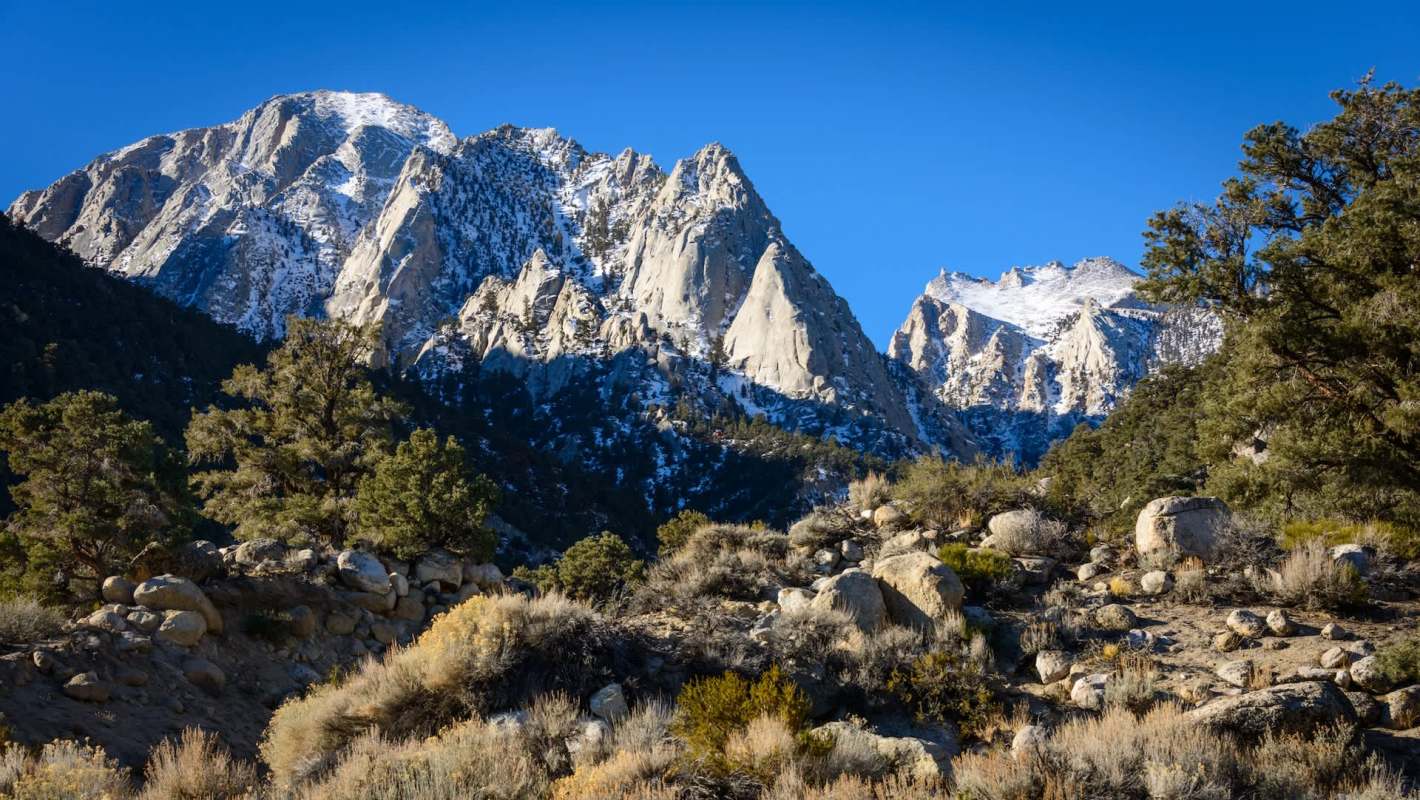
After a promising start, the snowpack in the Northern Sierra, California, dropped dramatically during the middle of winter.
Officials are concerned because the snowpack supplies nearly 30% of the state's water needs.
What's happening?
Snowpack levels in the Sierra Nevada are subjected to the whims of winter weather. Weather whiplash is common in the mountain range, which can experience a series of winter storms followed by long stretches of dry conditions with little to no snow falling.
The winter of 2024-25 got off to a great start after several storms at the start of the season helped build up the statewide snowpack in California to 108% by January 1.
January took a dry turn, though, dropping the Northern Sierra back to near average for snowpack by the end of the month. Elsewhere, the Central Sierra fell to 58% of the average, and the Southern Sierra Nevada dropped to just under 50% of the average.
"Despite a good start to the snowpack in the Northern Sierra in November and December, we can look back as recently as 2013 and 2021 to show how quickly conditions can change for the drier," said California's Department of Water Resources director Karla Nemeth.
"California missed out on critical snow-building storms in January, which has pushed the state down below average for this time of year. While we are excited to see some storm activity in the coming days, sustained periods of no precipitation can dry the state out very quickly. For each day it's not snowing or raining, we are not keeping up with what we need."
Snowpack in the Sierra improved a bit by the second week of March but was still below average overall. The Northern Sierra snow water equivalent was near normal. The Central and Southern Sierra snow water equivalent was 81% of the average. This "frozen reservoir" is an essential supplier of California's water.
Why is a below-average snowpack in Sierra Nevada concerning?
California's drought was holding steady in the middle of March, with nearly 42% of the state reporting at least a moderate drought, according to the U.S. Drought Monitor. That's in stark contrast to mid-December, when nearly 17% experienced moderate drought. At the start of the water year on October 1, this figure was just over 10%.
An analysis of snowfall trends at over 2,000 U.S. locations by Climate Central's scientists revealed nearly two-thirds of them are getting less snow now compared to the early 1970s.
TCD Picks » Quince Spotlight
💡These best-sellers from Quince deliver affordable, sustainable luxury for all




|
Would you install water-collecting hydropanels on your home?
Click your choice to see results and speak your mind. |
 Definitely 👍
 "Snow keeps our planet cooler, makes up more than 50% of runoff that replenishes reservoirs and groundwater across the western U.S., and underpins local economies and cultures from coast to coast," the study observed.
Research from Dartmouth College also found a troubling trend, with snowpacks in the Northern Hemisphere dropping significantly in size over the past 40 years.
Experts have warned that if a persistent snow drought that has resulted in the declines in the water levels at Lake Mead (Nevada and Arizona) and Lake Powell (Utah and Arizona) continues, it could threaten a critical water supply for millions of people.
What's being done about diminishing snowpack in Southern California?
Cooling our overheating planet is critical, and among the most impactful changes we can make is to encourage a large-scale shift away from dirty energy sources to renewable, sustainable alternatives like solar, wind, and geothermal.
Using your voice at work to advocate for change and talking with friends and family about the need to make this shift is important. Supporting pro-climate policymakers fighting for our planet's future can have a big impact too.

Join our free newsletter for good news and useful tips, and don't miss this cool list of easy ways to help yourself while helping the planet.
Cool Picks






