


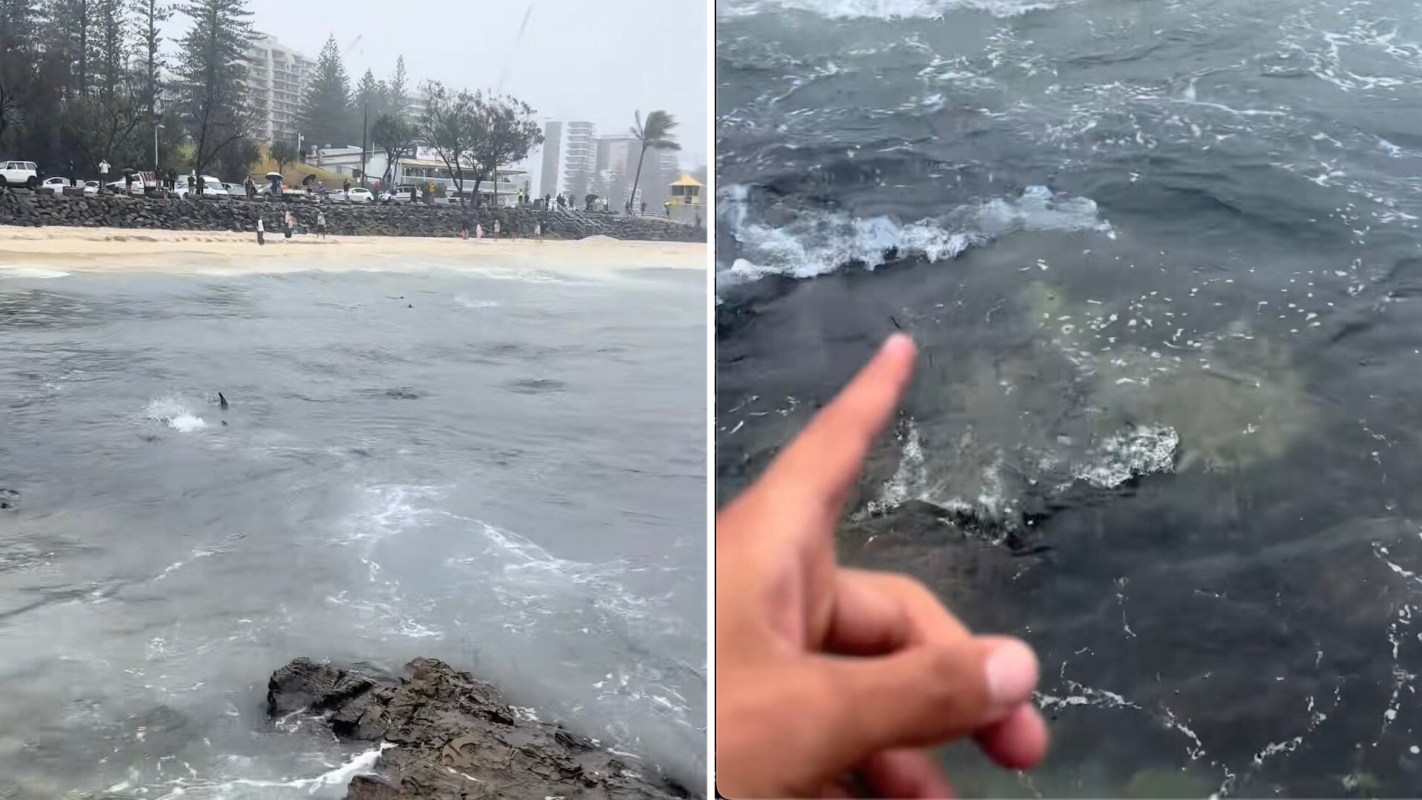
There are some things that feel wrong as soon as you look at them.
A group of sharks feeding in the shallows of a public beach is certainly on that list.
What's happening?
That's exactly the scene that surfer Kauê (@kaueauzier) witnessed on the beach in Queensland, Australia. He captured the wild moment on camera and posted it to TikTok.
@kaueauzier I've never seen anything like this. #shark #sharkattack #fy #snapperrocks #goldcoast ♬ Jaws Theme - Jaws
"I've never seen anything like this," he wrote in the video caption. The clip shows multiple active sharks in shallow water just a few steps into the ocean.
Kauê was filming at Snapper Rocks on the country's Gold Coast. The spot is renowned in the surfing world, and major competitions are held there.
"I've lived on the coast 60 years and I've never seen that many sharks so close at one time," one person commented on the video.
Why is this group of sharks concerning?
The scene does look a bit scary. However, the risk of shark attacks is far lower than popular media would lead one to believe, and hardly anyone was on the beach due to the subpar weather.
When wild animal attacks do happen, reasons other than malice are often to blame. Human provocation, habitat destruction, and environmental shifts can all pressure wildlife to behave more aggressively or expand their territory.
That's why the Snapper Rocks event is concerning. It was reported positively in the news as a natural feeding frenzy and a chance to watch the creatures up close. Yet sharks coming in so close to shore to feed may not be a good thing, even if no humans were put in danger.
That's because animals going places they do not typically go can be a sign of disturbance in their habitat. There's no direct evidence of that in this case, but the world's oceans are facing immense threats from rising temperatures, overfishing, and pollution. That means it's important to watch out for unusual behavior or potential signs of distress in the marine environment.
TCD Picks » Quince Spotlight
💡These best-sellers from Quince deliver affordable, sustainable luxury for all




|
Do you worry about having toxic forever chemicals in your home?
Click your choice to see results and speak your mind. |
 Majorly 😥
 What can be done to protect wild habitats?
At the end of the day, taking care of our natural resources is the best way to keep all the animals that live in them healthy and happy. It also keeps their interactions with humans safe and positive.
All kinds of conservation efforts are out there, especially when it comes to keeping the ocean clean.
Check out what's going on at your nearest body of water and find ways to help, whether it's picking up garbage, spreading awareness about invasive species, or rallying for positive change from elected officials.

Get TCD's free newsletters for easy tips to save more, waste less, and make smarter choices — and earn up to $5,000 toward clean upgrades in TCD's exclusive Rewards Club.
Cool Picks




