


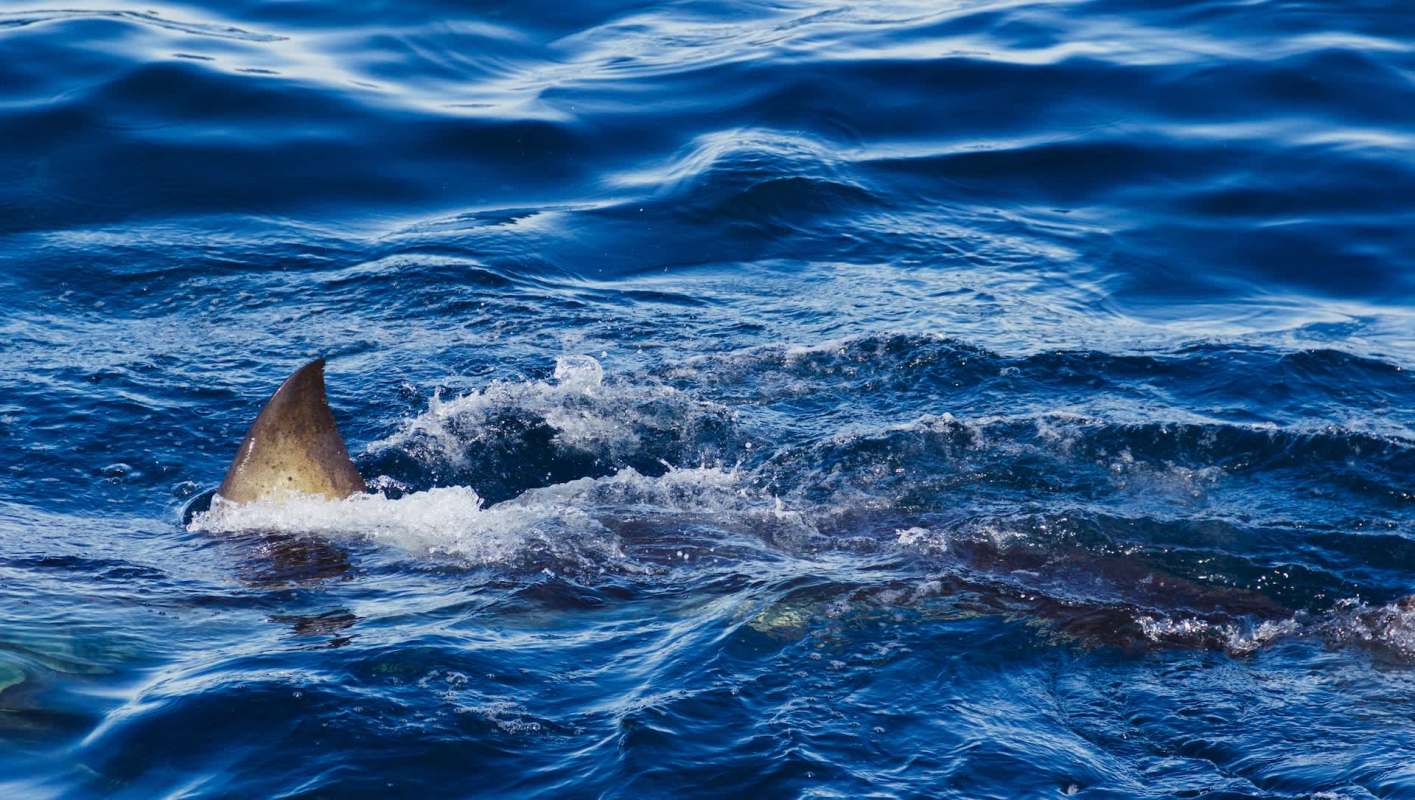
An Australian tour guide drove himself to the hospital after being bitten by a shark at a popular tourist spot earlier this month.
What happened?
As reported by the Independent, 57-year-old Lee Berryman was surfing at South Australia's D'Estrees Bay in a well-known surfing destination known as the Sewer on Kangaroo Island. What was supposed to be a leisurely afternoon spent catching waves quickly turned into a nightmare.
"I'd just caught a wave, [was] paddling back out... and I felt something chomping on me," he told Australia's 7News.
Berryman said that after the shark bit down on his left thigh, he started punching and shouting at the animal, hoping to drive it away. Once it let go, he began swimming to shore, but told 9 News he feared it "could be the end, because I had to paddle to the rocks."
Even though it took him about four minutes to make it to the rocks, he said, "It felt like half an hour because [the shark] kept coming back," according to News.com.au.
It had bitten him three separate times, with bite marks going all the way up his legs. When he got to the hospital, doctors determined he needed 50 stitches.
TCD Picks » Quince Spotlight
💡These best-sellers from Quince deliver affordable, sustainable luxury for all




Witnesses saw a seal near the surfer and shark during the attack, and believe Berryman may have gotten in the way of the sharks' intended target. News.com.au reported it was likely a large bronze whaler shark, also known as a copper shark, which can weigh up to 660 pounds and is common in South Australia.
Why is the shark attack concerning?
While experts said there is "no cause for concern" after the attack and that shark bites on Kangaroo Island are "remarkably rare" despite the large number of sharks in the area, attacks across Australia are increasing, according to The Guardian.
"Broadly speaking, across Australia and over the last two decades, there's been an increase in the number of shark bites," Charlie Huveneers, the director of Flinders University's Marine and Coastal Research Consortium, said.
The uptick in shark attacks is partially driven by more people in the water, but rising temperatures, habitat loss, erratic weather, and improved wetsuits that allow surfers more time in the water are also contributing to the phenomenon.
|
Would you ever want to travel to space? Click your choice to see results and speak your mind. |
 Sign me up 🚀
 It's not known what caused the attack at D'Estrees Bay, other than the man, unfortunately, being in the wrong place at the wrong time. According to the Government of South Australia, it's prime time for bronze whalers to move closer to shore as the water warms, so that may have played a role in the attack.
What's being done to prevent shark attacks?
As The Guardian noted, the New South Wales government has begun tagging various shark species and tracking them by satellite. The data is then transmitted to an app that can alert the public about a shark nearby. Drones are also being used more often, both by authorities and civilians.
"What I would suggest is to avoid murky waters the best they can to eliminate confusion, and also if people want to experiment with certain shark deterrent devices, that's also an option," Shark Watch SA founding director Anton Covino told News.com.au.
If you visit a beach known for high shark activity, make sure to check with local authorities if you plan on going into the water.

Join our free newsletter for good news and useful tips, and don't miss this cool list of easy ways to help yourself while helping the planet.







