


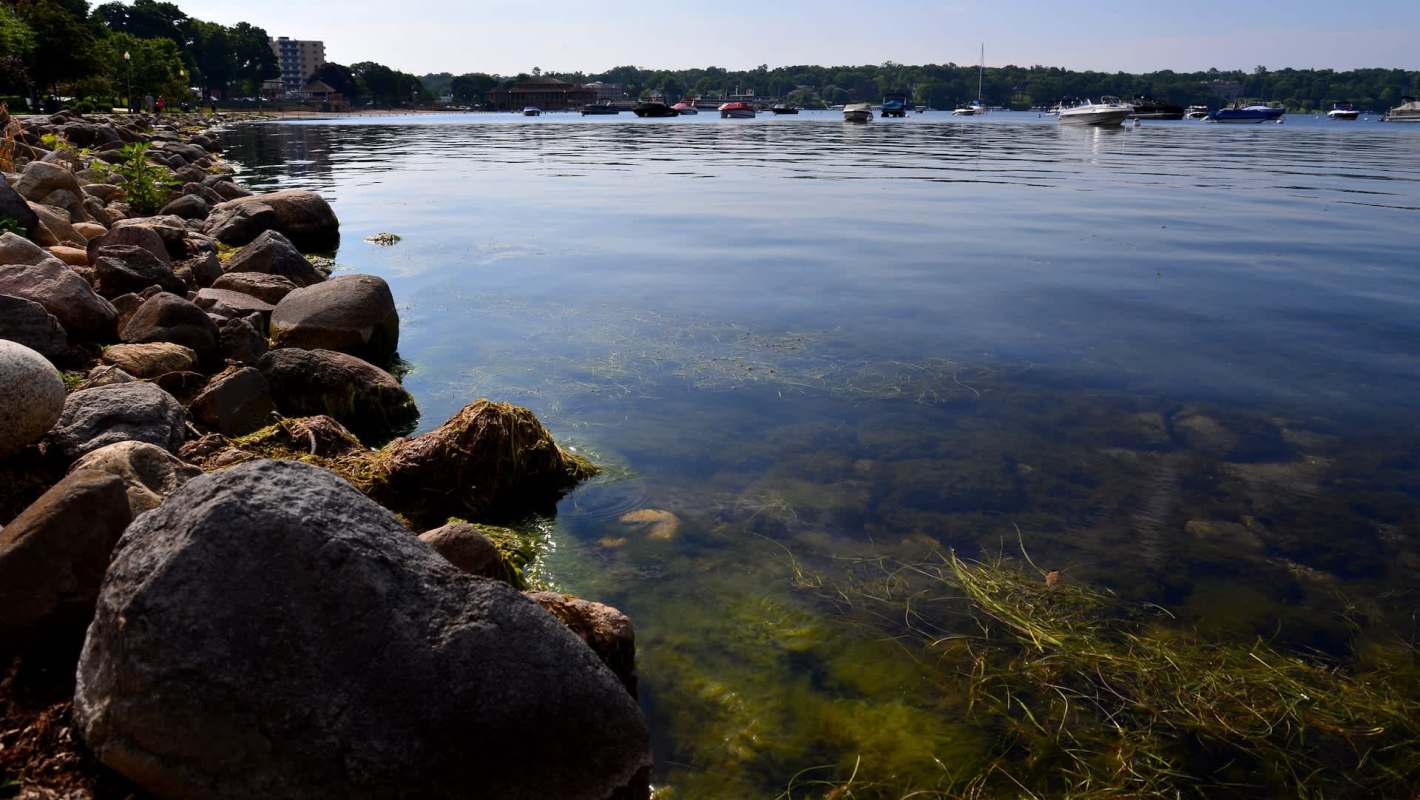
Quagga mussels have spread across Lake Geneva at an incredible rate, fundamentally altering natural habitats and human infrastructure.
What's happening?
In recent years, Lake Geneva has been known for its clear waters, alpine backdrop, and role as a lifeline for nearby communities. But scientists now say the lake that straddles the French-Swiss border is undergoing a potentially irreversible transformation.
First detected in 2014, the mussels now dominate the lake, as detailed by The Guardian. Surveys have found that 100% of samples taken from parts of the lake consisted solely of quagga mussels, with densities exceeding 35,000 per square meter (about 11 square feet) in some areas.
The invasion has already caused operational problems, according to the news outlet. At the Swiss Federal Institute of Technology in Lausanne, quagga mussels clogged deep-water cooling pipes that draw cold water, reducing cooling capacity by up to a third and threatening research facilities, data centers, and even an experimental nuclear fusion reactor. Systems used by nearby cities and Geneva's airport are also affected.
"It is too late for this lake," Bastiaan Ibelings, a professor in ecology at the University of Geneva, told The Guardian. "It's like a meadow of quaggas down there. Every spot is taken. Instead of seeing sand you see quagga mussels."
Why are quagga mussels concerning?
Invasive species such as quaggas outcompete native species for food and space, disrupting entire food webs. Each mussel filters large volumes of water daily, stripping out phytoplankton — the foundation of the lake's ecosystem, as noted in the news report. When this part of the food system disappears, other life connected to it suffers, from small invertebrates to fish populations that support local fisheries and human livelihoods.
Clearer water may seem like a benefit, but the news report noted that it allows sunlight to penetrate deeper, which factors into the risks of toxic algal blooms. Native snails, shrimps, and mussels have already vanished in many areas of Lake Geneva, and locals are feeling the impact too, with sharp shells washing onto beaches and cutting swimmers' feet.
What can we do about quagga mussels?
Prevention is the primary strategy for addressing quagga invasions. Scientists stress that once quagga mussels establish themselves in a lake, there's pretty much no way to get rid of them. "Going back is a fairytale, because of quagga mussels and climate change," Ibelings said in the Guardian report. "We cannot control either, and I don't think they will go away."
Current efforts focus on stopping mussels' spread with inspections and by enforcing boat-cleaning rules and urging anglers and boaters to clean, drain, and dry all equipment. At Lake Geneva, institutions are adapting. The Institute of Technology and the University of Lausanne plan to build a new closed-loop cooling system that keeps quaggas out, though construction won't begin until 2027.
The lesson is a sobering one: protecting native species and ecosystems early is much easier and cheaper than responding after an invasive species has taken over. You can explore critical climate issues to learn about other ways to make a difference before it's too late.
TCD Picks » Quince Spotlight
💡These best-sellers from Quince deliver affordable, sustainable luxury for all




|
What's the most you'd pay per month to put solar panels on your roof if there was no down payment?
Click your choice to see results and speak your mind. |
 $200 or more 💰
Get TCD's free newsletters for easy tips to save more, waste less, and make smarter choices — and earn up to $5,000 toward clean upgrades in TCD's exclusive Rewards Club.
Cool Picks






