


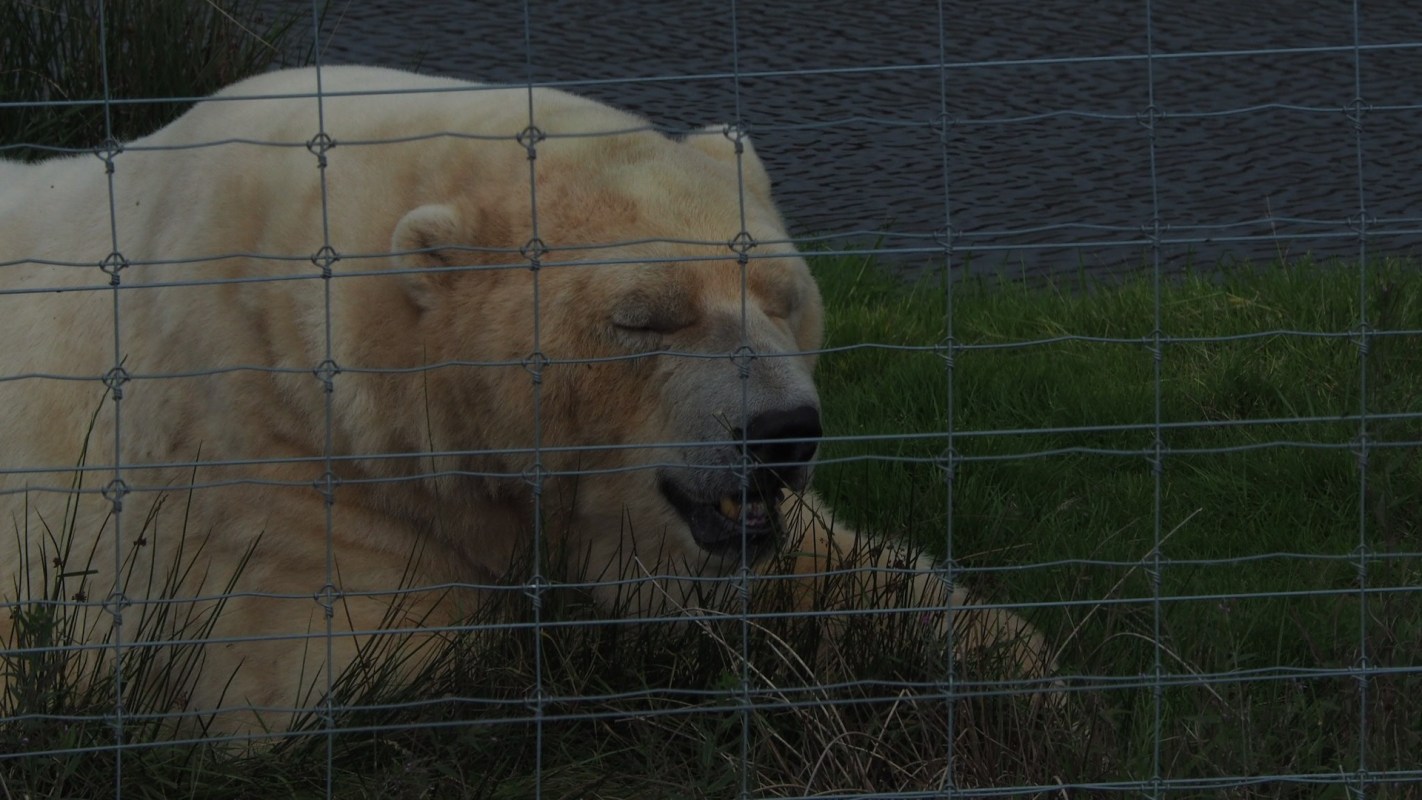
Polar bears are the largest land-based carnivores in the world. Seeing these magnificent mammals up close can be frightening, as one TikToker shows.
What's happening?
One TikToker (@literallyunbound) shared a video of their close encounter with a polar bear outside a compound in Manitoba, Canada. The area, known as Polar Bear Alley, is a common spot for viewing polar bears as they migrate to hunt food on the Hudson Bay.
@literallyunbound another clip from the Churchill wildlife collection. and no, this one did not go to jail. #wildlife #polarbear #churchill ♬ original sound - Literally Unbound
"There's a reason we have these signs on the fence," OP says, showing a sign that reads "Beware of Polar Bears: Check Your Surroundings Before Leaving the Compound."
"Sometimes, there just happens to be a polar bear out there," he says as he shows a polar bear sniffing around the compound. The polar bear, its white legs covered in mud, tries to push its way into a shed and checks the perimeter of the fence for a way into the compound.
"They're curious and they'll test everything," OP says. "I sincerely hope everyone is on the inside of the gate right now."
Commenters shared their fear of OP being that close to the polar bear with a fence that doesn't look too strong to hold out a polar bear.
"Love that he is checking the perimeter like he can't just like obliterate that fence if he really wanted to," wrote one commenter.
"Uhm can we get the fence upgraded?" another commenter wrote.
Why is this polar bear interaction important?
The video and comments highlight the fear of humans being around polar bears, one of the largest predators of the Arctic. Between 1870 and 2014, there were 73 confirmed polar bear attacks. While this is a low number, the frequency of the attacks has increased in recent years, with 20% of those attacks taking place between 2010 and 2014. Polar bears and human interactions are becoming increasingly common.
"The danger is the proximity to people, coupled with an increasing number of polar bears in poor body condition spending more time on shore," said Geoff York, senior director of conservation at Polar Bears International. "Both people and bears are trying to adapt to rapid changes on the ground and at sea."
TCD Picks » Quince Spotlight
💡These best-sellers from Quince deliver affordable, sustainable luxury for all




|
Do you think America does a good job of protecting its natural beauty? Click your choice to see results and speak your mind. |
 Definitely 👍
 Higher global temperatures caused by an increase in human activity that released harmful carbon dioxide and methane have led to the melting of Arctic ice caps. Sea ice has diminished at a rate of almost 13% each decade, and polar bears are spending more time on land among humans searching for food.
Because bears may view human campsites or trash as a means to get food, polar bears are less avoidant of humans, putting them in more situations where they are near humans and can get into confrontation.
Unfortunately, this can cause wildlife officials to have to put down polar bears to protect humans if an attack occurs. This is dangerous because polar bears are categorized as a vulnerable species by the International Union for Conservation of Nature, with populations rapidly declining.
What's being done about polar bear interactions with humans?
Conservation groups are aiming to help limit the number of interactions between humans and polar bears that could lead to fatal attacks. In Manitoba, where OP took this video of a polar bear, the government has a Polar Bear Alert program.
"Conservation officers respond to bears that have been visibly seen, and they respond to them differently depending on where they are," said Geoff York. "'There's a bear near something it shouldn't be near. Let's encourage it to move along.' That's their primary role."
The World Wildlife Fund is also working to protect the Arctic Ocean and improve polar bear habitats. By 2030, they hope to safeguard 30% of the Arctic Ocean.
Individuals can also help make donations to Polar Bear International and even symbolically adopt a polar bear with the WWF to help polar bear conservation.

Get TCD's free newsletters for easy tips to save more, waste less, and make smarter choices — and earn up to $5,000 toward clean upgrades in TCD's exclusive Rewards Club.
Cool Picks






