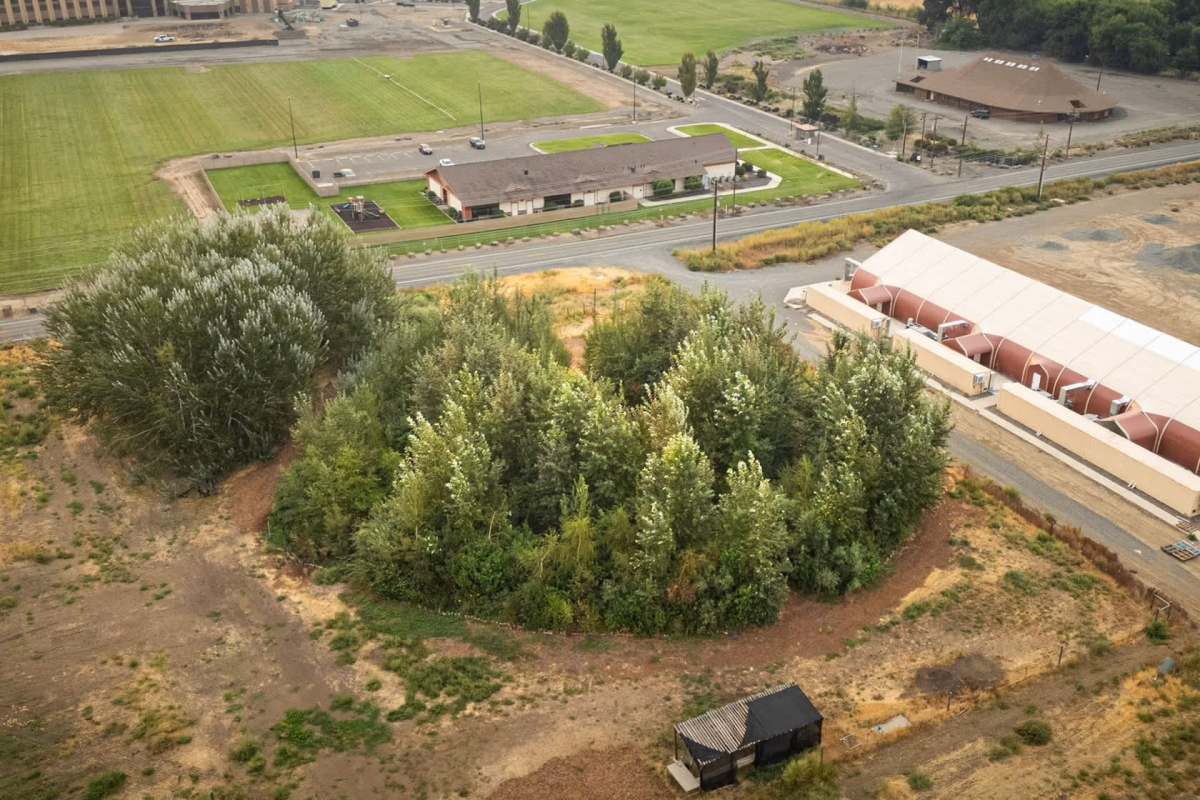
A tiny forest might not sound like much at first; maybe it's a few saplings tucked into a corner of a yard.
But these dense "pocket forests" are increasingly taking root in backyards and even former sports fields, and supporters say they can help cool neighborhoods, absorb stormwater, and reconnect people with native ecosystems, as NPR reported.
The concept is simple: Plant hundreds of native trees and shrubs close together so that a mini-forest can grow in an area roughly the size of six parking spots.
The approach is based on the Miyawaki method, a dense planting technique developed in Japan in the 1970s by ecologist Akira Miyawaki. By packing native species tightly together, the method can fit around 350 trees into a very small footprint and produce a mature-looking forest in 20 to 30 years.
That method is now appearing in communities around the world.
In Tacoma, Washington, homeowner Wendy Clapp transformed her yard after years of dealing with invasive Japanese knotweed.
Enjoy your best summer vacation yet with 15% off your next stay With Hilton, you can find a hotel that matches your mood — whether you’re recharging at the beach, exploring natural beauty, or traveling with your crew. Enjoy vibrant summers in Hawaii, weekend trips in major cities, and even extended itineraries at adventurous sites like Moab’s desert canyons. Plus, save up to 15% during Hilton’s summer sale until June 1st. |

The technique has also been used by the Yakama Nation in Washington and in Attleboro, Massachusetts, where volunteers recently planted hundreds of native saplings on an abandoned baseball field.
In Attleboro, residents hope the new forest will help reduce flooding after the city experienced severe floods as recently as 2023.
On Yakama Nation territory, a small forest has also become a place for shade, healing, and learning about traditional plants.
Even so, researchers told NPR that some of the biggest claims surrounding the Miyawaki method, especially those related to carbon storage and unusually rapid growth, still need stronger evidence.
TCD Picks » Quince Spotlight
💡These best-sellers from Quince deliver affordable, sustainable luxury for all




A review of 51 studies found that the method has not been tested as rigorously as many people may assume, and one estimate suggested it can be far more expensive than allowing natural regrowth.
Still, experts noted that, broadly speaking, more vegetation in cities is usually better than more concrete.
Many communities are moving forward with pocket forests not as miracle climate solutions, but as local resilience projects.
In Tacoma, Clapp brought neighbors together for a backyard planting party and has continued adding native species over time. In Massachusetts, students and volunteers turned a neglected field into what could become a green buffer for the surrounding neighborhood.
Researchers say that local involvement may be one of the most important ingredients for success. Clark University geographer John Rogan told NPR that trees tend to do best when nearby residents feel a sense of ownership and stewardship over them.
Native planting can still be worthwhile even on a small scale. That could mean replacing invasive plants, adding shade trees, or exploring native landscaping ideas that support pollinators and yard upgrades that help manage stormwater. The most effective projects are often the ones that match local conditions and that people are willing to care for over time.
"When you do things like this, you're setting up opportunities," Marylee Jones, a gatherer and member of the Yakama Nation, said.
For Clapp, the benefit is both immediate and deeply personal. "This is the first time I've seen real hope, where I see, like, we're actually making a difference out here now," she said.

Get TCD's free newsletters for easy tips, smart advice, and a chance to earn $5,000 toward home upgrades. To see more stories like this one, change your Google preferences here.
Cool Picks