


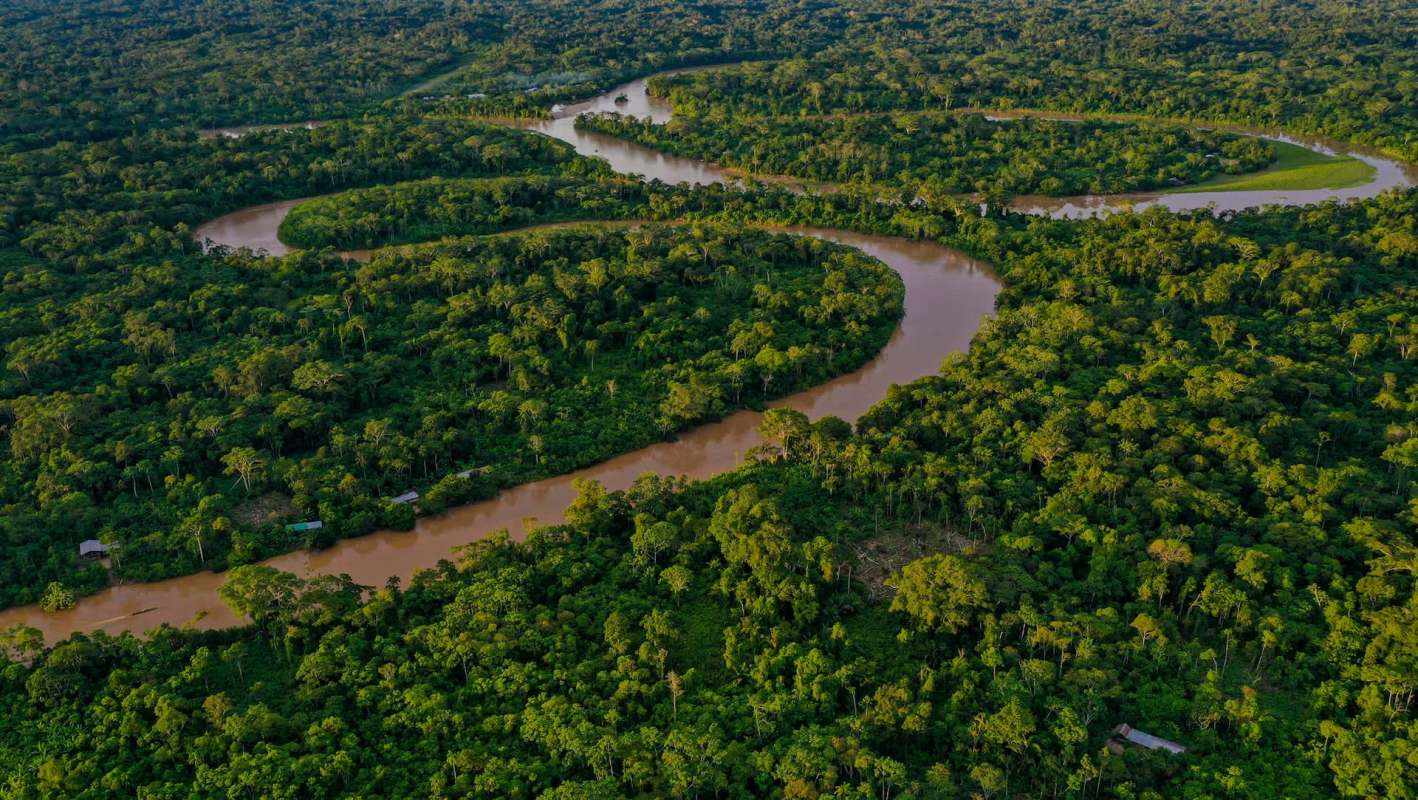
A comprehensive meta-review, the first of its kind according to Phys.org, contained disturbing findings about plastic pollution in the Amazon Basin.
What's happening?
Individual studies and research initiatives have long examined the impact of widespread plastic pollution on specific aspects of heavily affected areas, such as the Amazon Basin.
Research recently published in the environmentally-focused, peer-reviewed journal Ambio wasn't one of them. Rather, its authors compiled 52 existing peer-reviewed studies and set out to "assess plastic contamination across Amazonian ecosystems."
The reviewed research, dating back to 2000, provided its authors with a quarter-century's worth of data on plastic pollution and its varied outcomes.
Approximately nine out of 10 studies focused on "Brazilian sites along the main Amazon River," and research routinely concentrated on the impacts on fish. Phys.org described the review as "troubling reading," with a disturbing theme emerging in the larger body of evidence.
Its authors identified findings about "plastic fragments and litter in the water, river sediments, and among plants and wildlife, including birds, fish, and mammals."
The outlet asserted that the human health implications were particularly concerning: 66%, or two-thirds of commonly consumed fish contained microplastic contaminants.
Why is this worrisome?
The study was the first to analyze a large set of independently published studies, creating a broader picture of plastic pollution and the impact of microplastics.
Microplastics are defined as plastic particulate matter that is five millimeters or smaller, whereas nanoplastics are particles smaller than one micrometer. As Phys.org pointed out, none of the reviewed studies accounted for nanoplastics, which could pose a larger risk.
The issue of microplastics didn't land on researchers' radar until fairly recently, when marine biologist Richard Thompson coined the term in 2004.
TCD Picks » Quince Spotlight
💡These best-sellers from Quince deliver affordable, sustainable luxury for all




|
Do you worry about having toxic forever chemicals in your home?
Click your choice to see results and speak your mind. |
 Majorly 😥
 Since that point, research into the effects microplastics have on the ecosystem, wildlife, and human health has been ongoing — and the findings have been unsettling.
Microplastics have been found in the soil, the remote reaches of Antarctica, and the deepest ocean trenches. They've been found to impact human health in a variety of ways, none of which are beneficial.
The authors agreed.
"The evidence presented in this review is more than sufficient to justify immediate policy implementation throughout the Amazon to reduce plastic reaching the natural environment," they wrote.
What's being done about microplastics?
The authors called upon governments to act "immediately," and contacting elected representatives to demand action is one way to influence policy toward a safer, cleaner future.
Microplastics exposure can be reduced on a direct level, even if we can't entirely purge the environment of them just yet.
Using less plastic overall is effective, and replacing everyday items with plastic-free alternatives is another effective approach.

Join our free newsletter for good news and useful tips, and don't miss this cool list of easy ways to help yourself while helping the planet.
Cool Picks






