


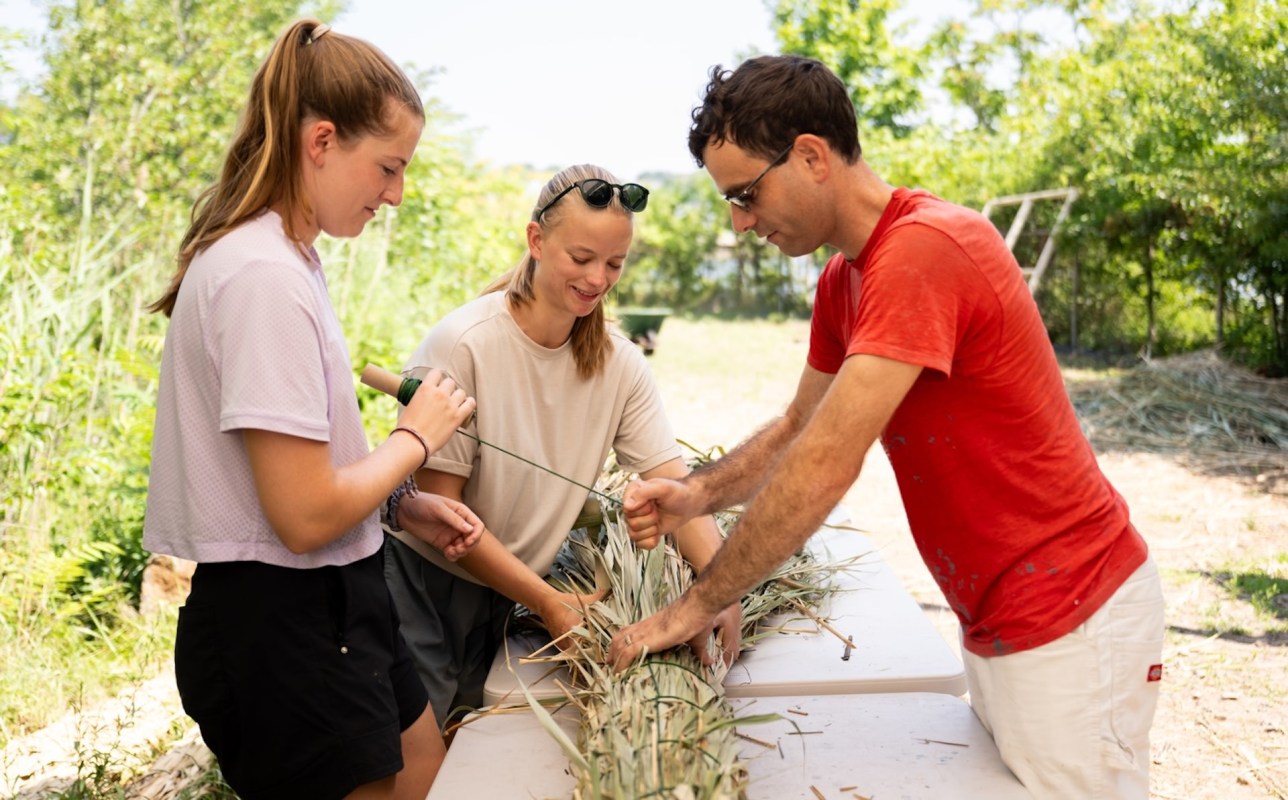
Two graduate students have discovered an innovative technique to turn a problematic wetland grass into a bona fide superhero.
Kayla Sklar and Anja Clark are using invasive plants for coastal restoration to prevent shoreline erosion and provide wave protection while creating a habitat for native life. Northeastern Global News reported the duo is gathering phragmites — a tall, aggressive reed — to use as a biomass foundation to plant native Spartina grass as part of the initiative Emerald Tutu.
"The important distinction between (human-made) gray infrastructure and nature-based infrastructure is that gray infrastructure is strongest on day one and then weakens over time," the project lead, Gabriel Cira, explained.
"The opposite is true for nature-based infrastructure," Cira says. "It's weakest when you first install it. But as those native marsh grass plants grow denser and denser, as their rhizomes expand and connect and anchor everything together, it just gets stronger and stronger."
Using nature itself, the goal is to keep the bundles from floating away using stones and stakes until they are able to take root and thrive on their own.
"I probably would have gone to art school if I didn't really care about the climate crisis," Clark, a project assistant, said, according to the university article. "So it's been really special to be part of this."
Invasive species outcompete natives for vital resources, ultimately destroying ecosystems. Once they take root, they can be unforgiving and sometimes impossible to eradicate. Not only does the Emerald Tutu project work to rid the coast of these threatening plants, but it's also using them to restore natives and preserve balance. It's a sustainable way to solve a lot of problems at the same time.
Native plants are crucial to a healthy ecosystem. They're cost-effective and require exponentially less maintenance because they thrive naturally in their accustomed environments. They don't need the constant attention of water, fertilizer, pesticides, and other gardening hassles.
Native flora and fauna also attract pollinators like bees, hummingbirds, and butterflies, which help plants reproduce. In fact, 75% of the world's flowering plants and 35% of crops rely on animal pollinators, accounting for one in every three bites of food, according to the USDA. This is why rewilding your yard with native plants, vegetables, or wildflowers is so important.
Similarly, a Michigan Tech student developed a concoction of mushrooms to remove invasive trees, like buckthorn, without disturbing neighboring species. It's another great solution that doesn't involve toxic chemicals and fosters a happy, balanced environment. Plant natives, take local action, and donate to green organizations you believe to help the world prosper and breathe a little easier.
TCD Picks » Quince Spotlight
💡These best-sellers from Quince deliver affordable, sustainable luxury for all




|
What is the biggest reason you don't grow food at home? Click your choice to see results and speak your mind. |
 Not enough time ⏳
Join our free newsletter for good news and useful tips, and don't miss this cool list of easy ways to help yourself while helping the planet.
Cool Picks




