


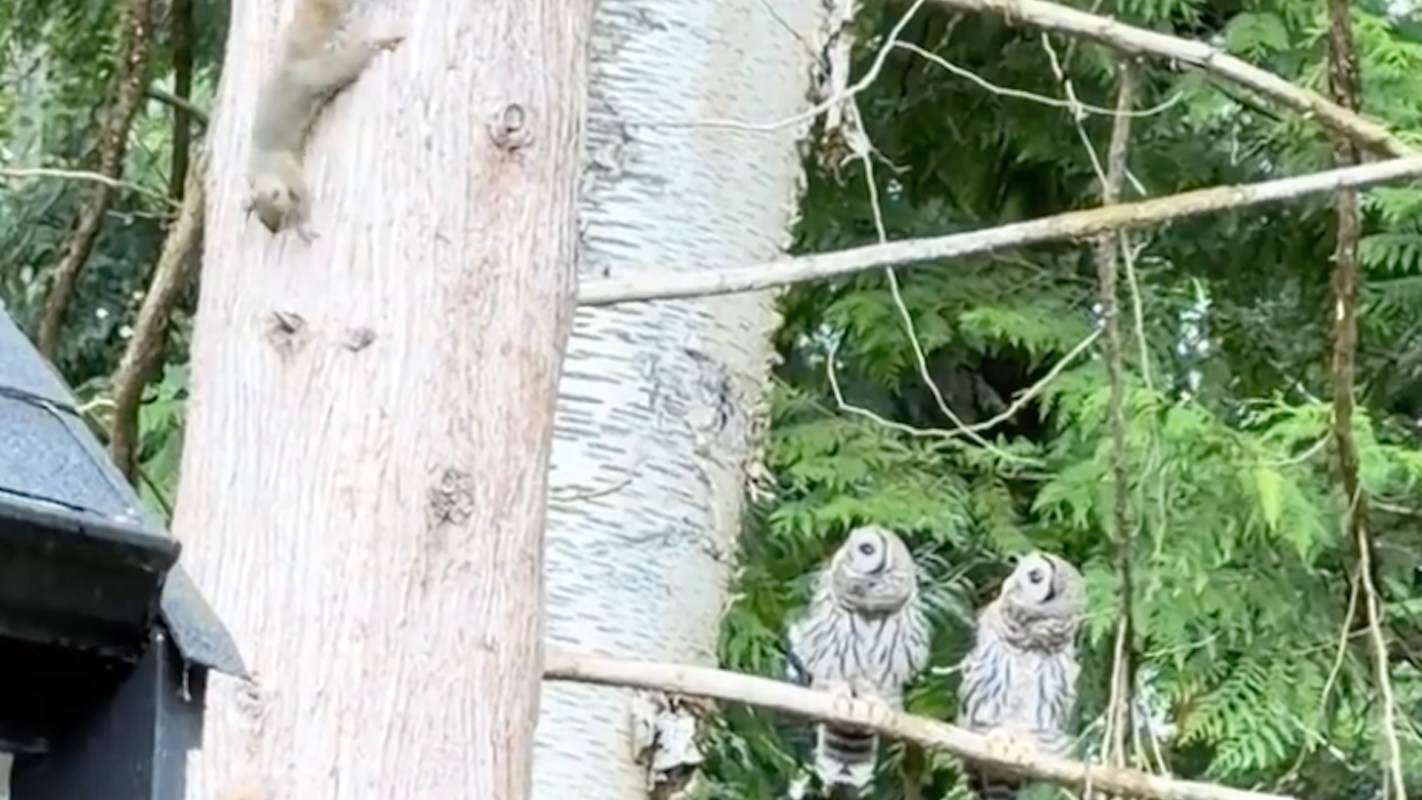
In an oddly relatable scene, two young owlets stared down at a pair of squirrels with the kind of uncertainty usually associated with someone trying to make sense of an unfamiliar menu item.
The birds fixate on the squirrels beneath them, leaning over the edge as if they cannot decide whether they are looking at prey, a threat, or neither.
What happened?
A short video posted to a nature appreciation community on Reddit focuses on two owlets watching squirrels below.
(Click here if the embedded video does not appear.)
There is no dive, no panic, and no retreat. The young birds simply keep staring, wide-eyed, seeming unsure how to interpret what is happening.
Rather than showing a finished predator at work, the clip spotlights a more awkward phase of growth, when young animals are still learning how to read the world around them.
TCD Picks » Quince Spotlight
💡These best-sellers from Quince deliver affordable, sustainable luxury for all




One viewer summed up the owlets' apparent internal debate: "We eat those, right?"
"Such an adorable moment, nature's little comedy moments are the best!" another added. "Those owlets look so curious while the squirrels are probably just going about their day like they own the place."
Why does it matter?
What stands out here is not fierceness or polish, but the fact that the owlets seem to be learning.
For young wild animals, watching, hesitating, and getting things wrong are part of the process. Nature is not only made up of dramatic chases and perfect instincts; it is also shaped by trial and error.
When people see wildlife as fascinating rather than distant, they may be more inclined to value the habitats those animals depend on for survival.
What can I do?
Protecting mature trees, preserving natural cover, and avoiding unnecessary disturbance can help birds and small mammals coexist.
Rodenticides and other poisons can move up the food chain and harm birds of prey that hunt or scavenge affected animals, so finding safer ways to eliminate pests can help protect these creatures. Meanwhile, keeping cats indoors, especially around dawn and dusk, can further reduce pressure on young birds.
Owls are best observed from a distance. Binoculars or a zoom lens can offer a closer look without stressing the animals or disrupting nesting and hunting behavior.
A young owl that appears grounded or awkward does not always need rescuing. Juvenile birds often spend time out of the nest while still being watched and fed by their parents, so intervention should be reserved for cases of clear injury and handled by a trained professional.

Get TCD's free newsletters for easy tips, smart advice, and a chance to earn $5,000 toward home upgrades. To see more stories like this one, change your Google preferences here.







