


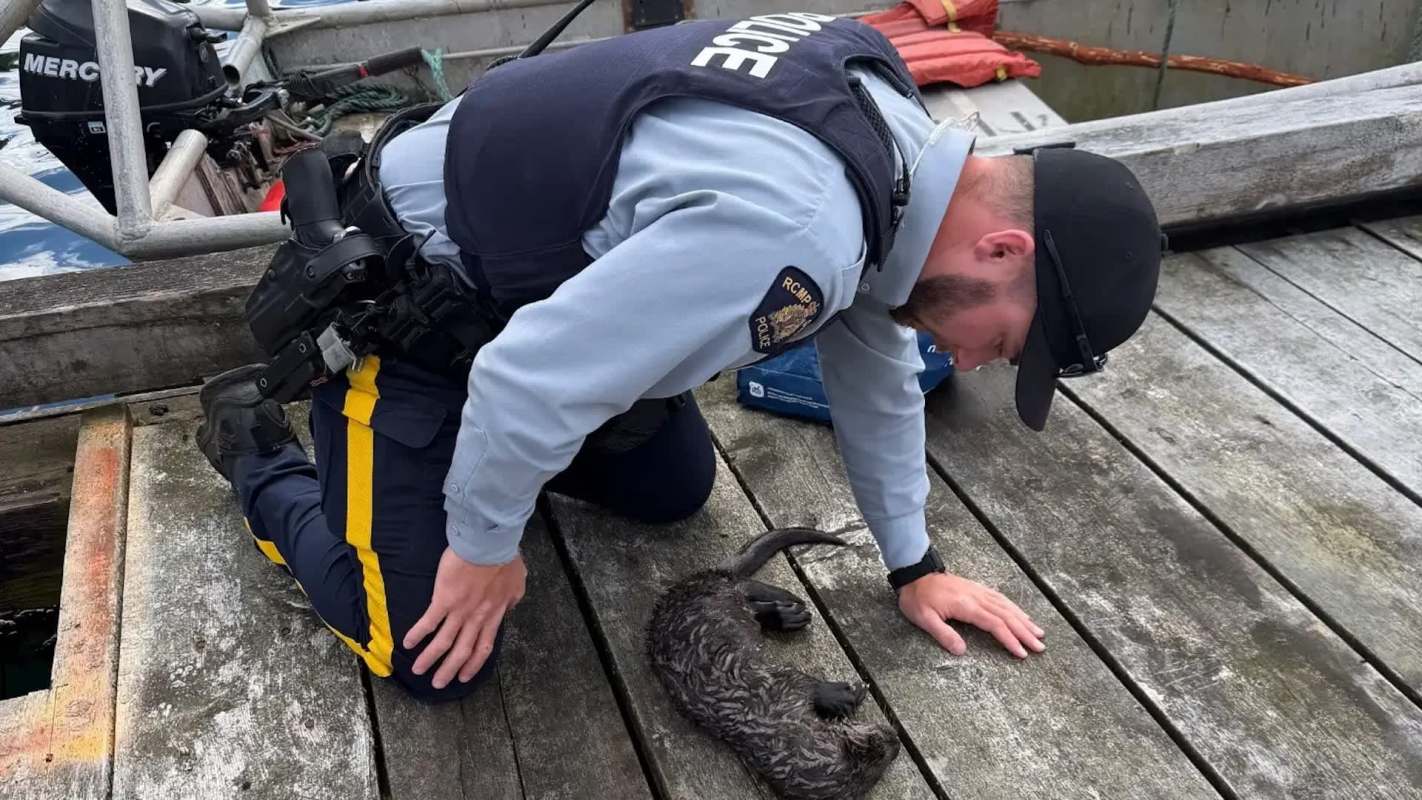
A high-stakes wildlife rescue on Cormorant Island ended in a heartwarming reunion after local residents freed three tangled otter pups and helped save one that had stopped breathing.
The rescue showed how quickly community action can mean the difference between life and death for animals living alongside people in busy waterfront areas.
Here's what to know
A fishing net left on the 'Namgis Dock in Alert Bay trapped three juvenile otters on July 28, after residents investigated sounds of animals in distress nearby.
Their mother was waiting close to the dock, and once two of the pups were untangled, they returned to the water and rejoined her.
However, the third pup was in bad shape — netting had tightened around its neck, making it difficult to breathe. After a resident removed it, the animal was found unresponsive until CPR fortunately restored its breathing.
According to the Alert Bay RCMP, as Victoria News reported, officers connected with a local wildlife rescue volunteer, who worked with the Mountainaire Avian Rescue Society in Merville to coordinate transport of the injured otter to a wildlife rehabilitation facility for treatment and care.
TCD Picks » Quince Spotlight
💡These best-sellers from Quince deliver affordable, sustainable luxury for all




Once treatment was completed, the otter had fully recovered and was taken back to Alert Bay, where it was released and reunited with its family in the wild.
More background
Abandoned or poorly stored fishing gear can pose a serious threat to animals. Docks and shorelines often serve as wildlife corridors, especially in coastal communities, where otters, birds, and marine life move through the same spaces people use for work and recreation.
Other discarded trash can also harm animals both in the sea and on land — one raccoon was trapped in a discarded mayonnaise jar, having spent several days without access to food or water.
What's being done?
Residents stepped in first, RCMP coordinated support, and a rehabilitation network helped carry the rescue and get these seals safely back home.
One clear way to prevent similar incidents is to store and secure fishing gear properly, reducing an avoidable hazard in areas where wildlife regularly moves through docks and shorefronts.
People who want to help protect wildlife in their own communities can look into these guide pages on taking local environmental action or its page on donating money to climate causes. Local rescue groups, shoreline cleanups, and community education efforts can all play a role.
Sgt. David Ribeiro-Pereira, detachment commander of the Alert Bay RCMP detachment, summed up the lesson: "Cormorant Island is home to many species of wildlife and we all have a role to play in keeping them safe. This incident serves as an important reminder that properly securing and storing fishing gear can help prevent unnecessary harm to animals and protect the wildlife that makes our community so special."

Get TCD's free newsletters for easy tips, smart advice, and a chance to earn $5,000 toward home upgrades. To see more stories like this one, change your Google preferences here.







