


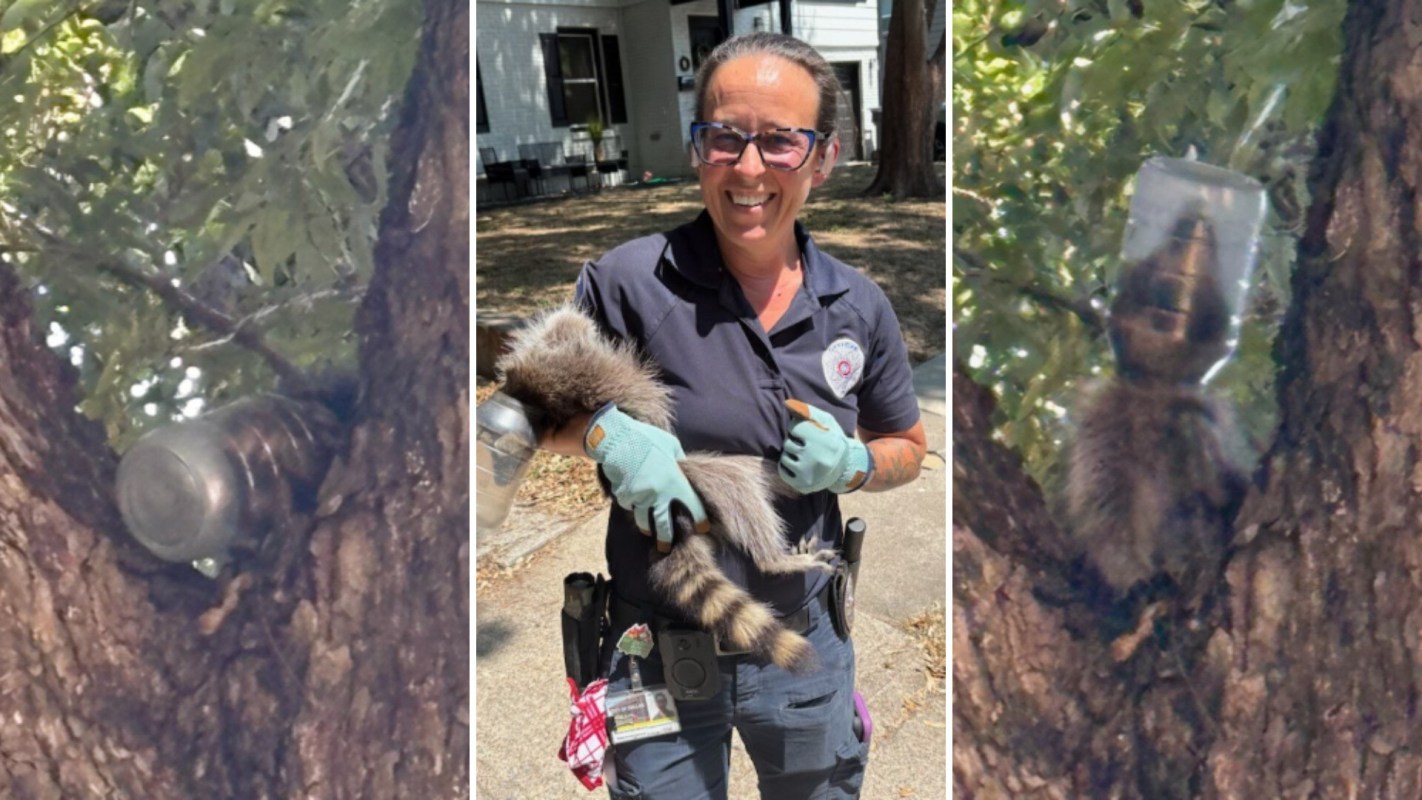
A raccoon that spent several days wandering through a Dallas neighborhood with a mayonnaise jar stuck over her head has finally been rescued, according to UPI, ending a tense local ordeal and giving the animal another chance to return to the wild.
What happened?
Residents had spotted the raccoon, affectionately named Mayonesa, multiple times in a residential part of Dallas, but earlier efforts to catch her were unsuccessful, according to UPI. The search finally came to a successful end when two Dallas Animal Services officers spotted her in a tree beside an abandoned house and stayed nearby until she climbed down, according to UPI.
At Dallas Animal Services, staff sedated Mayonesa, administered fluids, and removed the jar. She had been brought there after coming down from the tree, where an officer safely captured her by approaching from behind. They shared photos and a video of the rescue process on Instagram.
Texas Metro Wildlife is caring for Mayonesa, and she is expected to be released back into the wild after she recovers.
Before the rescue, she had gone several days without food or water.
Why does it matter?
Raccoons are especially vulnerable because they are curious, intelligent foragers that investigate anything carrying the scent of food. This situation shows how just one piece of trash can inadvertently harm an animal — a jar, can, or plastic container thrown away carelessly can quickly become hazardous when a curious critter gets its head stuck inside and cannot free itself.
TCD Picks » Quince Spotlight
💡These best-sellers from Quince deliver affordable, sustainable luxury for all




Dallas Animal Services wrote on Instagram reminding people that "Even everyday household items can become dangerous when they end up in the environment."
That danger tends to increase in cities and suburbs, where wildlife and humans live in closer proximity. As a BBC Future report explains, many conflicts between humans and wild animals are influenced by human behavior and habitat changes that force species into closer contact.
What's being done?
In this case, trained animal services officers and a wildlife rehabilitation group stepped in in time to save Mayonesa's life.
Groups such as Dallas Animal Services and Texas Metro Wildlife help injured or trapped animals recover instead of suffering unnoticed. Their work also reduces the likelihood that distressed wildlife will end up on roads, in backyards, or in other dangerous places.
Properly throwing away jars and containers, rinsing food packaging, securing trash bins, and not leaving pet food outside can all make a meaningful difference.
Experts generally advise against trying to intervene alone. Contacting local animal services or a licensed wildlife rehabilitator is usually the safest option for both the person and the animal.
Dallas Animal Services said: "Aside from dehydration after several days without food and water, she was in remarkably good condition and full of energy." One Instagram user commented on their post expressing their appreciation for these rescue efforts: "Love seeing stories like this!!"

Get TCD's free newsletters for easy tips, smart advice, and a chance to earn $5,000 toward home upgrades. To see more stories like this one, change your Google preferences here.







